

Recent military tensions and oil pollution are endangering the Persian Gulf’s fragile ecosystem, poisoning coastal dolphins’ lungs and making hawksbill turtles’ nesting beaches unsafe.
The recent war against Iran has thrown not only human infrastructure, but also the country’s vital ecosystems into crisis. After more than two and a half months of widespread internet disruption and restrictions, the gradual restoration of access for some citizens has revealed further dimensions of the war’s environmental impact. New images and documentation published on social media platforms such as Instagram have exposed environmental damage across the waters of the Persian Gulf and the Strait of Hormuz; a region that was already fragile before the conflict because of climate change, high salinity, and rising temperatures, and is now bearing the heavy burden of military tension.
According to a May 16, 2026 report by the newspaper Peyame Ma, even before the outbreak of these hostilities, the Persian Gulf had already crossed critical biological thresholds. Today, military tensions are placing additional pressure on the region’s biodiversity, turning what were once safe habitats for marine life and birds into high-risk zones. The long-term consequences of this damage remain unclear.
The Strait of Hormuz: A Biological Corridor for Endangered Species
The Strait of Hormuz is known in global political language as a 21-mile strategic chokepoint for energy transit. Ecologically, however, it is a sensitive and vital aquatic corridor. For centuries, this narrow passage has served as both habitat and migration route for valuable species such as the critically endangered hawksbill turtle, the Arabian Sea humpback whale, and the endangered Indian Ocean humpback dolphin.
Because of its particular geography, this ecosystem is extremely vulnerable to pollution. The hydrodynamic circulation of the Persian Gulf is very slow, and the full exchange of its waters with the open ocean takes between three and five years. As a result, toxic substances and pollutants produced by modern military conflict are not easily washed out of this semi-enclosed basin. Instead, they settle into its seabed.
The unique biodiversity of the Strait is produced by the energetic exchange between the shallow waters of the Persian Gulf and the depths of the Sea of Oman, creating a habitat for more than 1,100 fish species. Although marine life in this region has adapted to extreme temperature fluctuations, from 12 to 35 degrees Celsius, and to high salinity, this natural resilience does not mean it can withstand sudden chemical and physical pollution caused by war.
The Region’s Biodiversity and Endangered Species
The animal diversity identified in this region includes several dolphin species, among them the Indian Ocean humpback dolphin, the common dolphin, the Indo-Pacific bottlenose dolphin, and the common bottlenose dolphin. It also includes several whale species, such as the tropical blue whale, fin whale, Bryde’s whale, and humpback whale.
The region’s islands are also habitats for gazelles, breeding and nesting grounds for birds, especially terns, for whom Shidvar Island is a haven, and nesting sites for sea turtles. Overall, more than 35 species of terrestrial and marine mammals, 40 reptile species, five species of sea turtles, more than 800 fish species, 200 gastropod and bivalve species, and between 300 and 450 other aquatic species have been identified in this area.
Dolphins and Turtles
According to assessments by the International Union for Conservation of Nature and international biological research, the Persian Gulf, as a shallow marginal marine environment, is home to unique dolphin communities. These mainly include three key coastal species: the Indian Ocean humpback dolphin, the Indo-Pacific bottlenose dolphin, and the finless porpoise.
Among them, the Indian Ocean humpback dolphin is especially exposed to human threats because of its strong dependence on very shallow coastal habitats. It is listed as endangered on the IUCN Red List. Because these intelligent mammals sit at the top of the food chain, they are considered key biological indicators for assessing the health and stability of the Persian Gulf’s entire marine ecosystem.
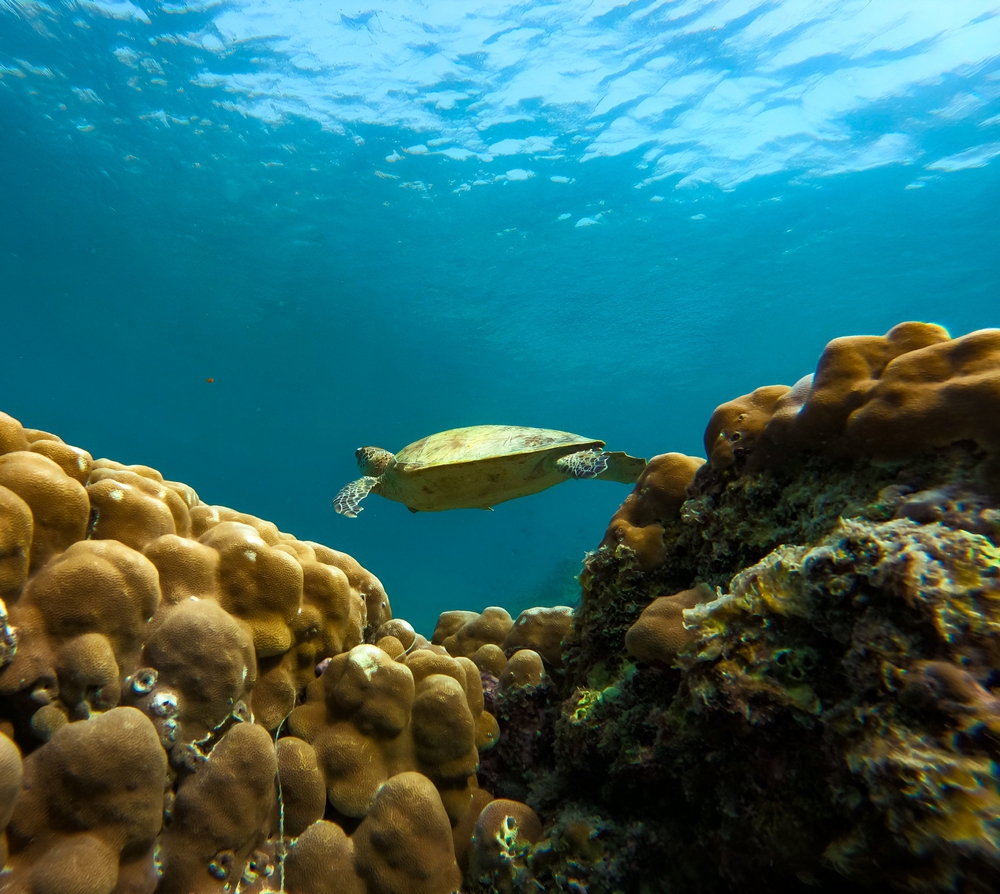
International reports confirm the presence of five sea turtle species in the waters of the Persian Gulf. The most common among them are the hawksbill turtle and the green turtle. According to data from the Marine Turtle Specialist Group, the hawksbill turtle, which is critically endangered, uses the beaches and islands of the Persian Gulf as one of its main nesting areas. It also plays a vital role in preserving the biodiversity of the region’s coral reefs by controlling sponge populations.
Green turtles in the region, which are considered vulnerable at the regional level, mostly feed in shallow seagrass meadows. Both species face severe survival challenges because of the destruction of nesting beaches, bycatch in fishing nets, and persistent industrial pollution.
Environmental Risks in Lavan and the Oil Spill on Shidvar’s Shores
One example of the war’s consequences, also covered by media inside Iran and whose exact dimensions are still being assessed, is the oil spill that followed the April 8, 2026 airstrike on the Lavan refinery in the Persian Gulf. According to the Mehr News Agency, Habib Masihi Taziani, director general of the Hormozgan Province Department of Environmental Protection, confirmed that the attack caused oil substances to enter the waters of the Persian Gulf. Pollution from the spill was observed along the shores of Lavan Island and its neighboring island, Shidvar, also known as Maru.
Images and documentation published by citizens on social media show thick oil slicks contaminating the pristine rocky shores of the uninhabited island of Shidvar. Peyam Ma also reported that, at the same time as the fire at the Lavan refinery, concerns peaked over severe damage to sensitive bird and sea turtle habitats on Shidvar. The island is a vital breeding refuge for southern wildlife, and local images show its coastline coated in black oil compounds. According to the newspaper, this critical situation has sharply increased fears of heavy and lasting losses among the native animals of this ecosystem.
Cleanup Challenges
Cleanup operations on the contaminated coastline after the Lavan crisis face deep structural challenges, adding to the complexity of the situation. In an interview with the newspaper Hamshahri, Habib Masihi Taziani pointed to these difficulties and said: “A large portion of the oil pollution on sandy beaches has been collected, but cleaning rocky and coral shores is much harder.”
He also told Mehr News Agency that although no sea turtle deaths had been reported by late April 2026, these pollutants do not quickly disappear from the ecosystem. He warned that the oil crisis would leave lasting consequences on rocky shores and coral reefs.
At the same time, reports have emerged of oil slicks in more distant parts of the Persian Gulf basin. The Department of Environmental Protection has attributed some of these secondary forms of pollution to the secret discharge of ballast water by oil tankers, while oil officials have denied the existence of new slicks. Yet the reality is that military confrontation has reduced the stability and resilience of this vital waterway as a whole, making environmental monitoring and rescue operations more difficult.
Hawksbill Turtle Breeding Season Under Oil Slicks
One of the most alarming aspects of the recent oil pollution is that it coincides with the breeding season of endangered sea turtles. Asghar Mobaraki, a wildlife expert at Iran’s Department of Environmental Protection, told Peyam Ma:
“We are now in the peak breeding season of hawksbill sea turtles. The Persian Gulf’s resident populations make local movements for reproduction. During this season, in May and June, they come to Iran’s islands to lay their eggs.”
According to Mobaraki, these turtles repeatedly move between water and land to lay their eggs, and each time they enter or leave the water, they come into direct contact with oil slicks. He also warned that because of rough seas and strong winds around Shidvar, oil substances penetrate the beach sand and enter the nests. This not only destroys and suffocates the eggs, but also exposes hatchlings to deadly risks immediately after birth, as they make their way toward the sea.
The region’s green turtles are also at risk. Because they feed on shallow seagrass meadows, grazing in contaminated areas and swallowing plants polluted with oil can cause severe poisoning and threaten their survival.
The Hidden Threat Beneath the Surface
The damage caused by war to the Persian Gulf’s large marine mammals goes beyond physical contact with oil slicks. Haleh Abedi, director of Meydaf, a non-governmental nature conservation organization, explained another dimension of the disaster in an interview with Peyam Ma. When oil accumulates on the surface of the water, vapors from volatile organic compounds are released. Abedi said:
“Each time dolphins breathe, they empty and refill their lungs at high speed and in large volume. Under these conditions, inhaling toxic vapors carries them deep into the respiratory system and causes severe pulmonary and neurological diseases.”
According to scientific studies from 2018 cited by Abedi, these toxic vapors can cause deadly pneumonia and structural damage to dolphins’ adrenal glands, sharply reducing the secretion of the hormone cortisol. Even if dolphins and whales do not directly breathe these gases, they remain at risk through damage to sensitive eye and skin receptors, as well as severe kidney and liver poisoning caused by swallowing contaminated water.
Marine mammals such as the Indian Ocean humpback dolphin and the non-migratory Arabian Sea humpback whale, both of which sit at the top of the Persian Gulf food chain, are among the main victims of the bioaccumulation of toxins produced by war. These animals have a thick layer of blubber under their skin, which acts as thermal insulation and an energy reserve. When oil pollution occurs, polycyclic aromatic hydrocarbons, highly persistent and toxic compounds, rapidly accumulate in this fatty tissue.
According to the director of Meydaf, these toxic substances are transferred in female whales to their calves through the placenta and breastfeeding, while in males they accumulate gradually over time. This heavy chemical burden suppresses the animals’ immune systems and sharply reduces their fertility. At the same time, their prey, including fish and plankton, are poisoned by oil compounds, and feeding on them multiplies the entry of toxins into the bodies of these apex predators.
Mangrove Forests
The biological productivity of parts of the Persian Gulf and the Strait of Hormuz is closely tied to the Hara mangrove biosphere reserve, which includes thousands of hectares of mangrove forests along Iran’s coast. These tidal forests function as a vast biological filter and as a nursery for nearly 2,000 animal species.
Yet petrochemical leaks caused by military attacks pose a deadly threat to this ecosystem. Mangrove trees breathe through aerial roots known as pneumatophores. When thick oil covers these roots, the forest quite literally suffocates.
With the destruction of mangrove trees, the root system that holds coastal soil together collapses. Natural nurseries for juvenile fish and shrimp disappear, and untreated sediments suffocate nearby coral reefs. This structural collapse drives a crisis through the food chain of larger species, including whale sharks that move through these waters, exposing them to unprecedented food scarcity.
Invisible Pollution from Weapons of War
Alongside visible oil pollution, the recent war has produced another form of pollution that is invisible but equally destructive: acoustic trauma. During the conflict, the Strait of Hormuz became an acoustic chokepoint because of explosions. For whales and dolphins, whose primary sense is hearing, the deafening noise from underwater explosions and active military sonar, which can reach extremely high decibel levels, can cause direct physical injury.
These powerful sound waves can cause internal bleeding in dolphins’ brains or panic them into surfacing so rapidly that they suffer decompression sickness. In addition, the constant noise of warships and military vessels creates a chronic “sound fog.” This phenomenon disrupts the signals and songs of endangered species, depriving them of their ability to hunt, navigate, and find mates. The final consequence can be disorientation and mass strandings of marine mammals.
Future Risks and the Collapse of the Persian Gulf’s Benthic Ecosystem
The continuing effects of war carry severe future risks for the region. The most important is the potential collapse of the benthic zone, the ecological layer at the bottom of the sea. The Persian Gulf seabed is covered with complex communities of sponges, corals, and microbial mats that function as the biological engine of the waterway, pumping nutrients into the water column.
When heavy oil substances produced by the bombing of refineries sink to the seabed, they mix with sediments and create toxic, low-oxygen sludge that suffocates the benthic layer. As these organisms die off en masse, the nutrient cycle collapses and a bottom-up chain reaction begins: plankton disappear, small fish starve, and larger predators are forced to migrate or die.
Another threat comes from the discharge of ballast water from damaged tankers. This can introduce invasive species and toxic algae, including the phenomenon known as red tide, into the environment. By depleting oxygen from the water, these blooms can poison coastal birds such as the Socotra cormorant.