

From Iran and the Gulf to Gaza and Ukraine, attacks on water systems make civilian life uninhabitable long after the bombs fall.
During the recent US–Israeli war against Iran, water facilities were directly targeted on several occasions.
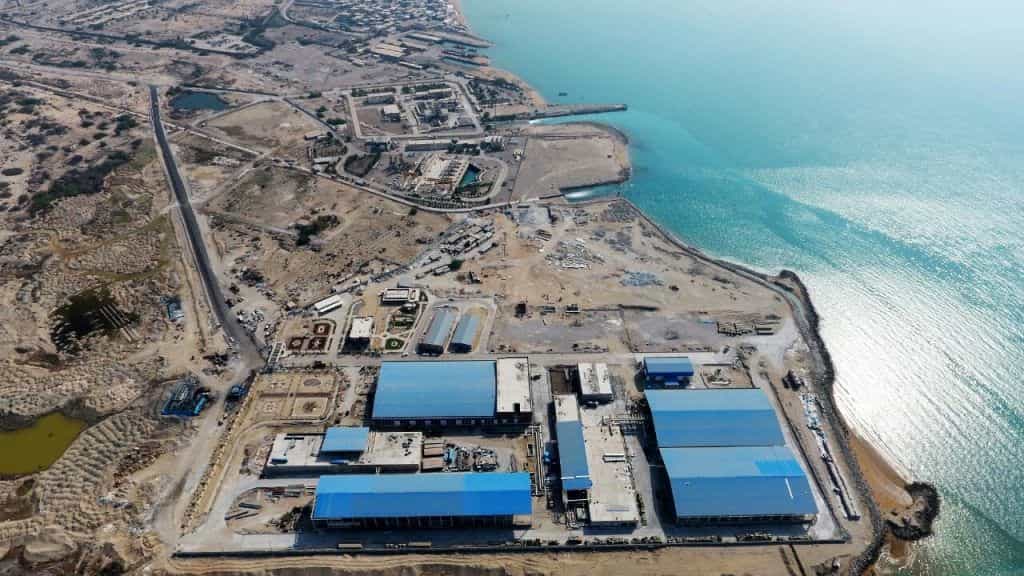
On March 7, 2026, a US strike hit a desalination plant on Qeshm Island, disrupting the water supply to 30 villages. The following day, an Iranian drone damaged a desalination facility in Bahrain, although Bahraini officials said that water and electricity services were not interrupted.
The most serious incident inside Iran occurred on June 10. A US air strike destroyed two water storage tanks in the Bomani area of Sirik County, Hormozgan Province. With a combined capacity of approximately 2,500 cubic metres, the tanks supplied drinking water to the town of Kuhestak and ten surrounding villages.
Their destruction left more than 20,000 people without normal access to safe water in temperatures ranging from 45 to 50 degrees Celsius. Local authorities were forced to dispatch mobile tankers and temporary pumps.
On July 17 and 19, Iranian missile and drone attacks twice damaged electricity-generation and desalination complexes in Kuwait, causing fires and disabling several production units. Kuwait obtains more than 90 percent of its drinking water through seawater desalination.
This sequence shows that attacks on water are no longer a marginal exception in war. Desalination plants, reservoirs, electricity lines and pumping stations have become targets within cycles of military action and retaliation.
The first consequences are not borne by armies. They fall on civilians who depend on these networks for drinking, cooking, medical treatment and everyday hygiene.
Violence That Continues After the Explosion
In Gaza, violence against water does not consist of isolated incidents. It forms part of a prolonged and recurring pattern.
On March 25, 2026, an attack on the electricity line supplying southern Gaza’s desalination plant reduced its daily capacity from 16,000 cubic metres to around 2,500, restricting access to water for nearly half a million people.
On April 17, two civilian contractors working for UNICEF were killed at a water-distribution station. UNICEF had previously reported that more than 85 percent of Gaza’s water and sanitation infrastructure was either fully or partially out of service. The amount of water available per person had fallen to less than half the emergency minimum of 15 litres a day.
In Ukraine, Russian attacks on electricity, heating and water systems have likewise become recurrent. According to Moldovan officials, a March 2026 attack on the Novodnistrovsk hydroelectric plant polluted the Dniester River and disrupted water access for tens of thousands of people. The river is the principal source of water for a large part of Moldova’s population.
These cases cannot simply be entered in the ledger of “collateral damage.”
Water is not an ordinary form of infrastructure. When a pump stops functioning, the result is not merely a dry tap. Hospitals can no longer sterilise equipment. Bakeries close. Sewage flows into streets and groundwater. Infectious diseases spread. Families are forced to leave.
Violence against water lengthens the distance between attack and death. It is precisely this delay that often conceals responsibility for the crime.
A person may survive the initial strike but later become ill from contaminated water, lose access to medical treatment or be forced from their home. The explosion is visible. The slower destruction of the conditions necessary for life is not.
A Global Pattern of Violence
Data collected by the Pacific Institute show that at least 420 violent incidents involving water were recorded in 2024—almost 20 percent more than in 2023 and 78 percent more than in 2022.
Water may be the subject of a dispute, an instrument of pressure or the victim of an attack. These categories frequently overlap.
A state may argue that a dam, power plant or electricity line was a legitimate military target, even when the predictable consequence is to deprive hundreds of thousands of civilians of water.
An armed group may not physically destroy a pipeline, but it can produce the same result by blocking fuel, chlorine, spare parts or access for technical workers.
For this reason, the category of a “water-related crime” must be defined more broadly than the bombing of a reservoir.
It includes acts that damage the quantity or quality of water resources and the ecosystems that depend on them: poisoning wells, releasing oil or chemicals, destroying dams in ways that risk flooding, or imposing discriminatory and coercive restrictions on access to water.
It also includes attacks on wells, desalination plants, pipelines, treatment facilities, sewage networks, irrigation systems, and the electricity and fuel required to operate them. Repair workers and the digital systems controlling water networks may themselves become targets.
Preventing repairs or obstructing emergency assistance can therefore also form part of the crime.
Targeting water is rarely an attack on a single point. It is an intervention in the entire social metabolism of a society.
What International Law Protects
International law is not silent on water.
Article 54 of Additional Protocol I to the Geneva Conventions prohibits attacking, destroying, removing or rendering useless objects indispensable to the survival of civilians, including drinking-water installations and irrigation systems, when the purpose is to deprive civilians of the means of survival.
The International Committee of the Red Cross recognises this protection as a rule of customary international law applicable to both international and non-international armed conflicts.
The principles of distinction, precaution and proportionality also prohibit direct attacks on civilian objects and attacks expected to cause civilian harm excessive in relation to the concrete and direct military advantage anticipated.
The Rome Statute of the International Criminal Court criminalises intentionally using starvation of civilians as a method of warfare, including by depriving them of objects indispensable to survival or deliberately obstructing relief. Drinking water plainly falls within the logic of this provision.
The right to sufficient, safe, accessible and affordable water is also recognised within the United Nations human rights system. In Resolution 64/292, the UN General Assembly recognised safe drinking water and sanitation as human rights essential to life and the enjoyment of all other rights.
Not every instance of damage to water infrastructure, however, automatically constitutes a war crime. The legal determination depends on the nature of the target, the attacker’s intent, the information available to commanders, the availability of less harmful alternatives and the foreseeable consequences of the attack.
The difficulty is that military assessments often calculate immediate damage while ignoring the chain of effects that follows.
When cutting electricity to a treatment plant leads within days to contaminated water, hospital closures and an outbreak of cholera, these consequences should not be dismissed as “indirect” and therefore less significant. They are ordinary and foreseeable results of destroying a vital system.
Making a Society Uninhabitable
The deliberate deprivation of water may also constitute a crime against humanity when it forms part of a widespread or systematic attack against a civilian population and is carried out with knowledge of that attack.
The threshold for proving genocide is higher and more complex. It requires evidence of the specific intent to destroy, in whole or in part, a national, ethnic, racial or religious group.
Thirst or the destruction of water facilities does not by itself prove genocide. But it may constitute one of the material acts through which destructive living conditions are imposed, as well as evidence relevant to determining genocidal intent.
Darfur offers an important example. The prosecutor of the International Criminal Court described the destruction, contamination and poisoning of wells and water pumps as part of operations directed against targeted communities. In 2010, the second arrest warrant for Omar al-Bashir included charges of genocide.
The warrant was not a conviction, but it demonstrated that the destruction of water sources can form part of a legal analysis of conditions of life deliberately calculated to bring about the destruction of a group.
In the Gaza case, the International Court of Justice stated on March 28, 2024, that famine was no longer merely a risk but was setting in, and ordered the unhindered provision of essential aid, including water. The court has not yet issued a final judgment on whether genocide has occurred.
The political significance of attacks on water is that they blur the line between killing, displacing and governing a population.
The destruction of a house can be seen immediately. The destruction of a water system makes life impossible gradually.
A person may survive the strike but then spend hours queuing for water, buy contaminated supplies, cook less food, stop washing and live with the risk that their child may become ill.
This form of violence occupies everyday time. It turns survival into a full-time occupation.
Water also exposes the inequalities of war. Armies possess reserves, filters, tankers and alternative supply routes. Besieged civilians do not.
In the Gulf states, the concentration of water production in a small number of major desalination plants creates extreme dependency. In Gaza, the water network’s reliance on electricity, fuel and permission to import equipment makes it especially vulnerable to siege. In Ukraine, attacks on electricity during winter disrupt water, heating and sanitation simultaneously.
The term “weaponisation of water” must therefore encompass more than the deliberate destruction of a dam or the poisoning of a well.
When decision-makers know that destroying electricity supplies, blocking fuel or preventing repairs will leave a population without water—and nevertheless continue that policy—water has become an instrument of coercion and violence.
Intent does not have to appear in an explicit order demanding that people be kept thirsty. It may be inferred from repeated patterns, the selection of targets, expert warnings, official statements, the rejection of repair requests and the refusal to reduce foreseeable harm.
Documenting the Full Chain of Harm
Documentation of war crimes must move beyond counting destroyed buildings.
For every attack on water infrastructure, investigators should record the facility’s capacity before and after the incident, the size of the population dependent on it, the duration of the disruption, changes in water quality, illness, deaths, forced displacement, environmental damage and any obstruction of repair work.
Satellite imagery, network-pressure data, water samples, hospital records, communications from system operators and information concerning the selection of targets must be examined together.
Without such documentation, deaths caused by disease or kidney failure in the weeks and months following an attack disappear from the chain of responsibility.
Assessments of proportionality must also explicitly include cascading consequences.
A commander who knows that a desalination plant depends on a particular electricity line, or that a reservoir supplies hospitals, cannot reasonably claim that the subsequent consequences were unforeseeable.
The protection of water workers, repair routes, fuel reserves and replacement parts must also be included in ceasefire agreements and interim judicial measures.
Recent legal developments have created additional possibilities. In 2025, the Office of the Prosecutor of the International Criminal Court finalised its policy on environmental crimes. The European Union’s Directive 2024/1203 strengthened criminal provisions concerning serious harm to water quality and ecosystems, while the Council of Europe adopted a new convention on the criminal-law protection of the environment in May 2025.
These instruments cannot replace the laws of war, but they may help address water pollution, long-term environmental destruction and the responsibility of companies and civilian officials.
The principal problem is not a shortage of law. It is the gap between law and power.
The state carrying out an attack may restrict investigations, classify relevant data and describe damage to water systems as a “secondary effect.”
Meaningful accountability requires independent investigations, cross-border jurisdiction, protection for local experts, publication of targeting data and reparations for affected communities.
Repairing pipelines is essential, but it is not enough. Those responsible must also face the political and criminal consequences of the decisions that caused the pipelines to rupture or explode.
Water is not merely a resource required to sustain life. It is the material form of life in common.
It moves through networks connecting homes, hospitals, farms and rivers. An attack on water deprives a society not simply of a commodity, but of the possibility of remaining in place, caring for others and building a future.
Naming “water-related crimes” is a legal and political attempt to make this reality visible: the countdown to death does not always begin with an explosion, and war does not always end when the shooting stops.