

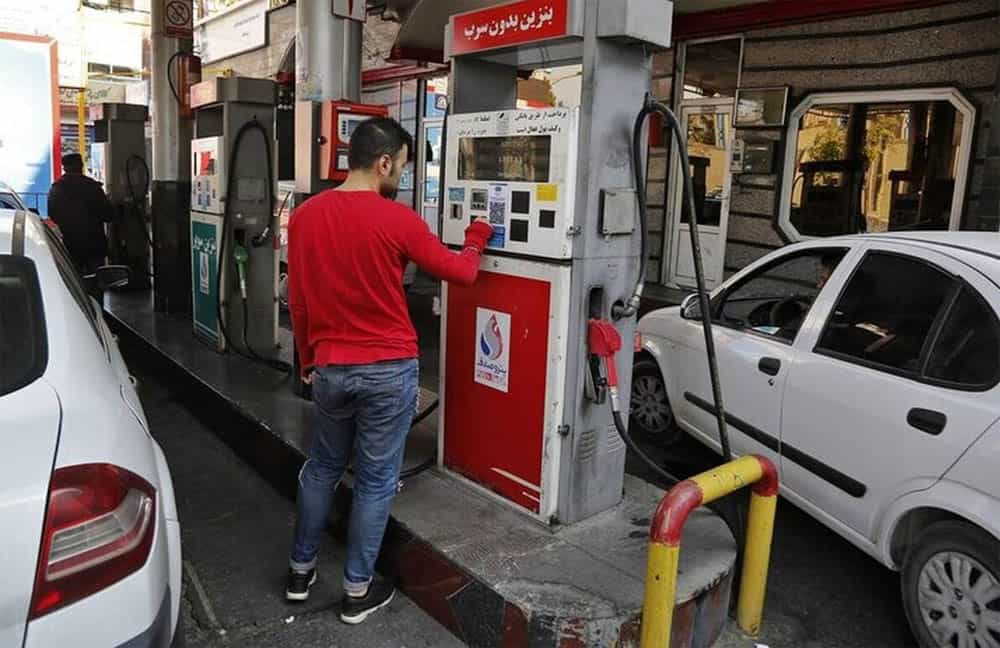
As war, sanctions, and a maritime blockade deepen Iran’s fuel crisis, the government faces a politically explosive choice: reduce subsidies, raise prices, or risk worsening shortages.
Iran’s gasoline shortage has become a growing crisis for the government at a time when the country remains affected by war and the future of negotiations with the United States remains uncertain. Resolving this crisis after years of delay—especially following the nationwide protests of November 2019—could once again ignite public anger.
Nasser Ashouri, secretary of Iran’s Petroleum Refining Industry Employers’ Association, warned on August 16, 2026, that if current conditions continue, Iran’s gasoline deficit could reach 15 million litres per day by early September.
According to Ashouri, average gasoline distribution at the beginning of July stood at 134 million litres per day—at least 11 million litres below domestic consumption. One of the main causes of the shortage, he said, is the maritime blockade, which has limited Iran’s ability to import fuel from the United Arab Emirates and Russia.
Despite years of official claims that Iran had achieved self-sufficiency in gasoline production, the country has continued to spend billions of dollars annually to meet domestic demand. Official estimates put the annual cost of gasoline imports at up to $6 billion.
Meanwhile, the government has been exploring different scenarios for managing consumption. On August 13, the sudden sale of gasoline at a price of 78,000 tomans per litre in Kerman briefly revealed one possible plan for increasing fuel prices. The decision was quickly reversed amid fears of public backlash, but government officials have indicated that discussions over fuel management and possible price changes are continuing.
Three Scenarios for Gasoline
Iran’s parliament’s Energy Commission has been examining several options. A previous report by the Parliamentary Research Centre outlined three possible approaches.
The first scenario is maintaining the current system: keeping existing prices and continuing to distribute the available subsidised gasoline until supplies run out.
The second scenario would maintain subsidised gasoline quotas while selling additional consumption at market prices. Under this model, the existing daily supply of around 121 million litres would continue to be distributed through quotas, while any additional demand would be met at a market price that could exceed 80,000 tomans per litre.
The third scenario, previously proposed by President Masoud Pezeshkian during his election campaign, would change the basis of gasoline subsidies from vehicles to individuals. Under this model, part of the country’s gasoline production would be allocated to public transportation, while the remaining amount would be distributed among citizens rather than cars. People without vehicles would then be able to sell their allocated share to those who need more fuel.
Each option carries significant consequences.
Reducing gasoline supplies could disrupt businesses, particularly informal economic activities, while creating longer queues and possible conflicts at fuel stations.
Increasing gasoline prices could also intensify inflation. Unlike some free-market arguments that minimise its broader effects, gasoline in Iran functions as a benchmark commodity, similar to foreign currency. Any increase in fuel prices can quickly raise transportation costs and push up prices across other sectors.
The third scenario could potentially provide an additional source of income for poorer households, particularly in a country where poverty has expanded and many people have lost jobs. Supporters argue that the current system disproportionately benefits wealthier citizens who own more vehicles and consume more fuel.
Mohammad Bahrami, a member of parliament’s Energy Commission, defended the proposal:
“This is a positive development because gasoline belongs to the entire nation. Today, those who have more money buy more cars and consume more gasoline. Those who have more benefit more from a government subsidy whose cost is extremely high, and this is a violation of national interests. The current price paid by consumers is extremely low. The reality is that poorer groups benefit less, while those who have more wealth use more.”
However, implementing this system would require administrative infrastructure that critics say is not yet in place. The difficulties surrounding previous attempts to reform cash subsidies show the challenges of implementing such a policy.
The Poisoned Chalice Pezeshkian Must Drink
Increasing gasoline prices in Iran is not merely an economic decision; it is directly linked to political stability and security. The experience of November 2019, when the government abruptly raised fuel prices and triggered nationwide protests, has made successive governments deeply cautious about any reform of gasoline subsidies.
Members of parliament have said that authority over energy pricing has already been delegated to the government under Iran’s Seventh Development Plan. Former MP Gholam Ali Jafarzadeh Imanabadi, responding to parliament’s opposition to fuel price increases, argued that lawmakers should accept responsibility rather than shifting the burden onto the government.
At the same time, he warned that the current moment may be the worst possible time for such a decision. Inflation remains extremely high, with year-on-year inflation exceeding 80 percent during the first months of 2026 and food inflation surpassing 100 percent. Under such conditions, an increase in gasoline prices could not only intensify inflationary pressures but also deepen public anger.
Yet the government faces pressure to act. The maritime blockade has severely restricted gasoline imports, while parts of Iran’s refining capacity have reportedly been affected by attacks and wartime disruptions. In addition, some domestic gasoline production has reportedly been redirected toward military needs.
This has placed President Masoud Pezeshkian’s government in an extremely difficult position. In a context where war has already weakened the government’s authority and any unpopular decision could trigger new unrest, determining the future of gasoline prices has become a politically explosive choice.
A similar dilemma confronted Mahmoud Ahmadinejad’s government when it finally implemented a long-delayed subsidy reform programme, replacing some commodity subsidies with direct cash payments. Even some economic officials and advisers associated with former president Akbar Hashemi Rafsanjani praised the move, arguing that Ahmadinejad had implemented a policy previous governments had lacked the political courage to pursue.
Pezeshkian now faces a similar challenge. Years of postponing fuel price reforms, combined with the economic costs of war, sanctions, and restrictions on fuel imports, have left the government with limited options.
A gasoline shortage could trigger widespread protests and disrupt transportation systems. Raising prices, however, could deepen dissatisfaction at a moment when Iran remains vulnerable to further conflict. It could also undermine the government’s stated efforts to control inflation.
The Pezeshkian administration has shown that it remains committed to reducing subsidies and liberalising prices. In the first months of 2026, prices for many food items and medicines increased significantly. But the political obstacle to raising gasoline prices remains the same: fear of a popular backlash.
If Pezeshkian raises gasoline prices, his government could become one of the most unpopular administrations in recent Iranian history—even if he survives internal political pressure. If he avoids the decision, he will have to find another way to manage a growing energy crisis.
The Rule of Vested Interests
The deeper cause of Iran’s gasoline crisis, this analysis argues, is not only production shortages or damaged refineries, but also the country’s highly inefficient domestic automobile industry.
For years, restrictions on vehicle imports—justified in the name of protecting domestic production—have benefited powerful economic interests while imposing a heavy cost on the country through increased fuel consumption.
Members of parliament, influenced by actors connected to the automobile industry, have repeatedly opposed lowering import tariffs on foreign vehicles. Energy and economic researchers argue that if cars in Iran were produced according to international efficiency standards, the country would not only avoid gasoline imports but could potentially have surplus fuel for export.
Energy researcher Mehdi Hashemzadeh said in a 2024 television programme that domestic Iranian cars consume roughly twice the global average. While Iran’s Ministry of Industry claims that the average fuel consumption of domestic vehicles is 7.2 litres per 100 kilometres, experts argue that the real figure is significantly higher, at least around 9 litres per 100 kilometres.
Hashemzadeh argued that if Iranian vehicles met global efficiency standards, the country’s daily gasoline demand would fall to around 60 million litres—meaning domestic production would exceed consumption.
A June 2026 report by Mehr News Agency similarly noted that domestic vehicles consume close to eight litres per 100 kilometres on average and that a significant share of Iran’s vehicle fleet consists of old and worn-out cars whose fuel consumption is even higher.
According to parliament member Mostafa Pourdehqan, the 2026 budget required the government to reduce vehicle import tariffs to below 20 percent. However, he said the measure has not yet been implemented, partly because of wartime conditions.
Some lawmakers have accused domestic automobile manufacturers of maintaining political influence and blocking competition. One of the most prominent defenders of domestic automakers has been Mostafa Mirsalim, a member of the Islamic Coalition Party.
Former MP Lotfollah Siyahkali, meanwhile, accused opponents of vehicle imports of representing a “car-import mafia”—groups that benefit from importing luxury vehicles while opposing the import of affordable, fuel-efficient cars needed by ordinary citizens.
In Iran, powerful networks are often blamed for economic problems under the broad label of “mafia,” but the individuals and relationships behind these networks are rarely publicly identified. Former parliament speaker Mohammad Bagher Ghalibaf, for example, accused “mafias” of profiting from vehicle imports, while Mirsalim claimed that only a small number of wealthy families benefited from the system.
Vehicle importers have generally focused on expensive luxury cars, whose import requires special permissions and access to foreign currency—resources often dependent on political connections. Meanwhile, the import of cheaper, fuel-efficient vehicles has remained restricted.
The result has been not only higher prices and lower-quality domestic cars, but also what some economists describe as billions of dollars in annual economic losses due to excessive gasoline consumption.
The networks benefiting from the automobile industry cannot be separated from broader structures of power. The same applies to groups involved in gasoline production, fuel imports, and sanctions-related economic arrangements.
These interconnected interests have helped create the current situation: a government forced to choose between limiting gasoline consumption or raising prices, with either decision carrying significant political consequences.
In a country where the gap between society and the state has become extremely deep and public trust in government institutions is severely weakened, authorities cannot expect citizens who have experienced years of economic pressure and repression to support painful decisions.
Perhaps this is the government’s hardest decision — even harder than deciding whether to reach an agreement with the United States or continue confrontation and war.
Qaem Hosseini’s execution comes amid a broader wave of prosecutions against people arrested during the January 2026 protests. The Committee for Following Up on the Situation of Detainees reported that four residents of Sari—Mehrshad Ahmadi, Naser Bajan, and Danial Nik-Naqsh, among others—remain imprisoned on charges including “waging war against God” (moharebeh) and “corruption on earth” (ifsad fel-arz), facing the possibility of severe sentences.
The group also raised concerns over cases involving alleged forced confessions and prolonged detention without trial. In another case, nine residents of Esfarayen have been charged in connection with the January protests, facing charges including moharebeh, corruption on earth, murder, and acts against national security. Two of those defendants were under 18 at the time of the alleged events.
These cases illustrate the increasingly securitised atmosphere in Iran, where wartime conditions have coincided with the expansion of security charges and the use of the death penalty against those accused of involvement in protests.