

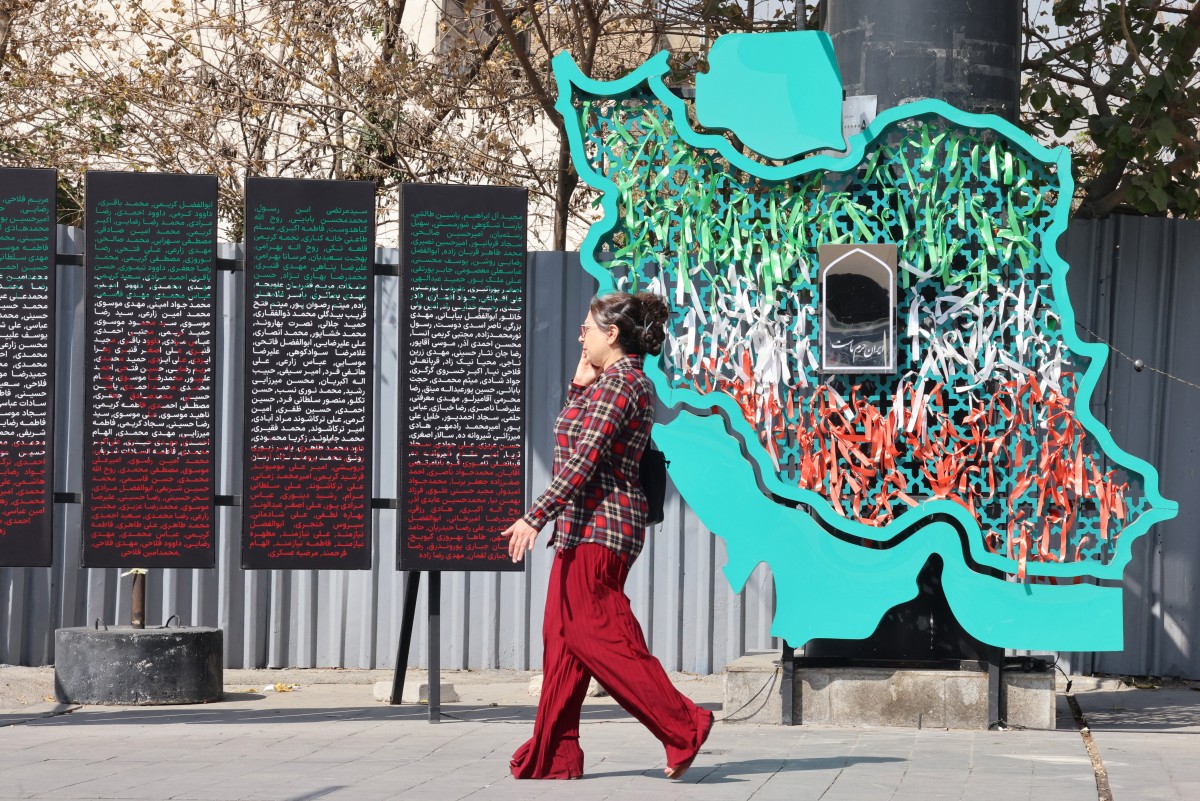
When the European Union and the Gulf Cooperation Council issued a joint statement on October 6, demanding that Iran end its “occupation” of three Persian Gulf islands claimed by the United Arab Emirates, few in Brussels seemed to grasp the weight of that word—“occupation”—for Iranians. From steadfast loyalists of the Islamic Republic to secular, pro-Western dissidents, the response was swift and fierce. To Iranians, these islands aren’t mere bargaining chips in regional diplomacy; they are emblems of sovereignty, deeply woven into the fabric of national identity. Yet, once again, Europe showed little regard for the sensitivities of the very society it claims to champion.
This misstep stands in sharp contrast to Washington’s more measured approach. When Donald Trump visited the Gulf earlier this year, speculation swirled over whether he would use the term “Arabian Gulf”—a seemingly small choice with profound symbolic meaning for Iranians. In the end, Trump sidestepped the issue, a move many in and outside Iran saw as deliberate, bolstering their trust in his diplomatic instincts.
Among Western actors, Israel has shown the sharpest understanding of the divide between Iran’s Islamist rulers and its Western-leaning dissidents. For decades, Israel backed armed separatist groups in western Iran as a strategic tactic to pressure Tehran, with little regard for the democratic opposition. But since the October 7 attacks, Israeli leaders have shifted gears, directly engaging Iranian dissidents and appealing to their patriotic pride. In interviews with Persian-language opposition media, Benjamin Netanyahu has spoken reverently of Iran’s ancient civilization, vowing that Jews will “repay their ancient debt to Cyrus the Great” by supporting Iran’s liberation.
This shift mirrors a surprising change in the Islamic Republic’s own rhetoric. During the twelve-day war that decimated much of the IRGC’s top leadership, the regime’s propaganda shed its usual religious fervor for overt nationalism. The defining moment came when Ayatollah Khamenei, after weeks out of the public eye, appeared and requested his official singer perform “Ey Iran”—a patriotic anthem long shunned by the regime’s clerical base. Opposition figures seized the moment, derisively calling regime loyalists “twelve-day patriots” for their sudden embrace of nationalism.
Paradoxically, Iran stands apart in the Islamic world: its rulers are among the most radical, yet its society is far more secular, Western-oriented, and democratic than those of neighboring countries with milder regimes. Just three years ago, Iranians launched a mass movement against mandatory Islamic dress codes—a rebellion with unmistakably liberal undertones. Yet the West has failed to tap into this immense civic potential to influence Tehran’s behavior, whether through regime change or gradual reform. Western governments have yet to earn the genuine trust of Iran’s secular, pro-Western opposition.
In 2009, during the Green Movement, when millions of protesters in Tehran urged Barack Obama to choose between them and the Islamic regime, he opted for secret assurances to Iran’s rulers, signaling no intent to pursue regime change. The outcome was predictable: the protests were crushed. Even when Western states emphasize human rights to support democratic activists, their efforts often backfire, reflecting a profound misunderstanding of Iran’s civic landscape.
A sprawling network of human rights organizations, nearly all funded by Western grants, has created a professional class of exiled experts, commentators, and activists—an opposition industry driven by the same market logic as any other: the client is always right. Too often, their reports are tailored to meet donors’ expectations rather than to unravel the complexities of a society that defies Western frameworks. As an old Persian saying goes, “We serve the king, not the eggplant.”
This misreading stems from a deeper intellectual flaw. Western analysts often view Iran’s internal tensions through Europe’s historical lens, where nationalism emerged from the unification of fragmenting tribes into modern nation-states. Iran’s story is different: a civilization far older than the modern state, where cultural diversity has always been central to national identity. Reports steeped in postcolonial or identity-politics frameworks, which emphasize Iran’s ethnic divisions as the root of opposition to the regime, may resonate with Western audiences but horrify Iranian dissidents. For them, the struggle against the Islamic Republic is a rebellion against its ummah-oriented ideology—a religious echo of communist internationalism. Any Western attempt to inflame ethnic divisions evokes a primal fear: the disintegration of Iran itself, a fate worse than enduring its current rulers.
The traumas of Syria and Libya have only deepened this anxiety. The term “Syrianization” has become a chilling refrain among dissidents, symbolizing the nightmare of ethnic conflict and national collapse. Every Western policy misstep risk stoking this collective fear—a dynamic Iran’s rulers exploit, constantly warning of Western plots to “dismember Iran.”
The West’s relationship with Iran’s pro-Western opposition is thus caught in a paradox. Dissidents dream of replacing an Islamist regime with a liberal democracy inspired by the West, nostalgic for Iran’s pre-revolutionary role on the global stage. They aspire to rebuild a democratic, strong national state. Yet many doubt whether the West truly welcomes the resurgence of a powerful, independent Iran.
Meanwhile, the regime’s propaganda relentlessly claims that Western powers prefer a weak, isolated Iran, forced to trade its national interests for survival. If the West truly wants to harness Iran’s opposition to reshape Tehran’s behavior, it must directly challenge this narrative. Western governments should send a clear, unequivocal message to Iranian society: they have no desire to fracture the country and would warmly welcome a stable, engaged Iran in the global order. The recent EU-GCC joint statement does little to build that essential trust. Instead, it risks alienating the very voices the West claims to support.
To move forward, the West must listen to Iran’s dissidents—not through the distorted lens of its own assumptions, but with a genuine commitment to understanding their aspirations. Only then can it forge a partnership that empowers Iran’s people to shape their nation’s future, restoring its place as a proud, democratic force in the world.