

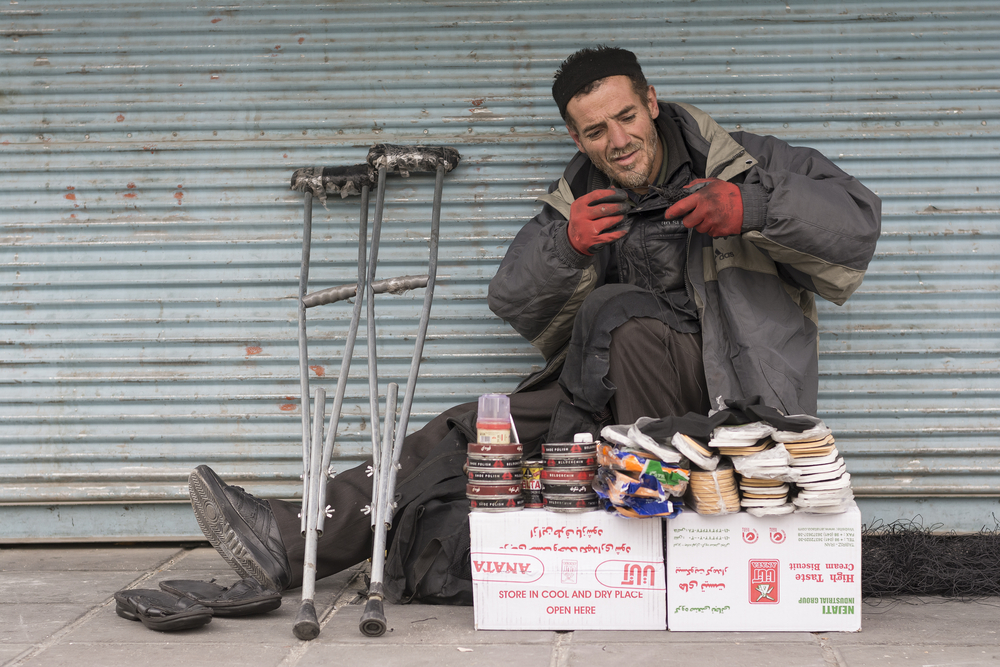
Roya and Zahra’s stories show how poverty, war, inflation, internet shutdowns, and neglect turn disability into structural exclusion in Iran.
The stories of Roya and Zahra, both from inside Iran, offer a picture of life for people with disabilities in a crisis-ridden country; a place where poverty, war, inflation, internet shutdowns, and the absence of social support have turned disability into a form of structural deprivation. This report shows how economic, military, and security pressures push people with disabilities to the margins of life, stripping many of them of even the most basic possibilities of medical care, work, and independent living.
Roya: Disability, Poverty, and the Cost of Survival
Roya, 35, the mother of a one-year-old child, has lived for years with the consequences of an accident that happened when she was a child. She says she was playing in the alley when a car hit her and the driver fled. Her family, lacking financial means, did not pursue the case seriously. They thought the injury was superficial, but the result was the loss of her right leg and, later, gradual damage to her spine. Doctors eventually told her she needed spinal cord surgery. For years, she lived with pain and severe limitations. She married and made handicrafts at home to help with expenses. The meager welfare payment she received from the State Welfare Organization, Iran’s main public body for disability and social support, did not even cover the cost of her painkillers.
When she could no longer walk, doctors warned her that if she did not undergo surgery, she would lose her other leg as well. She and her husband borrowed money and sold household items to pay for the operation. “No organization was willing to support us. We lived in a small town and had to go to Tehran for the surgery. The costs were several times higher.” A week after the operation, she found out she was pregnant. “I wanted to have an abortion. We had no financial means, and I did not have the physical capacity to become a mother. I was ready to give up my dream of motherhood.” But restrictive abortion laws and the high cost of illegal abortion left her trapped. “They said it was a crime. And even if I wanted to do it, I would have had to pay a lot of money. It was risky for them.”
The child was born, and Roya lost her left leg as well. Today, she is no longer able to walk at all. “I couldn’t take care of the baby. There was no one to help me. We were even struggling to buy baby formula.” Her husband left the house for a while and intended to separate from her. “A woman with a disability in this society is forced to accept many things and remain silent.” The internet shutdown, which cut off her only means of selling handicrafts, destroyed even that small source of income. As she explains: “The money I get from welfare is not enough to buy even one kilo of meat. I don’t buy my own medicine so I can buy formula for the baby.” Price increases after the recent war and military tensions have intensified the pressure. “Before, we could buy chicken once a month. Now even that is not possible.”
Zahra: Blindness, War, and the Fear of Losing Family
Zahra, 29, blind and unmarried, offers another account of life with disability from another corner of this crisis. She has been blind since birth and grew up with discrimination, pitying looks, and structural limitations. “Since the war began, I have barely been able to leave the house. The sound of missiles and jets gave me panic attacks. I couldn’t breathe.” Out of fear that something might happen to her family, she would not let anyone leave the house. “The thought of losing my family is terrifying. Only a blind person knows what it means to be without family. Here, no one supports you.”
Despite having a university degree, Zahra has never found a job. “There is no work even for able-bodied people, let alone for us.” She says her greatest pain is “the feeling of being a burden.” “My father and brother barely manage to pay the household expenses. I wanted to help, but there is no work for us.”
Disability as Structural Exclusion
Roya and Zahra’s stories offer a clear picture of a reality that turns disability in Iran into a socially erased condition. In a country where support structures have deteriorated, welfare payments are tiny and insufficient, rehabilitation services are private and expensive, insurance systems are ineffective, and urban accessibility is almost nonexistent, people with disabilities in many cities cannot even leave their homes. Runaway inflation has multiplied the costs of treatment and care, and many families cut back on treatment and care for relatives with disabilities simply to cover more urgent expenses.
Alongside economic pressure, the militarized and security-driven climate has made life even harder for people with disabilities. War and military threats produce an added layer of fear for those who depend on family support. Internet shutdowns, which for many people with disabilities were the only means of earning income or staying connected to the outside world, have left them even more isolated. In such a situation, disability is not simply a medical condition, but a form of structural deprivation that deepens with every new crisis.
People with disabilities in Iran have not only been excluded from politics and the economy; they are also rarely seen even within discourses of justice. They live on the margins of the margins: a group on whose bodies and lives economic crises, war, inflation, and austerity policies fall with particular force. Yet stories like those of Roya and Zahra show that people with disabilities are not merely victims. They carry an experience that can offer a more precise picture of Iran’s social reality: a reality in which human vulnerability, abandonment, and social fragility have become more visible than ever.