

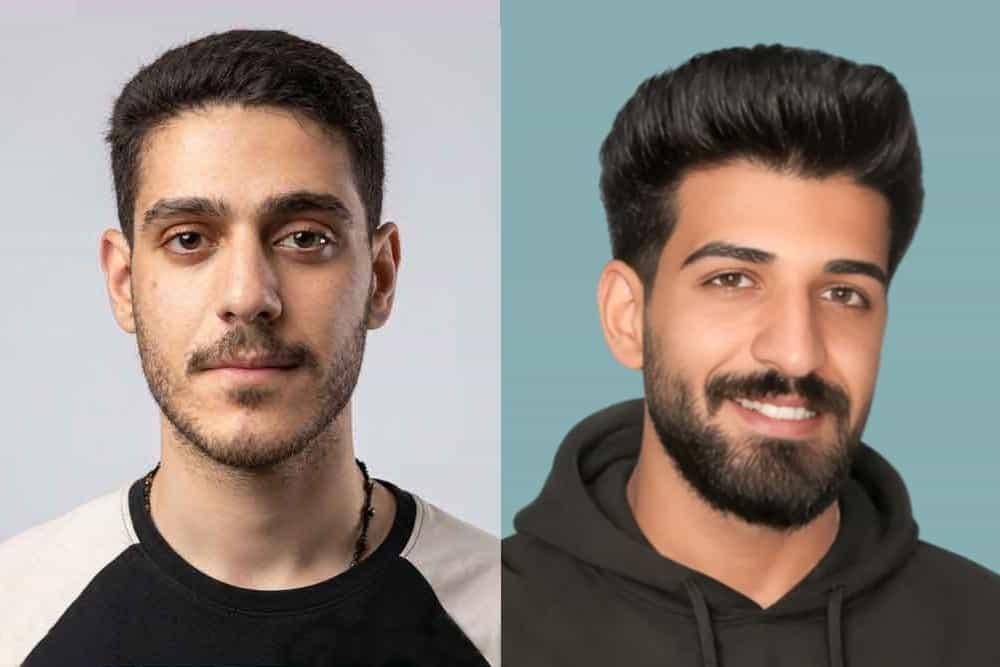
Four defendants in Isfahan’s Alikhani Square case have been executed, while dozens more face death sentences amid torture allegations and summary trials.
Abolfazl Sepahi and Amirhossein Safari, two political prisoners arrested during the January 2026 uprising in Isfahan, were publicly executed on the morning of Tuesday, July 28.
According to Mizan, the news agency affiliated with the Islamic Republic’s judiciary, the two men were defendants in the “Alikhani Square” case—a mass prosecution arising from clashes between protesters and security forces in Isfahan on January 8, in which authorities say four security personnel were killed.
Videos and reports published on social media indicate that people gathered at the execution site protested against the hangings. Reports described a heavy security presence, confrontations with protesters, and attempts to disperse the crowd. Some sources reported gunfire, although Iranian authorities have not commented on those claims.
The case dates to January 8, at the height of the nationwide uprising and the beginning of its bloodiest phase. HRANA later documented at least 7,007 confirmed deaths across the uprising and said a significant proportion occurred on January 8 and 9, without providing a verified total for those two days alone. Iran Human Rights, citing witnesses and medical sources, separately estimated that more than 5,000 people were killed in Isfahan and Shahin Shahr during those two days.
No independent and fully verifiable account of the Alikhani Square clashes has been published. Iranian authorities claim that four members of the Basij and police were killed. At least 59 people were subsequently prosecuted, and human-rights organisations have reported between 12 and 14 confirmed death sentences in the case.
The defendants were reportedly tried collectively in only three court sessions, each lasting approximately one hour. Their sentences were issued in July 2026, while many courts were operating on reduced schedules during the war, and were upheld by the Supreme Court soon afterwards.
Abolfazl Sepahi was reportedly sentenced to death three times, while his brother Alireza Sepahi received four death sentences. Several other defendants were each sentenced to death twice.
Amirhossein Safari, born in 1998, was the oldest defendant in the case. Several others were around 18 at the time of their arrest.
The judiciary convicted Sepahi and Safari on charges including “membership in rebellious groups acting against national security,” moharebeh, or “waging war against God,” “corruption on earth,” destruction and burning of public property, and involvement in the deaths of four police officers.
These allegations have not been independently verified.
Human-rights sources say the two men were subjected to physical and psychological torture and that their confessions were obtained under coercion. Their families had also criticised the denial of effective access to independent lawyers, violations of the right to a defence, and the absence of a fair trial.
On July 19, the judiciary executed two other defendants in the same case: Erfan Esfandiyari and Gol-Mohammad Mohammadi. Esfandiyari was reportedly under 18 at the time of the alleged offence, while Mohammadi was an Afghan citizen.
Eight other defendants remain at immediate risk of execution.
The public hangings have renewed criticism of the Islamic Republic’s use of capital punishment—particularly public execution—to intimidate society and suppress civil and political opposition.
More Than 70 Protesters Reportedly Face Execution
Before the latest executions, Iran Human Rights warned that more than 70 people detained during the January uprising were on death row in Isfahan Central Prison, also known as Dastgerd Prison.
The organisation confirmed the identities of 31, including three Afghan citizens and at least one person who was under 18 at the time of the alleged offence. Twenty-six were being held in pre-execution solitary-confinement cells or isolation units.
Families have been pressured not to speak publicly. Prisoners who launched hunger strikes against the sentences were reportedly threatened into ending them.
The organisation has documented allegations of torture, prolonged solitary confinement, coerced confessions, and trials conducted without effective access to lawyers.
These cases are unfolding amid a wider wartime and post-war crackdown. HRANA found that although Iran’s overall number of executions initially declined during a 65-day period of conflict, political and security cases rose to 71 per cent of those carried out—compared with seven such executions during the equivalent period a year earlier.
Zamaneh spoke with Behnam Daraeizadeh, a legal expert and senior Persian-language editor at the Center for Human Rights in Iran.
Two Mass Prosecutions in Isfahan
Daraeizadeh said two major cases are central to the prosecution of January protesters in Isfahan: the Alikhani Square case and the separate Martyrs’ Square case.
The Alikhani case involves at least 59 defendants. In addition to the death sentences, at least 23 people reportedly received prison terms of between five and ten years.
The Martyrs’ Square case involves 16 people, many of whom worked in or were connected to shops around the square. Prosecutors allege that Molotov cocktails were prepared inside one of the shops during the January 8 protests.
An Islamic Revolutionary Guard Corps officer and an unhoused man were killed during the events. However, the indictment reportedly does not directly charge the defendants with either death, and no specific evidence linking them to the killings was presented.
The defendants face charges including moharebeh, destruction of public property, assembly and collusion, and propaganda against the state. They include 20-year-old twin sisters Romina and Taraneh Rahimi.
Defence lawyers were reportedly denied full access to the files before trial, and at least one defendant told the court that he had been tortured during interrogation.
Daraeizadeh compared the prosecutions to the mass cases brought after the Woman, Life, Freedom uprising:
“These cases resemble the mass prosecutions that followed the Woman, Life, Freedom uprising, including the Ekbatan case, in which more than 50 people were arrested.”
Torture, Forced Confessions and Denial of Counsel
Daraeizadeh said the cases reflect the judiciary’s systematic denial of basic fair-trial rights:
“Many detainees were denied access to an independent lawyer from the moment of arrest. We have also received numerous reports of pressure and torture used to obtain forced confessions, as well as hastily conducted court proceedings in which even the minimum guarantees of a fair trial were ignored.”
Most of those arrested were young people with no previous experience of detention or political organisation, he said. Many did not know how to exercise the right to remain silent or demand access to a lawyer.
“This lack of knowledge and experience made them far more vulnerable to psychological pressure, threats, intimidation, torture, and deceptive promises used to extract confessions.”
Solidarity Inside Iran and Targeted International Pressure
Daraeizadeh argued that opposition inside Iran remains the most important force capable of preventing further executions.
He pointed to prisoners’ hunger strikes, gatherings by families outside prisons, and civil campaigns against capital punishment.
International action also matters, he said, but should take the form of diplomatic and media pressure, international legal mechanisms, and targeted human-rights sanctions—not broad economic sanctions that harm the population.
“These measures can help advance Iran’s movement for justice and hold human-rights violators accountable.”
On July 24, the European Union sanctioned five judges from Iran’s regional Revolutionary Courts over their role in trials of political dissidents and religious minorities, including cases resulting in death sentences and other severe punishments.
Daraeizadeh described such measures as legitimate pressure directed at those responsible for human-rights violations rather than at the Iranian population.