

As normalization with the United States becomes thinkable, the Islamic Republic may have to turn its shock therapy inward, targeting its own loyal hardliners.
Context: This opinion piece should be read against the background of widening tensions inside the Islamic Republic’s ruling bloc after the war and the memorandum of understanding. The question of U.S.–Iran relations, possible normalization with Washington, and the Islamic Republic’s integration into Western global capital has sharpened internal divisions. Certain hardline factions view normalization with the United States and integration into Western-led circuits of capital as a red line.
The Islamic Republic stands on the threshold of political shock therapy. Just as in previous years, under the name of “economic surgery,” it decided to impose the cost of reforms on society through a sudden shock — from November 2019 to the economic policies of recent years — it now seems that, in order to overcome one of its greatest deadlocks, namely its relationship with the world and especially with the United States, it has been forced into political shock therapy. This shock will end in a major surgery, and like any surgery, it will not be without pain, bleeding, and victims.
If the Islamic Republic, after Khamenei I, wants to enter a new phase, it will have to redefine one of the most important components of its political identity over the past four decades. For the system’s second leader, hostility toward the United States was not merely a foreign policy position; it became part of the Islamic Republic’s ideological identity, an identity that was ultimately tied to regional confrontations and the crises of recent years. Changing this policy now is therefore not simply a change in diplomatic tactics, but a reconstruction of the Islamic Republic’s official narrative about itself.
This time, however, shock therapy has new victims. If, in economic surgery, the people paid the main cost, now it is the turn of part of the regime’s own loyal forces.
For years, political eulogists, hardline media outlets, radical principlist currents, and part of the forces known as Hezbollahis have turned opposition to negotiations with the United States into one of the most important markers of revolutionary commitment. They described any form of dialogue with words such as “compromise,” “surrender,” and “retreat from ideals,” and they subjected any government that moved toward negotiation to their fiercest attacks. If today the system has decided to move toward agreement and de-escalation, the very forces that were for years tasked with defending this narrative will themselves become obstacles to the new one. For this reason, political shock therapy seems difficult without the removal or marginalization of part of these same forces. Those who spent years producing the discourse of “resistance” may now also pay the price for changing that very discourse.
Of course, this is not the first time the Islamic Republic has resorted to internal purges in order to preserve itself. Since the system’s formation, different factions have been marginalized or eliminated at various moments, either after their mission ended or when they came into conflict with the interests of the ruling order. From the sidelining of nationalist and liberal forces in the early years after the revolution to the gradual elimination of sections of the Islamic left, reformists, and even principlists, these purges have always been part of the mechanism through which power is rearranged inside the Islamic Republic. Therefore, splits and factional conflicts cannot be read simply as signs of the regime’s collapse. The experience of the past four decades shows that at critical junctures, the Islamic Republic has usually given the structure of power a new arrangement by eliminating part of its own forces. If today the most hardline section of the ruling establishment is exposed to removal or restriction, this may be less a sign of the Islamic Republic’s end than the beginning of a new stage in its internal reconfiguration.
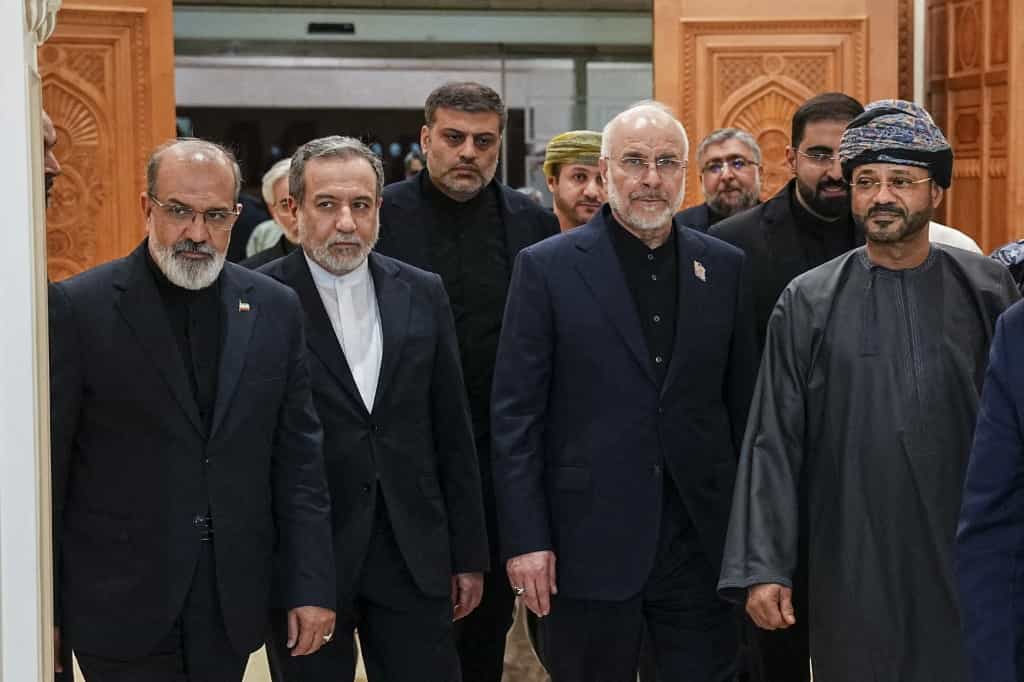
In this process, Mohammad Bagher Ghalibaf plays an important role. Over the past two decades, Ghalibaf has repeatedly shown that at critical moments, rather than thinking primarily of his own personal project, he accepts the role required by the Islamic Republic. In different elections, he has sometimes stepped aside, sometimes accepted the cost of the system’s decisions, and sometimes taken on responsibilities that others were unwilling to accept. Despite all his self-importance, he has always presented himself as a manager whose mission is to advance the system’s projects, not necessarily his own political project. Haj Bagher, the commander, the doctor, or the captain — whatever name he is called, whether in praise or mockery — he has ultimately remained one of the most trusted figures in the structure of power, and in its most powerful section: the Office of the Supreme Leader.
If the Islamic Republic has decided to pursue negotiations with the United States, it needs someone who has a Revolutionary Guard and revolutionary background, is trusted inside the power structure, and can carry the political cost of this turn. In such a scenario, Ghalibaf can play the same role he has always played: the role of the system’s self-sacrificing loyalist.
In this narrative, he would not merely be a negotiator, but the system’s political shield: someone who must endure the wave of attacks, insults, and accusations from the same hardline currents, political eulogists, and ideological base alongside whom he himself had long been defined. If an agreement with the United States is to take shape, part of its social and media cost will be placed on Ghalibaf’s shoulders so that the main structure of power suffers the least possible damage.
Perhaps this is the paradox of the Third Islamic Republic: a system that, in order to survive, must break its most important ideological taboo; in order to break it, must sideline part of its most loyal forces; and in order to carry out this project, must use a politician whose specialty for years has been accepting costly missions and playing the role of sacrifice in order to advance the system’s major decisions.
These days, the Islamic Republic has entered a stage in which “economic shock therapy” is no longer enough. Now it is the turn of political shock therapy: a shock that this time targets neither people’s livelihoods nor the regime’s opponents, but the arrangement of forces inside the ruling establishment.