

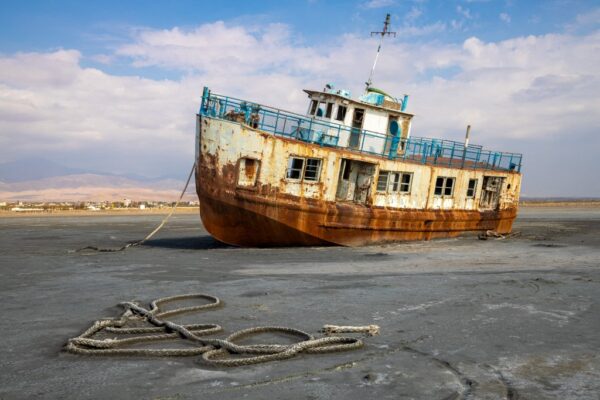
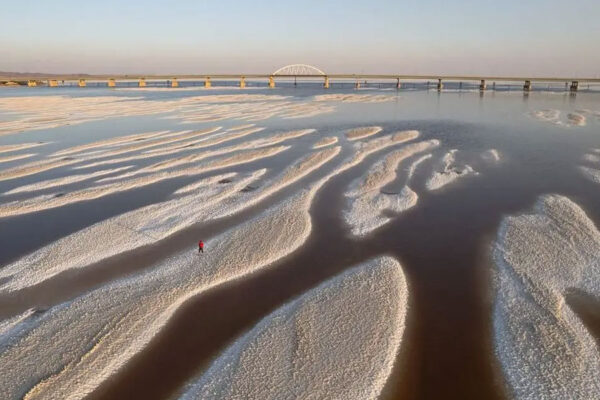
Once the azure jewel of Iran, Lake Urmia has officially collapsed into a salt desert. Decades of mismanagement, damming, and climate change have turned it into an ecological and social disaster—fueling dust storms, forced migration, and health crises across northwest Iran.
Lake Urmia, once the turquoise jewel of Iran and among the largest saltwater lakes in the world, is now officially dead. What was once a thriving ecosystem, a refuge for migratory birds, and a lifeline for local communities has collapsed under decades of mismanagement, reckless water policy, and accelerating climate change. Today, its vast dry bed has become a salt desert—an ecological catastrophe with profound social, economic, and health consequences for millions of Iranians.

A Disappearing Lake
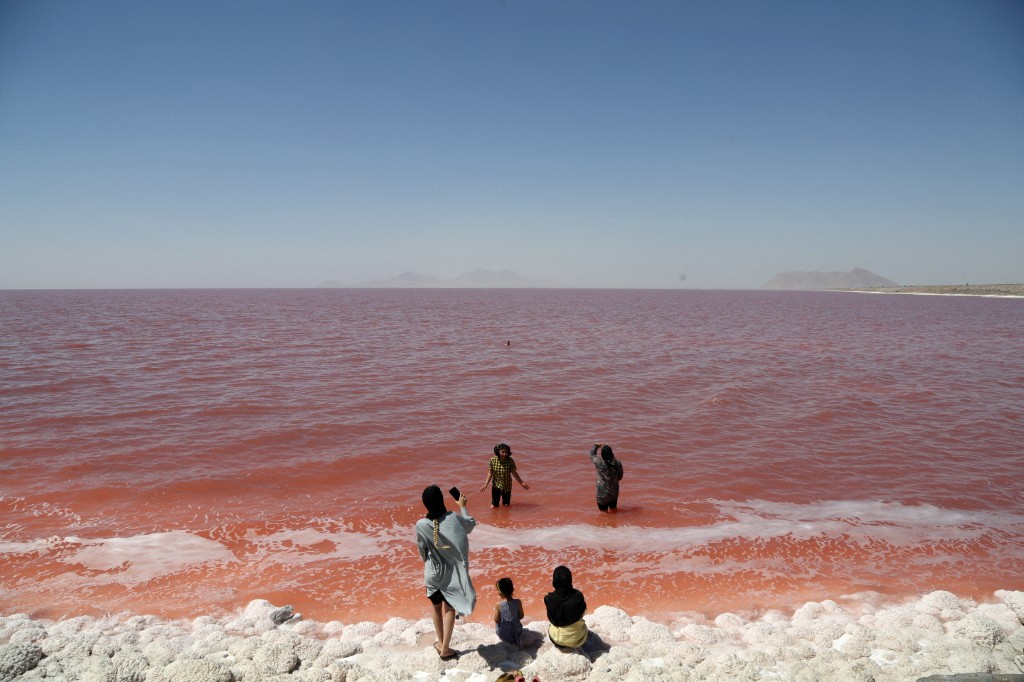
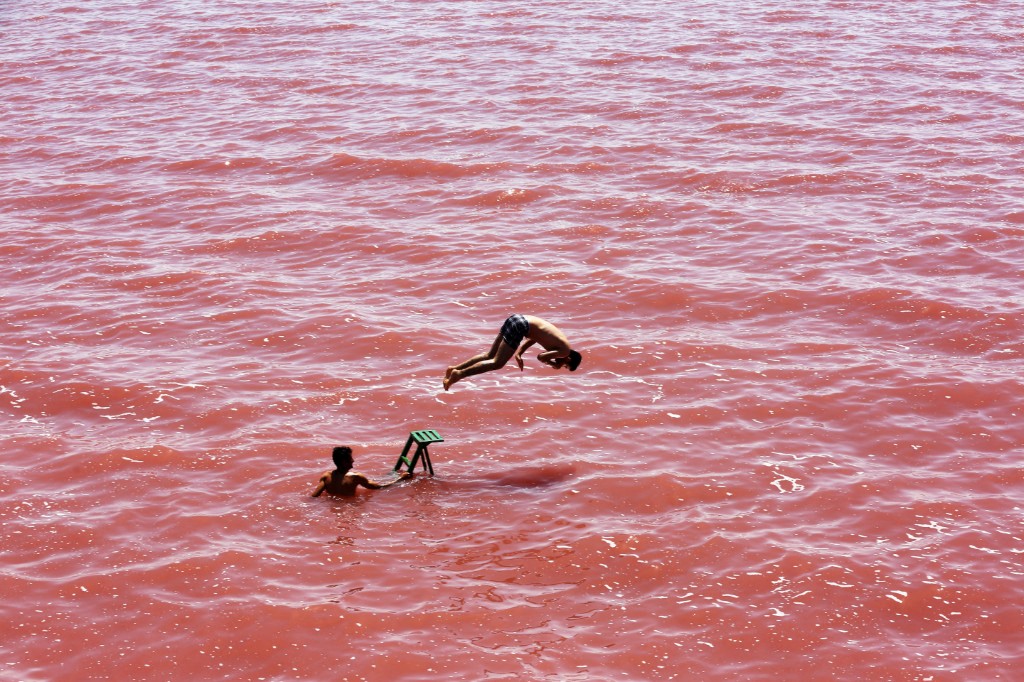
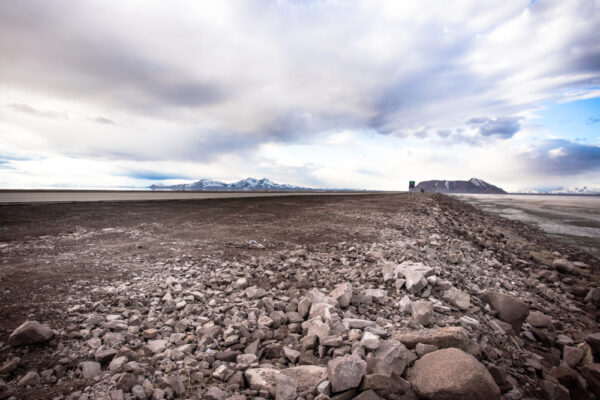
By the summer of 2025, Lake Urmia’s surface area had shrunk to just 581 square kilometers, with water volume down to half a billion cubic meters, according to Iran’s Environmental Protection Organization. Satellite images from NASA and Kurdistan24 confirm that vast stretches of the lakebed are now exposed salt flats. Scientific studies estimate that since 2000, between 65 and 85 percent of the lake has vanished. A body of water that once spanned more than 5,000 square kilometers now survives only as a fraction of its former self.
Why Lake Urmia Died
The lake’s collapse is the result of overlapping pressures:
- Dam construction and loss of inflow: More than 50 dams in its basin diverted lifeline rivers such as Zarrineh-Rud and Ajichay into agriculture and cities, choking the lake’s natural inflow.
- Unsustainable agriculture: Expansion of water-intensive crops like sugar beets and apples, alongside flood irrigation that wastes up to half the water, placed crushing pressure on resources.
- Climate change: Rising temperatures and declining rainfall accelerated evaporation. Average temperatures in northwest Iran have risen by 1.5–2°C in recent decades, while rainfall has dropped by up to 20 percent.
- Groundwater over-extraction: More than 80,000 illegal wells in the basin have drained aquifers, triggered land subsidence, and reduced water quality.
Beyond Ecology: A Societal Crisis
Lake Urmia’s disappearance is not only an environmental tragedy—it is a multi-dimensional societal crisis threatening health, livelihoods, and stability across the northwest.
The lake once supported unique species such as Artemia urmiana (brine shrimp) and drew tens of thousands of migratory birds, including flamingos. Now biodiversity is collapsing. The dry lakebed has become a source of salt storms, with corrosive particles carried on winds to cities like Tabriz and Urmia, raising risks of respiratory illness, allergies, and cancer.
For farmers, shrinking water supply and declining soil fertility have slashed incomes, forcing many to abandon their land. Migration from villages to cities is accelerating, while land subsidence from aquifer depletion threatens long-term habitability. As Urmia’s representative in parliament warned, the lake’s death is now a “serious social, political, and economic threat” to the entire region.

Warnings from Experts
Reza Haji-Karim, head of the Water Industry Federation, likened Lake Urmia to “an emergency patient slipping into a coma.” He warned: “This is just the beginning. Salt storms, rising heat from reflected sunlight, and mass migration will destroy life and livability in the region.”
Fereydoun Natqi-Elahi, a researcher at Iran’s International Institute of Earthquake Engineering, has cautioned that dust rising from the salt flats will trigger “abnormal cancers and respiratory diseases” in the near future.
Failed Efforts to Save the Lake
Over the past decade, Iran’s government launched high-profile restoration projects—water transfers, crop reforms, and irrigation modernization. But the results were meager. Transfers proved costly and inefficient; attempts to shift farmers away from water-hungry crops met resistance; and political will to enforce restrictions was absent.
As Isa Bozorgzadeh, spokesperson for Iran’s water sector, admitted, Urmia has become “a symbol of failed water and agricultural management.” Despite billions spent, the centerpiece of the plan—cutting agricultural water use by 40 percent—was never implemented. Instead, cultivation expanded further.
A Crisis of Governance
Experts stress that the problem is not the absence of solutions but the failure to implement them. As Haji-Karim put it: “We don’t need new solutions. We need to enforce the ones we already had.”
While some officials still describe conditions as “exceptional” rather than terminal, environmentalists remain deeply pessimistic. If current trends continue, they warn, the chance to revive Lake Urmia will soon disappear forever.
The Human Cost
The most immediate consequence is forced migration. Lawmakers acknowledge signs of a “silent evacuation” from villages around the lake. Families leave behind ruined farms as water shortages and salt storms make life unbearable.
The longer-term costs go deeper: widespread health crises, collapsing rural economies, and accelerated depopulation will reshape the entire northwest of Iran. Lake Urmia’s drying is no longer just an environmental issue—it is a driver of social and political instability.
A Warning for the Future
Restoring Lake Urmia to its 1990s levels would require decades, billions of dollars, and a level of national commitment that remains absent. Without urgent, coordinated action—releasing ecological water flows, enforcing crop reform, banning illegal wells, and involving local communities—the lake will remain a salt flat, fueling toxic dust storms.
Lake Urmia’s death is not only a national disaster but a global warning: short-term exploitation, climate inaction, and governance failure can turn natural treasures into lifeless wastelands. Saving what little remains of Urmia is no longer just an environmental obligation—it is a moral responsibility to future generations.