Across centuries, Hormuz has remained a passage where control over maritime insecurity gives states leverage over trade, energy, and global power.
The military crises of 2026 and the threat of disruption in the Strait of Hormuz repeat historical patterns around a passageway that, centuries ago, was freed from Portuguese occupation through the strategy of Safavid Shah Abbas and his alliance with the English East India Company. This 33-kilometer waterway, where Nader Shah Afshar once sought to consolidate Iran’s naval power, has today moved from the age of stone fortresses to the age of drones and satellite positioning. Despite alternative routes, Hormuz remains a vital artery of global trade and energy, and any disruption there affects the world economy.
The Age of the Kings of Hormuz
Hormuz in the medieval centuries, from the tenth to the fifteenth century CE, was a dynamic waterway of global trade and part of an extensive maritime network. Ships carrying pearls and silk passed through its waters. By connecting the Arabian Peninsula to India and more distant markets, this waterway became a hub where languages, religions, commodities, and political currents intersected. The native Kingdom of Hormuz, ruling over the islands and coasts, managed a network that carried Chinese silk and Indian spices to European markets. Marco Polo and Ibn Battuta, the fourteenth-century Moroccan traveler and chronicler, both referred to the island of Hormuz in their travel writings. Ibn Battuta described Hormuz as a large and beautiful city with crowded markets, while Marco Polo, who twice visited Hormuz in the thirteenth century, wrote of its harsh climate and flourishing trade.
The Arrival of the Portuguese
With the Portuguese arrival in Hormuz, the nature of the strait changed. Recognizing the immense strategic value of the strait, the Portuguese seized Hormuz and consolidated their influence by building fortifications on the island. In late September 1507, a Portuguese fleet commanded by Afonso de Albuquerque attacked Hormuz, defeated the local fleet, and killed many of the island’s inhabitants. He turned the city of Jarun, the old name of Hormuz, into a tributary of Portugal and imposed an annual payment of 15,000 ashrafi gold coins on its people. He also began building a fortress, but after running into difficulties with four of his fleet captains, he was forced to leave the island by February 1508, before the fortress was completed. He returned in March 1515 and established Portuguese rule, which lasted for more than a century.
The Story of the Fortress
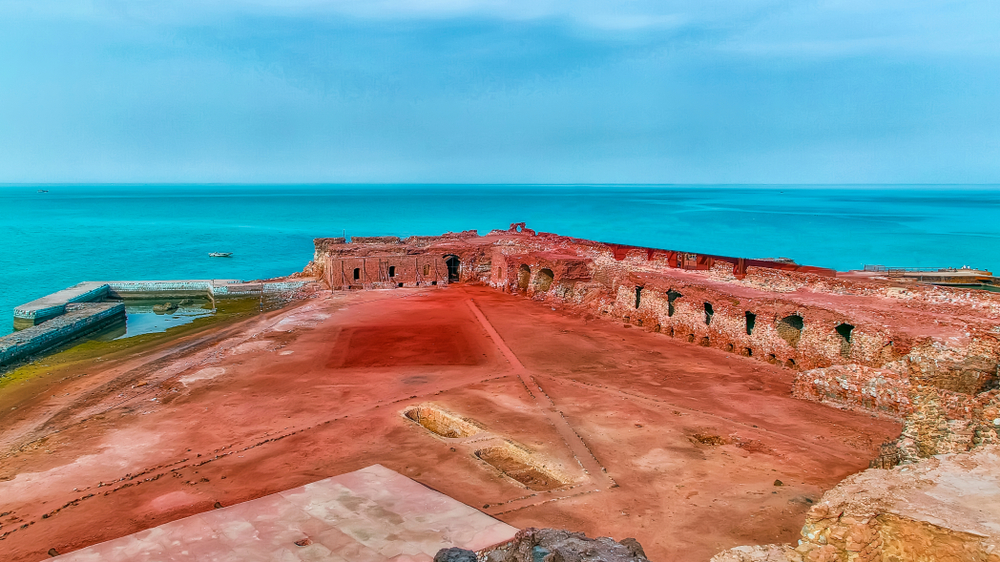
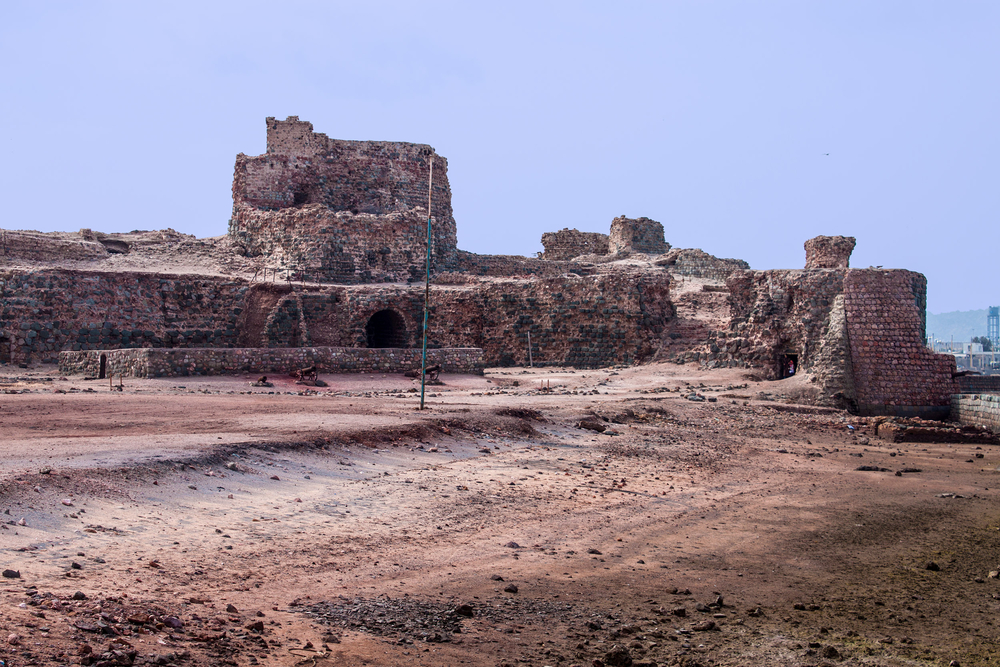
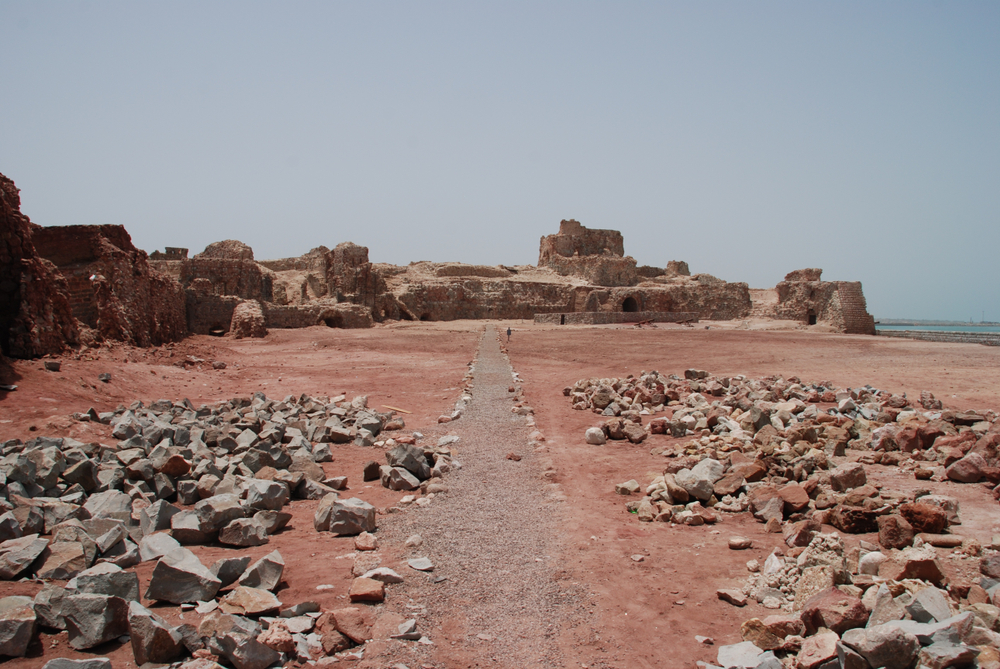
In an article written by Willem Floor, the Iranologist and historian, for Encyclopaedia Iranica, Floor explains that Albuquerque began building the Portuguese fortress in Hormuz in 1507, but, because of his captains’ insubordination, was forced to abandon the half-finished structure. On his return in 1515, he completed it as the backbone of Portugal’s century-long domination of the region. This fortress, once a seemingly impenetrable symbol of colonial power, was heavily damaged after the Portuguese defeat in 1622 and the decline of their presence. Parts of its stone were later reused in the construction of houses in the new city of Bandar Abbas and even as ballast in ships. Yet its ruins still stand on Hormuz Island today, a remnant of Portugal’s century-long rule over the region.
The Safavid Strategic Decision
Shah Ismail I of the Safavid dynasty was troubled by the Portuguese presence in the south, but he was too occupied with wars against the Uzbeks and Ottomans to act. Iran also had no navy at the time. As a result, in 1515, the Safavid shah signed an agreement with the Portuguese under which the region became subordinate and tributary to Portugal, while the Iranian state was not to interfere in its affairs. In return, the Portuguese pledged to provide military assistance to Iran’s army in some areas. But with Albuquerque’s death that same year, the agreement’s provisions were left suspended.
The turning point in Hormuz’s political history came in the spring of 1622, in a battle whose details were recorded in the documents of the English East India Company and in correspondence from the Safavid period. Shah Abbas, a ruler who had consolidated his power on land, had soldiers but, like his predecessor, no ships. In this situation, the rise of English colonialism in the form of the East India Company created an opportunity for a strategic bargain. Shah Abbas assigned Imam-Qoli Khan, a renowned commander, to negotiate with the English forces. The English were initially hesitant: attacking Portugal, a European Christian power, on the territory of a Muslim country could have carried serious diplomatic consequences in Europe. But in the end, an agreement that included several clauses, among them customs exemptions for goods, shifted the balance in favor of war.
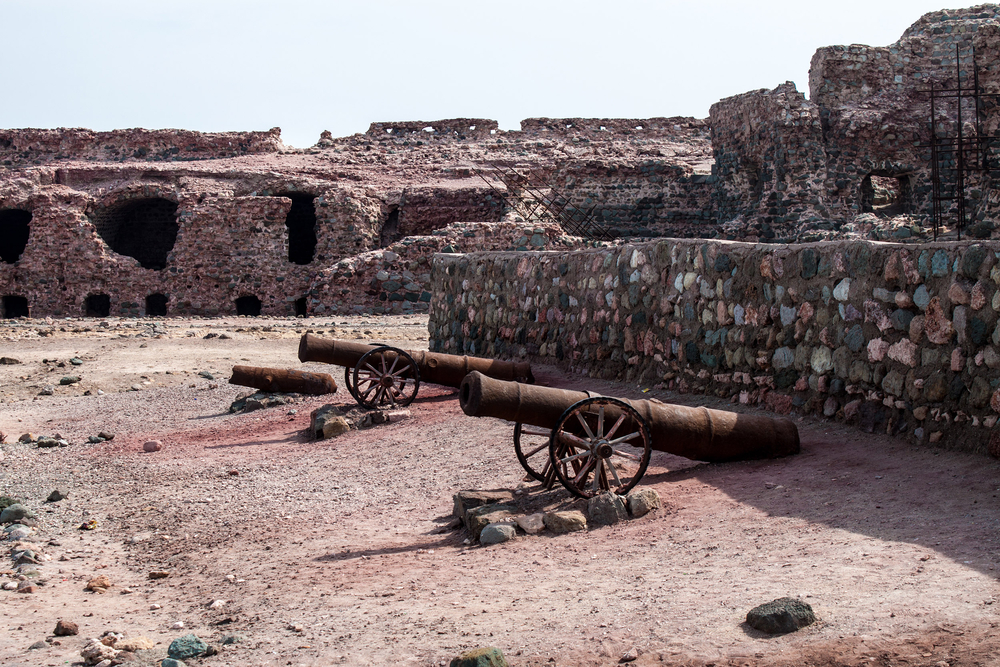
In February 1622, Imam-Qoli Khan’s forces attacked the island of Qeshm with more than 3,000 soldiers in order to cut off the Portuguese supply of fresh water. The Portuguese suddenly found themselves under siege. The English came to Iran’s aid with five warships and heavy artillery. England lost one of its famous navigators, William Baffin, when he was hit by cannon fire on Qeshm. Finally, on 23 April 1622, after a ten-week siege, the Portuguese presence in the region was brought to an end.
The Seventeenth and Eighteenth Centuries: Iran’s Trade Conflicts with the Dutch
To prevent the reoccupation of Hormuz, the Safavids consciously blocked its commercial revival. Responsibility for maintaining the island was assigned to yuzbashis, commanders of military units, so that Hormuz would serve only as a defensive fortress protecting Iran’s interests against foreign powers.
But the Portuguese and English were not the only ones who understood Hormuz’s strategic value. The Dutch East India Company, or VOC, also had its eyes on Hormuz. Willem Floor writes in Encyclopaedia Iranica that between 1627 and 1629, the Dutch considered transferring their trading post to the island of Hormuz. Once again in 1684, during the second major trade conflict between Iran and the Dutch, Hormuz’s strategic importance as the key to controlling the Persian Gulf became increasingly clear to the Dutch, who realized that control over this point could place additional pressure on the Iranian state to accept their trade conditions.
With the weakening of central power in the late Safavid period, Hormuz became a center of regional conflicts. In 1717, the Imam of Oman besieged the island but failed to capture the fortress. In the 1730s, the Bani Ma’in family replaced the Safavid yuzbashis in governing the island. This family played an important role in Iran’s naval power and supplied crews for Nader Shah Afshar’s war fleet. However, after Nader’s death, in 1741 they were among the rebels who seized part of the naval fleet as spoils. According to Willem Floor’s research, in 1760 the sheikh of Hormuz tried to persuade the Dutch to reestablish themselves on the island, but these efforts failed. In 1773, Bani Ma’in forces, in alliance with Muscat, attacked Bandar Lengeh and Bandar Abbas, although this alliance later collapsed because of internal disputes.
The Period of Muscat’s Administration and British Presence
After Hormuz was retaken by the Bani Ma’in family, the island, together with Bandar Abbas, came under the administration of Muscat through a lease agreement in the late eighteenth century and the first half of the nineteenth century. During this period, Hormuz no longer had its former commercial importance, and its small population, mostly fishermen, migrated to Minab during the hot seasons.
For much of the nineteenth century and the early twentieth century, the British Royal Navy secured the waters of the region, suppressed piracy, and enforced agreements that bound the sheikhdoms to London. When Britain withdrew from east of Suez in 1971, it did not fully abandon the Persian Gulf. Rather, it changed the nature of its commitment from direct imperial presence to military partnership and periodic deployment.
In the twentieth century, and especially in recent decades, Hormuz’s geographical position once again brought it to the center of attention. The passage of roughly one-fifth of the world’s oil through this route, along with the impact of political tensions between Iran and the United States after 1979, has made the region a strategic site in global power politics.
A Geography That Still Determines Events
The nature of competition in the Strait of Hormuz has changed over the past four hundred years, but the core issue has remained the same: the ability to influence the security of maritime passage. In the seventeenth century, control over Hormuz was based on coastal fortresses and warships. Today, anti-ship missiles, drones, and electronic warfare systems have created a new form of deterrence. One of the most important recent developments is the expansion of electronic warfare, disruption of navigation systems, and GPS signal spoofing. This development shows that modern conflict does not necessarily mean sinking ships. Sometimes, merely producing uncertainty can rapidly increase the costs of insurance, shipping, and global trade. For this reason, Hormuz has now become a space of competition in deterrence, economics, and the psychology of security.
Many nevertheless believe that Hormuz’s importance may change in the coming decades with the development of alternative pipelines in Saudi Arabia and the United Arab Emirates, as well as the growth of renewable energy. But the difficulty of fully replacing maritime routes has meant that Hormuz continues to hold a central place. Four centuries after the fall of Portugal, the technologies and actors have changed, but the essence of the matter remains the same: control over this waterway has a direct effect on global trade and security.