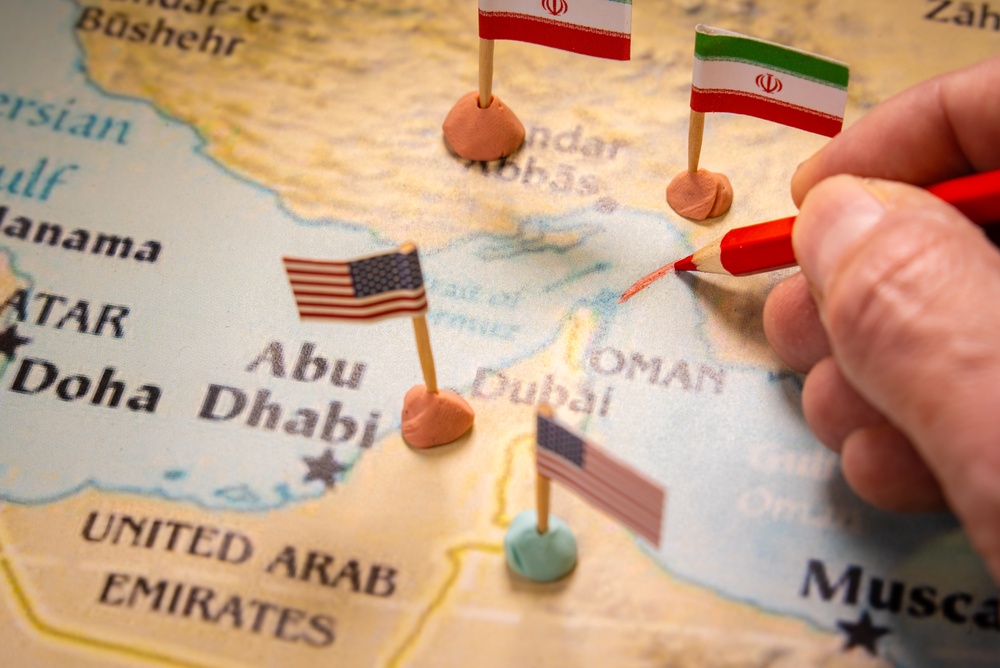
Hormuz is testing not only energy markets, but the petrodollar order that bound U.S. power, Middle Eastern oil, and dollar dominance together.
The closure of the Strait of Hormuz is not merely an energy crisis or another military conflict in the Middle East. This report shows that the core of the crisis, beyond oil prices and warships, lies in the gradual collapse of the “unwritten pact of the petrodollar,” the hidden architecture that kept the dollar at the center of global power for half a century. What is happening in Hormuz is not a temporary disruption of supply, but a historic test of this question: can the world endure without the three pillars of “the U.S. military, Middle Eastern oil, and the dollar”?
Masoud Delbari (energy analyst and expert in international relations)
A Crisis Without Precedent
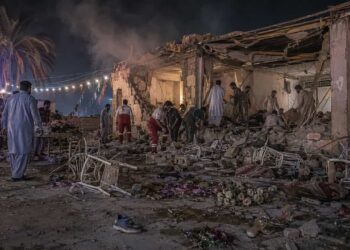
Since February 28, 2026, when the operation known as “Epic Fury” began, global energy markets have entered a phase that the directors of major international energy agencies have described as “the greatest energy security challenge in history.” The closure of the Strait of Hormuz, through which around 20 million barrels of oil per day and a significant share of the world’s LNG pass, has been recognized as the largest disruption in the history of the oil market.
Brent crude prices rose by around 55 percent in March, reaching $112. Although they temporarily fell and then rose again, this unprecedented surge surpassed even the 46 percent jump of September 1990 during the first Gulf War. The release of 400 million barrels from global strategic reserves not only failed to bring prices down, but merely gave the market a temporary breathing space that is now running out. Meanwhile, Iran has allowed a limited number of ships not allied with the United States to pass through the strait, but maritime traffic remains a fraction of its prewar level.
To understand what is happening today in the Strait of Hormuz, it is not enough merely to look at the map of the Persian Gulf. This crisis has a deeper root, one that goes back decades, to a hidden agreement: an agreement that shaped the modern world and is now burning in the fire of this war.
A large part of the world we live in has been built on three pillars: U.S. military power, Middle Eastern oil, and the dollar. These three have not functioned separately, but in an intertwined and mutually dependent way. The name of this interdependence is the “petrodollar,” a system that has formed the backbone of the world’s political economy for half a century, though few people speak about it.
When the Strait of Hormuz is closed, it is not only a waterway that has been shut. When oil prices rise to historic highs, it is not only a commodity that has become more expensive. What has truly been shaken is this hidden structure itself. It is the structure that has enabled the United States for decades to pay the costs of its empire with the money of the very countries whose oil it buys.
For that reason, before turning to the scenarios for the future of energy, we must understand this system. We must know what the petrodollar is, how it came into being, what power it has given the United States, and why the Hormuz crisis may mark the beginning of its end. Only with this understanding can we grasp why this war, unlike all previous wars, will determine not only the fate of one country, but the fate of the world’s financial order.
The Petrodollar: The Hidden Pillar of the Global Order
The petrodollar is one of the most important and, at the same time, least understood mechanisms of the modern political economy. To understand the current crisis—from the Strait of Hormuz to U.S. foreign policy in the Middle East—one must understand this mechanism from its roots.
1. The Birth of the Petrodollar: From Bretton Woods to the Saudi Agreement
The story begins in 1944. At the Bretton Woods conference, the U.S. dollar was defined as the anchor of the global monetary system: it was tied to gold, and other currencies were pegged to the dollar at fixed rates. This structure remained intact for a quarter of a century.
But in 1971, everything was shaken. Richard Nixon severed the dollar from the gold standard in order to contain inflation and pressure from the trade deficit, because foreign central banks, no longer willing to hold a devalued dollar, had begun converting their reserves into gold. The United States needed a new anchor.
The solution was found in the Middle East. In June 1974, a historic agreement was signed between the United States and Saudi Arabia: oil would be sold exclusively in dollars, in exchange for U.S. political and military support for Riyadh. This simple agreement shaped the hidden architecture of the modern world.
2. The Self-Reinforcing Cycle: How the Petrodollar Mechanism Works
The petrodollar created a self-reinforcing cycle: global demand for oil generated demand for dollars, which in turn increased demand for U.S. Treasury securities. The dollar went beyond being a mere instrument of exchange and became the world’s default reserve currency.
This cycle has three stages:
First stage: oil sales in dollars.
Oil exports from Saudi Arabia, and then from OPEC as a whole, were priced in dollars from 1974 onward, creating permanent global demand for dollars and for U.S. Treasury assets.
Second stage: petrodollar recycling.
Oil-exporting countries could not simply sit on their massive foreign-currency revenues. Oil income flowed to finance ministries, central banks, and sovereign wealth funds, and then through international channels into portfolios at whose center stood U.S. Treasury bonds.
Third stage: America’s advantages.
This system allowed the United States to run a permanent trade deficit while at the same time receiving large foreign investment flows through petrodollar recycling. The United States could finance its budget deficit with low-interest financial instruments.
Put simply: the United States buys oil, prints money, oil-producing countries reinvest that money in U.S. bonds, and the United States finances the cost of managing its empire with that same money.
3. The Strategic Power of the Petrodollar
This system was not merely economic; it was also a geopolitical instrument. Around 80 percent of global oil transactions are still conducted in dollars, and this gives the United States three levers of power:
First: the power of sanctions.
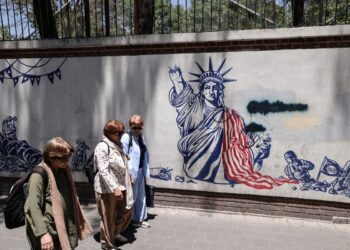
The United States used the petrodollar system to exercise dominance in foreign policy. The consequences of U.S. sanctions on countries such as Iran and Venezuela showed how dangerous excessive dependence on the petrodollar can be. Iran remained under pressure for decades because of this very structure.
Second: the power of cheap borrowing.
Because the whole world needs dollars, the United States borrows at lower interest rates than any other country, an advantage economists call the “exorbitant privilege.”
Third: control over the SWIFT system.
The use of SWIFT as an enforcement tool—something previously unimaginable for many developing countries—provoked a global reaction, and many countries now see the dollar not as a neutral reserve asset, but as an instrument of compliance with U.S. foreign policy.
4. Slow Disintegration: The Challenges to the Petrodollar
A system that stood firm for 50 years is now beginning to crack under multiple pressures.
Geopolitical challenge: the rise of China’s petroyuan.
China is moving to challenge the petrodollar system, and many major energy exporters are considering alternative options. Countries such as Saudi Arabia, the UAE, and Nigeria are increasingly pricing and settling oil in Chinese yuan, Indian rupees, or BRICS digital instruments.
Financial challenge: flight from U.S. Treasuries.
The dollar’s share of global reserves has fallen from 71 percent in 2008 to around 56 percent. China has reduced its holdings of U.S. Treasury securities from $1.3 trillion in 2013 to less than $700 billion, while at the same time expanding yuan-based trade in Asia.
Structural challenge: the energy transition.
The climate crisis, now manifesting itself in deadly heatwaves, floods, and the collapse of agriculture, has forced both developed and developing countries to accelerate decarbonization efforts. If one day oil yields its place to renewable electricity, the petrodollar will lose its main foundation.
5. The Hormuz Crisis and the Petrodollar: The Great Contradiction
The current war has created a strange paradox. The United States has gone to war to defend an order that it itself built. But that very war is destabilizing the foundations of that order.
The continued closure of the Strait of Hormuz proves that physical control over energy may matter more than financial control over it. Declining demand for U.S. Treasury bonds from countries that once recycled petrodollars means that, in order to attract new buyers, interest rates must rise—and that multiplies the cost of servicing existing debt.
6. The Future: What Comes After the Petrodollar?
In the foreseeable future, dollar dominance will continue. But a gradual diversification of the global financial order may already be underway: a world in which more currencies are used in international transactions. The dollar will remain prominent, but without the disproportionate power it currently enjoys.
The petrodollar will not collapse in a single dramatic moment; rather, like ice in the sun, it will melt slowly. The Hormuz crisis may have pushed this process forward by decades. The question is not whether this order will change. The question is what order will replace it.
The world now faces several probable scenarios:
Scenario One: Rapid Reopening of the Strait (Optimistic)
In this scenario, U.S. military pressure or a partial collapse of the power structure in Tehran leads to an agreement to reopen the strait. Trump could use his forces to attack Khark Island, the export point for 90 percent of Iran’s oil, or begin military escorts for ships. In that case, prices would likely quickly return to the $80–90 range. But this scenario also carries heavy costs: the region’s energy infrastructure has been damaged, maritime insurance has become more expensive, and market confidence in the stability of the Persian Gulf will remain shaken for years.
Scenario Two: The Continuation of the Crisis Until Mid-April (Base Case)
Analysts warn that if the strait is not reopened by mid-April, the scale of the supply disruption—which now stands at 4.5 to 5 million barrels per day—will double, making it the greatest crude oil supply loss in history. In this scenario, oil prices would reach $170, bringing a double stagflationary shock. Europe would face its worst energy crisis since Russia’s invasion of Ukraine; Europe’s gas reserves were already at the historic low of 30 percent, and the Dutch TTF gas index has nearly doubled. Asia is in an even worse position; countries such as the Philippines have already implemented a four-day workweek.
Scenario Three: A Long War and $200 Oil (Pessimistic)
The spokesperson of the Revolutionary Guards has explicitly stated that not “a single liter of oil” will pass through the strait and predicted a price of $200. U.S. government officials and Wall Street analysts also take seriously the possibility of oil reaching $200. In this scenario, the Houthis in Yemen, who have the potential to enter the war directly in support of the Islamic Republic of Iran, could also close the Bab el-Mandeb Strait, through which 4 to 5 million barrels pass every day. The result: global recession, a food crisis in importing countries, and an accelerated Western energy shift toward renewables.
Scenario Four: The Geopolitical Reconfiguration of Energy
This is the longest-term but also the most important scenario. Russia, which benefits from rising oil prices, is negotiating with the United States about cooperation in stabilizing the energy market. China, one third of whose oil passes through the Strait of Hormuz, is redefining its relations with the Gulf states. This crisis will be a major accelerator of Western investment in renewable energy. The lesson of 2022 is being repeated, but this time with greater intensity.
Conclusion
What is happening today in the Strait of Hormuz goes beyond a regional war. This crisis lays bare the fragility of an order that, from Bretton Woods to the petrodollar agreement, shaped the world for seven decades. The closure of the Strait of Hormuz has shown that physical control over energy can be more powerful than financial control over it. Whatever scenario lies ahead—rapid reopening or prolonged war—one thing is certain: the world that emerges from this crisis will no longer be the same as the world that existed before it. The petrodollar era is beginning to fade.