War has turned access to medicine into a classed ordeal, leaving patients to search, wait, pay, and fear what comes next.
War does not only destroy buildings; it also targets the path to medicine, treatment, and the possibility of survival. Focusing on the state of medicine and treatment in Iran after the ceasefire, this field report looks at drug shortages and rising prices, the erosion of the health system, and the wandering of patients, especially those with special medical conditions, through long queues at pharmacies and a deepening crisis of access to care.
With the first murmurs of the war’s end or the extension of the ceasefire, society slowly regains the ability to look at its wounds. These are wounds that had already marked the social psyche, wounds deepened by war, yet left without space for remembrance amid the daily turmoil of bombing and destruction. In wars, the weakest are always the most vulnerable: first the homeless, the sick, people with physical and mobility disabilities; then the elderly, children, women; and, in all circumstances, the lowest social classes economically. This note looks at the state of medicine and treatment, and at the many problems imposed on patients with special diseases on the one hand and ordinary patients on the other, in a condition of neither war nor peace. They have been left wandering between Red Crescent pharmacies, specialized pharmacies, clinics, and hospitals.
The Attack on the Pasteur Institute Was Symbolic Beyond Its Destruction
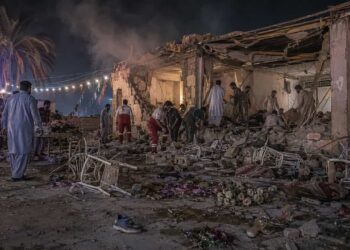
In the early hours of April 2, 2026, the Pasteur Institute was targeted in a joint Israeli and U.S. airstrike. The attack on the Pasteur Institute, which is not only a laboratory and research center but also part of the historical memory of modern medicine in Iran, was symbolic in itself. This institute had been founded in the aftermath of the First World War, when Iranian society was struggling with famine, contaminated drinking water, cholera, plague, smallpox, and the wounds of war. Attacking it sent a clear message: the health of Iranian citizens was being targeted. If its foundation coincided with the Paris Peace Conference and the journey of the Iranian delegation to Paris, its destruction through the collaboration of two allied countries, the United States and Israel, not only struck down all the naive optimism of pro-war advocates, but also showed that this attack trampled on every ethical boundary of the laws of war.
After the First World War, the Pasteur Institute had been a tool of survival amid destruction. On April 2, 2026, that tool of survival was itself reduced to ruin. According to the president of the Pasteur Institute, the center was damaged three times during the war: “twice in March and once in April.” The final attack caused serious damage. Even so, officials said that although the institute had been shut down, its activities continued in other affiliated sections. The Foreign Ministry website quoted The Lancet as writing: “This issue is not limited to Iran and could affect public health across the entire region.” Foreign Ministry website, May 21, 2026, “Destruction of Iran’s Pasteur Institute: A Threat to Regional Health Security.”
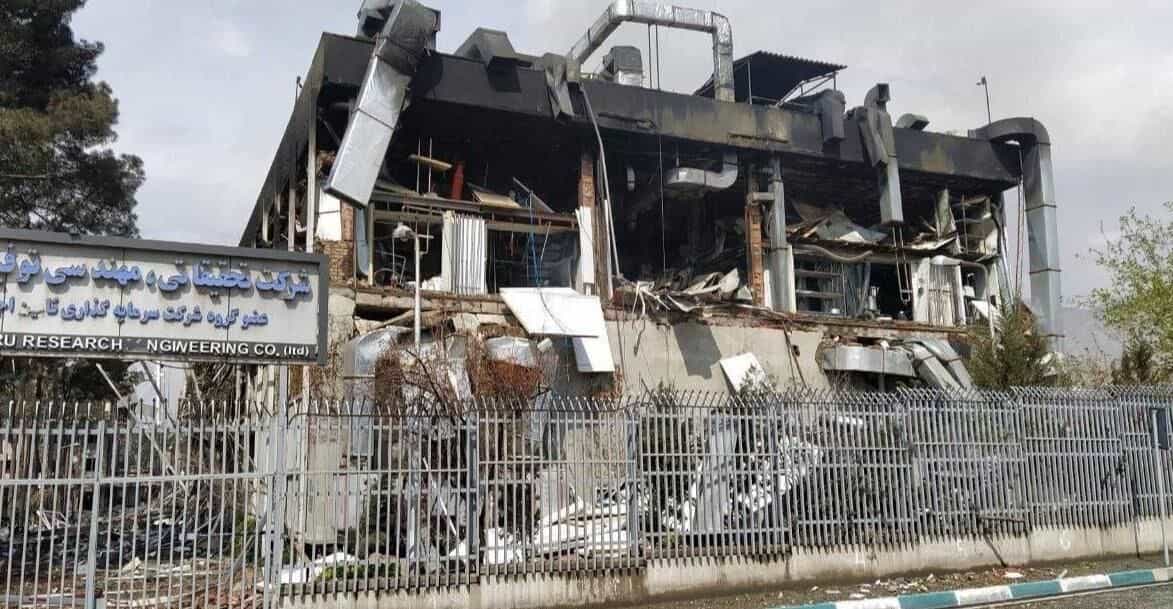
On April 11, 2026, the spokesperson for the Food and Drug Administration told Hamshahri: “During the 40-day war, more than 25 pharmaceutical and medical-equipment companies and producers of health-related products suffered major and minor damage as a result of the attacks.” He also referred to limitations in the supply of pharmaceutical raw materials, attributing them to the closure of air borders during the war: “The supply of some pharmaceutical items has become more difficult, but given that 97 percent of medicine is produced inside the country and we are close to self-sufficiency, no particular problem has occurred in this regard.”
What this official does not mention, however, is the extreme rise in drug prices. Medicine had already become more expensive before the war, but with the outbreak of war prices became staggering. Most supplementary health-insurance plans do not cover medication costs, and with the bankruptcy of insurance companies, they are not even able to meet their previous commitments. Foreign medicines have become rare, and most patients are forced to replace them with similar domestic versions, which do not always produce the desired result.
High Drug Prices Leave Patients Waiting in Long Lines at Red Crescent Pharmacies
Alongside the currency fluctuations that have intensified in recent years, drug prices have also risen. This increase became particularly rapid from 2024–2025 onward. Pharmaceutical companies, in addition to the rising cost of foreign currency, have cited cuts to subsidies and import currency, as well as reduced reserves of raw materials, as other reasons for rising drug prices in recent years. Drug-price changes are tied to the rising cost of production inputs, shaped by multiple factors. This is why not only foreign medicines but also domestically produced drugs are facing shortages. According to the secretary of the Pharmaceutical Distribution Industry Association, “medicine currency was not allocated during the first nine months of March–December 2025, and for this reason companies could not import medicine and related raw materials; although the necessary warnings were given at the time that we would face problems in the future.” IRNA, Islamic Republic News Agency, “Details of Drug Shortages / Why Did Medicine Become Expensive?”, May 2, 2026. Yet none of these statements says anything about how patients with special diseases are supposed to secure stable access to medicine.
Some medicines for patients with special conditions, such as those used for hemophilia, various cancers, autoimmune diseases, and other illnesses, are imported. Problems transferring currency, sanctions, banking restrictions, and disruptions in the drug supply chain caused by the war mean that even after patients go through exhausting efforts and finally find the medicine they need, they are immediately worried about access to the next dose: will they receive the next prescription or not? According to the chair of the board of the Iranian Hemophilia Society:
In recent months, some vital medicines for patients with bleeding disorders have faced serious shortages. For example, patients with factor XIII deficiency, patients with von Willebrand disease, and some other patients with special diseases have faced serious problems in obtaining medicine for months. This is while the absence or delayed use of these medicines can lead to severe bleeding, permanent damage, and even threats to the patient’s life.
While officials say there is no shortage of insulin or cancer medications, and that if any shortage exists it concerns branded drugs while domestic or generic versions are available, people say otherwise. At a Red Crescent pharmacy, a woman waiting impatiently in the crowd for her turn says the price of insulin has increased fivefold. Others there say the price of a heart medication, Plavix, has tripled. And it is not only that. Whatever dosage the doctor has prescribed, the pharmacy can only give the patient one quarter of the prescription.
At another of these pharmacies, someone speaks of an autoimmune medication that she must take twice a day. The doctor has prescribed sixty pills, but the medicine is no longer available, and she can only get thirty pills of a similar Iranian version. The pharmacist advises her to consult her doctor before taking the prescription. Worried that she may not be able to find even this later, the woman pays 900,000 tomans and buys the prescription so she can consult her doctor afterward. Someone else says Fefol Plus has gone from 350,000 tomans three months ago to 700,000 tomans. This supplement is prescribed for iron deficiency or during pregnancy. In a report, the Asr-e Iran website has reported a shortage of morphine: “Her husband needs 60 morphine tablets a month, but since the war he has not been able to find them. The price of this medicine for a patient with a special disease is 130,000 tomans per pack, but it cannot even be found on the open market.”
The disappearance of morphine, a medicine whose production cannot depend on foreign sources, raises questions. It is likely that the drug has ended up on the black market. In any case, morphine is an essential medicine, especially for unbearable cancer pain. Someone says: “Spartina injections: four of them cost 50 million tomans, and that is only for two months.” This medication is prescribed to control blood sugar in adults with type 2 diabetes.
All this is happening while most patients are retirees, pensioners, or low-income people who can barely manage ordinary life on monthly incomes below 20 million tomans. The situation of supplements is even worse. A packet of magnesium powder is priced at around 900,000 tomans. The patient refuses the medicine and asks the pharmacist: “Is taking this supplement necessary?” The answer is: “Whatever the doctor has prescribed is necessary.” The patient says that although she had always taken this supplement on her doctor’s advice, she can no longer afford it. Following the pharmacist’s suggestion, she takes only a few units so that the total cost will be lower.
A woman speaks of iron tablets that she must always have access to because of anemia and must take every day. She says the Iranian version of the tablet does not agree with her body and has caused her many problems, and wherever she goes she cannot find the foreign version. Even topical ointments and ordinary medicines have become more expensive. Part of this price increase is also linked to pharmaceutical packaging. With the destruction of a large part of the petrochemical industries and the shutdown of production plants, packaging production has declined. As a result, the final cost of packaged products, both pharmaceutical and non-pharmaceutical, has risen, naturally putting patients in a more dangerous situation. But psychiatric and neurological medications have become more expensive and scarcer than other medicines. To find them, one has to go from one township to another city, from one district to another:
From Shahr-e Qods they told me to go to Pardis; it can be found there. In Pardis they had a few items from the prescription, and for the rest of the medicines I have to see which pharmacies they recommend.
In reality, filling a prescription has become an expert process of finding the pharmacies where each specific medicine exists. For each item in a prescription, one has to search different areas. If a patient has no one to follow up on the prescription, and cannot physically manage all this movement, it is unclear how they are supposed to cope. Insulin exists, for example, but obtaining it has become a marathon that a diabetic patient cannot endure.
War Targets the Path to Medicine
Looking at the World Health Organization’s reports on Gaza, “shortages of fuel, essential medicines, medical equipment, and vital supplies have disrupted the provision of healthcare.” In Ukraine, “attacks on health infrastructure and restricted access have made treatment more difficult for chronic patients.” These cases point to a shared reality: “In war, medicine itself does not merely become scarce; the path to reaching medicine becomes unsafe, costly, and more classed. Those who have money, time, connections, a car, and the ability to follow up have a greater chance of finding medicine.” Asr-e Iran, May 19, 2026, “The Drug Crisis and Families’ Accounts of Long Lines and the Black Market.” Yet one must not overlook the fact that drug production is a day-by-day process, and these problems did not emerge immediately after the war.
War has made access to medicine unsafe, difficult, scarce, and expensive. According to a member of the board of the Pharmacists Association: “Drug production is a six-month process. This means that if today part of the drug-production process is halted for any reason, its effects will become visible six months later.” Tabnak, April 18, 2026. The secretary of the Pharmacists Association also responded to some criticisms regarding shortages of psychiatric and neurological medications by saying: “These shortages date back to before the war, not the past 40 days.” He also acknowledged a “shortage of liquidity.” Hamshahri, “Why Was There No Drug Shortage? Iran’s Resilience in Producing Medicine and Vaccines,” April 11, 2026.
It can therefore be concluded that the situation of medicine and treatment will become far worse in the next four or five months, and that the major problem of drug scarcity will only then fully emerge. At present, pharmacy stocks are still linked to the prewar situation, although the war has completely blocked access routes to rare and foreign medicines. If we take into account the damage caused by bombings to pharmaceutical factories and their removal from the production cycle, a terrifying pharmaceutical future can be predicted. Supplying raw materials, production, packaging, storage, and warehousing are all stages a medicine must pass through before reaching the consumer. Attacks on pharmaceutical companies may not immediately stop drug production, but they increase the costs of storage and warehousing, alongside the loss of access to raw materials. In the end, the consequences fall on one of the weakest social groups: patients, and especially patients with special diseases.