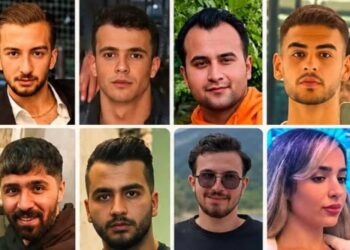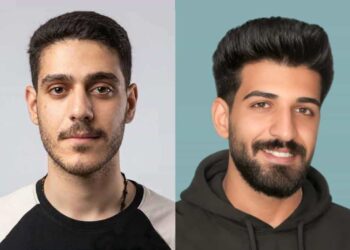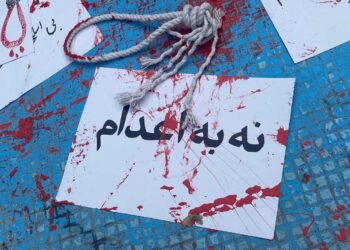
After the January 2026 uprising, the Islamic Republic expanded repression beyond Iran, targeting dissidents’ legal identity and freedom of movement.
After the January 2026 uprising, the Islamic Republic expanded its forms of repression with unrestrained force: mass executions, checkpoints, internet shutdowns, intensified social control, and more. These measures continue the violence that unfolded in the streets of Iran during the January uprising. The war, too, created a political atmosphere through which the state pushed society deeper into a black hole of repression.
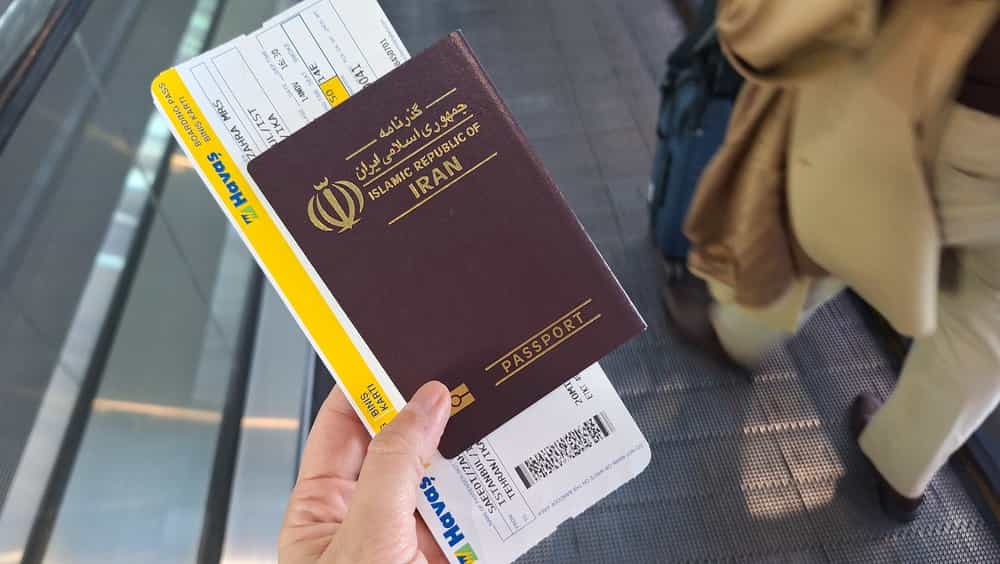
These are visible forms of violence. Their brutality is clear to everyone. But the Islamic Republic has also adopted another method of repression, one whose violence is not only physical or psychological, but directly targets people’s legal identity. In recent weeks, the Iranian passports of some migrants living in countries bordering Iran, including Armenia, have been revoked.
By doing this, the state not only denies people’s legal and national identity; it also turns a border country such as Armenia into a kind of prison for those whose passports have been revoked. They can no longer legally travel to another country. They are forced to remain in one place, unable to move legally elsewhere. And this is happening in a country that, as many Iranian dissidents know well, is not safe for them. The Islamic Republic has deep political, cultural, and security influence there.
In recent years, the Islamic Republic has repeatedly targeted activists in the diaspora, and these attacks have intensified since the Jina uprising. The state also has a long history of assassinating its opponents abroad. Until now, however, its transnational repression mostly targeted well-known political figures, or members of organized parties and movements. What we are now seeing is a method that targets non-organized protesters, as well as ideological or religious dissidents who are not necessarily well-known media or social figures. They are being subjected to legal and identity-based repression.
Through this method, the Islamic Republic has made its transnational repression broader and more social. Its brutality lies in the attempt to dehumanize people by revoking their legal identity at the international level. In effect, through this violent act, the Islamic Republic has produced a new population: people whose identity has been denied, who have been pushed into a condition of near-rightlessness, and who are trapped in a country where they have been placed in the most defenseless position possible.
At the same time, it is worth noting that even outside Iran, the right-wing opposition, despite claiming influence within Western governments and presenting itself as close to the seats of power in the West, has made almost no effort to save these people’s lives. This suggests one of two things: either protesters, and even its own supporters, are treated as expendable once they no longer serve a symbolic or political function, or its claimed influence within Western power structures is little more than a lie. Whatever the case, it testifies to the weakness and incapacity of this opposition.
In this sense, struggles in countries bordering Iran could become an important site of solidarity with other peoples. But in a situation where the opposition takes no meaningful step to support or save those who have fought, the Islamic Republic’s repression can become even more destructive.
Masoud Taheri, who manages a church in Yerevan, became aware of this form of repression when he tried to travel to Spain and discovered that his passport had been revoked. He was no longer allowed to leave Armenia. He is one of those who has spoken publicly about what happened:
“This is another crime of the Islamic Republic, committed in silence. It is truly hard for me. Imagine: without any notice, without any court, without even giving me the chance to defend myself, they used their state power to take my identity away from me.”
Taheri says that before this happened, he had already received warnings from the Armenian authorities:
“After Khamenei was killed in the initial hours of the U.S.-Israeli war on Iran, Armenia’s security service held a meeting with us and asked us not to hold any more gatherings under any circumstances. They warned us that they had received information that our lives were in danger. They asked us to leave Armenia for a while if possible. I told them I could not because of my job. They offered to buy tickets for some of the others if they had financial problems. They said it was important for them that nothing happen on Armenian soil to any Iranian, whether opponent or supporter, because that would endanger Armenia’s security. In the end, they made us promise not to be active in public, and to reduce our movements and activities.”
Armenia is one of the Islamic Republic’s main logistical nodes. Despite the Islamic Republic’s global financial isolation, it maintains extensive financial exchanges with Armenia and, as a result, has significant influence there. Iranian security figures travel there, and this is one reason why the Armenian state takes a cautious approach to these cases.
In Armenia, unlike in much of Europe, passport revocation can immediately become a question of physical safety, because those affected remain close to Iran and exposed to the Islamic Republic’s political and security networks. Armenia’s asylum and residency system also faces serious limitations and cannot guarantee their safety. Its land routes are so constrained that those affected have almost no escape route.
Another person whose passport has been revoked, and who does not want their identity revealed, told us:
“After we took part in protests against the internet shutdown in Iran, we were strangely placed under surveillance. Then we found out that our passports had been revoked, even though mine still had three years of validity left. After following up, we realized that the passports of people who had repeatedly attended the protests had been revoked. Among them was someone who had once been deported from Turkey because of a protest in Istanbul and had come to Yerevan, even though he had permanent residency in Turkey. The Islamic Republic has targeted our identity. We now have almost no enforceable rights. We cannot even carry out simple administrative tasks.”
During the war and the ceasefire, the Islamic Republic repeatedly emphasized nationalism and national unity. But in light of the executions, the different forms of repression, including passport revocation and property confiscation, and the destruction of people’s livelihoods, one thing is clear: nationalism is being used to strengthen a repressive structure built on the division between insiders and outsiders.