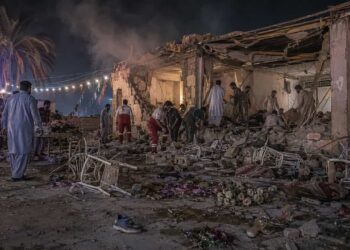
As war, unemployment, and inflation deepen Iran’s crisis, working-class women and children absorb its violence inside the home.
In the months during which Iran’s economy has been worn down by inflation, job insecurity, and the consequences of war and regional conflict, working-class women have carried the burden of crisis more than any other group. Falling household income, layoffs in factories, the closure of small businesses, and rising living costs have pushed the fragile structure of working-class families to the point of explosion; an explosion whose first victims are women and children.
Under such conditions, domestic violence, which usually rises during periods of economic recession, has also been increasing in Iran. Official data show that annual inflation in the Iranian year 1402 (March 2023–March 2024) was around 46 percent, while the price of basic goods rose by as much as 90 percent in some months. Reports by labor unions indicate that more than 35 percent of contract workers faced reduced working hours, suspension, or dismissal at least once over the past year. The rate of underemployment among women has also reached 27 percent, more than twice that of men. These figures show only part of a reality unfolding inside homes, hospitals, and working-class neighborhoods; a reality in which working-class women stand on the front line of the crisis.
Parvin, 41, a mother of two, is one of these women. She says her life collapsed completely after the war began and the factory where her husband worked shut down.
“When the war started, they told my husband to come in only part-time. Then they said the factory was closed. When the fighting stopped, they fired him. He was on a contract and had not yet been made permanent. Now he works as a day laborer for half a worker’s wage. Every day he looks for work, but there is none.”
Parvin herself has also lost her job.
“I used to sell herbal products for an online store. When the internet was cut off, our work ended too. Our income was cut in half, and expenses doubled.”
She says economic pressure has turned the home into a tense and volatile environment:
“My husband comes home from work tired and angry. He used to play with the children; now he just sits in silence. He has beaten me several times in front of the children. I don’t dare say that something is missing at home. When I had my own job, things were better. Now I feel I have no control over anything.”
Economic crisis also rearranges power relations within the family. In a structure where male income is the central pillar of survival, the loss of a job or a decline in wages is not only an economic problem, but also a blow to the man’s symbolic position within the family. In the absence of support networks, and with no possibility for women to leave violent relationships, this blow is transformed into domestic violence.
Under such conditions, the home is not a shelter, but an extension of the very relations shaped in the workplace and the wider economy. Structural pressure on men, instead of turning into collective protest, is discharged in the private sphere, where the least costly and most accessible targets are women and children. This is the moment when domestic violence ceases to be an individual matter and becomes a structural phenomenon.
Parvin says the home has become “like martial law” for her children:
“The children must not make noise. They must not ask for anything. They just have to wait for him to sleep or listen to the news. This is not life. I am becoming more hopeless every day.”
Through Parvin’s words, one can see how economic crisis disrupts social reproduction. Social reproduction — childcare, housework, and maintaining the family’s mental health — falls mainly on women in Iran. When the economic crisis intensifies, this burden multiplies. Women must compensate for lost income through more domestic labor; they must endure men’s psychological tension, and even calm them down; they must care for children; and at the same time, they have no material means to leave a violent relationship. This structure turns violence into a systematic outcome.
Sara, a 29-year-old nurse in the emergency ward, says the wave of domestic violence has “clearly” increased in recent months.
“Every day, women come in with broken hands, wounded faces, or knife injuries. A few days ago, they brought in a woman whose husband had poured gasoline on her and set her on fire. His own hand was burned too because he had held her down so she could not escape.”
She says many of these women hide the truth out of fear:
“They say they fell down the stairs or slipped. Because they have no shelter. There is no serious protective law. If they go back home, they will be tortured in the same place again.”
Domestic violence in Iran is not only the result of economic crisis, but also the product of the absence of support structures. In a country where there is no comprehensive law protecting women against violence, where safe shelters are limited, and where secure reporting mechanisms do not exist, women are effectively trapped in a cycle from which escape is almost impossible. This cycle becomes even more dangerous when patriarchal and controlling ideologies combine with economic pressure. Under such conditions, women’s bodies become the site where power is exercised; a power rooted not in the individual characteristics of the perpetrator, but in economic and social structures.
According to data from Iran’s Legal Medicine Organization, more than 85,000 women went to official centers last year to register physical assault; a figure that reveals only a small part of the reality, since many women never file complaints. This figure, alongside unofficial figures from social emergency services reporting a 20 to 30 percent rise in domestic violence cases, shows how economic crisis and regional wars have intensified violence across society. In periods of military tension, public anxiety rises, men bring their repressed anger into the home, children witness violence, and women become the first victims of this transfer of violence.
Rosita, 33, says domestic violence has become “part of women’s lives.”
“My sister attempted suicide this year, but survived. Her husband works in a workshop and then drives for Snapp after work. Their income does not match their expenses. Every fight starts over this.”
She says women have no way out under such conditions:
“My father also has a bad temper. My sister cannot stay with us. He does not allow us to become independent. These pressures drove her to suicide.”
Rosita herself works in a clothing shop:
“They don’t even pay me a quarter of the legal minimum wage. But it is better than nothing. If a woman does not have financial independence, any man can keep her captive.”
Domestic violence in Iran is not merely an individual problem; it is the direct result of economic and social structures that place women in positions of dependency and vulnerability. Without financial independence, women have no possibility of leaving violent relationships. This economic dependency, combined with cultural and familial pressures, reproduces violence. In such a structure, women are not only victims of violence, but also victims of the relations that make violence possible and enduring.
In today’s Iran, economic crisis and regional wars do not happen only at the borders; they continue inside homes. Working-class women, who simultaneously bear the burden of domestic labor, childcare, and economic pressure, stand on the front line of this crisis. Domestic violence, suicide, so-called “honor killings”, and the psychological collapse of families are not individual issues, but direct consequences of economic and social structures.
As long as women’s job security is not guaranteed, legal protection for survivors of violence is not established, safe shelters are not expanded, and the economic crisis is not contained, domestic violence will continue to rise. Working-class women and children will remain the silent victims of this crisis.