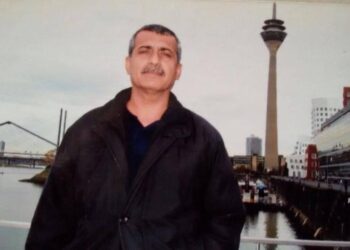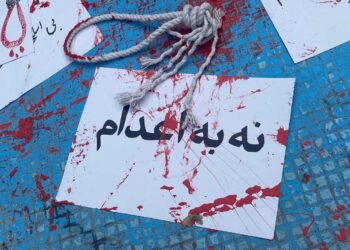
Qaem Hosseini was executed in connection with Isfahan’s Alikhani Square protest case, amid growing concerns over Iran’s use of the death penalty against protesters.
Mizan News Agency, affiliated with Iran’s judiciary, reported on Thursday morning, August 20, that Qaem Hosseini, known as “Arian,” had been executed in Isfahan. The judiciary identified him as a “foreign national” but did not disclose his nationality.
According to the official report, Hosseini had been sentenced to death in connection with events that took place on January 8, 2026, at Alikhani Square in Isfahan. The charges against him included “waging war against God” (محاربه), “corruption on earth” (افساد فی الارض), acting against national security, destruction of public property, and collusion to act against national security. His death sentence was upheld after an appeal review by Iran’s Supreme Court.
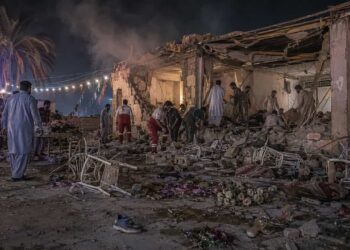
The judiciary claims that the charges against Hosseini were related to his alleged presence during the Alikhani Square protests and a fire at the Amir al-Momenin Mosque and Charity Centre in the Malkshahr district of Isfahan. According to the official account, he was present at the scene, carried a bladed weapon, and struck the body of one of the four police officers killed during the incident.
Mizan, citing the judiciary, also reported that Hosseini acknowledged his presence at the Alikhani Square protests during judicial proceedings and that his mobile phone had been turned off while he was at the scene. The judiciary further alleged that he and others removed items from the Amir al-Momenin Charity Centre—including “dowry items belonging to families in need”—and set them on fire. These claims have not been independently verified.
The Alikhani Square events took place on the evening of January 8, 2026. According to the Islamic Republic’s official account, four members of the special forces of Isfahan’s Law Enforcement Command—Mohammad Hemmati, Valiollah Safari, Hossein Ramezani, and Seyyed Ali Khoshouei—were killed during the unrest.
The judiciary has relied heavily on the deaths of these four police officers, and on its own account of how they were killed, when bringing charges against defendants in the case. The details of this account have not been independently verified.
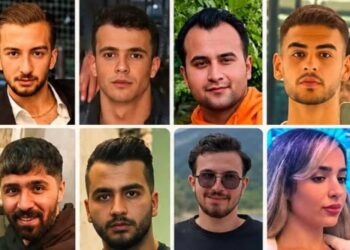
Before Hosseini’s execution, four other defendants in the Alikhani Square case had already been executed. Erfan Esfandiyari and Golmohammad Mohammadi were executed on July 19, while Abolfazl Sepahi and Amirhossein Safari were executed on August 7.
Golmohammad Mohammadi, one of those executed in the case, was an Afghan citizen. Reports published about the case identified him as a young Afghan man.
Before the first executions in the case were carried out, reports emerged that 12 people had been sentenced in connection with the Alikhani Square case. In late July, following the executions of Esfandiyari and Mohammadi, a group of United Nations human rights experts called on Iranian authorities to halt the executions of 10 other defendants in the case.
The experts expressed concern over the judicial process, including closed-door hearings and questions surrounding compliance with fair trial standards.
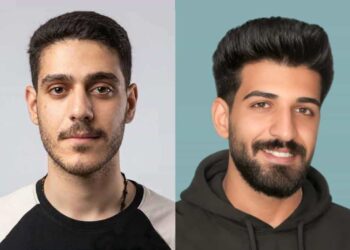
Qaem Hosseini, Amirhossein Maleki, and Ali Dashti were among the defendants in the case who had previously been reported to be at imminent risk of execution.
Hosseini’s execution comes amid a broader increase in executions in Iran in recent months.
On August 5, UN High Commissioner for Human Rights Volker Türk announced that since March 19, 2026, at least 56 people in Iran had been executed on charges related to national security, including 27 people connected to protests. He also raised concerns about judicial procedures in these cases and warned:
“More than 100 other people are also at risk of execution due to similar charges.”
With Qaem Hosseini’s execution, five defendants convicted in the case known as “Alikhani Square” have now been executed.
Qaem Hosseini’s execution comes amid a broader wave of prosecutions against people arrested during the January 2026 protests. The Committee for Following Up on the Situation of Detainees reported that four residents of Sari—Mehrshad Ahmadi, Naser Bajan, and Danial Nik-Naqsh, among others—facing the possibility of severe sentences.
The group also raised concerns over cases involving alleged forced confessions and prolonged detention without trial. In another case, nine residents of Esfarayen have been charged in connection with the January protests, facing charges including moharebeh, corruption on earth, murder, and acts against national security. Two of those defendants were under 18 at the time of the alleged events.
These cases illustrate the increasingly securitised atmosphere in Iran, where wartime conditions have coincided with the expansion of security charges and the use of the death penalty against those accused of involvement in protests.