

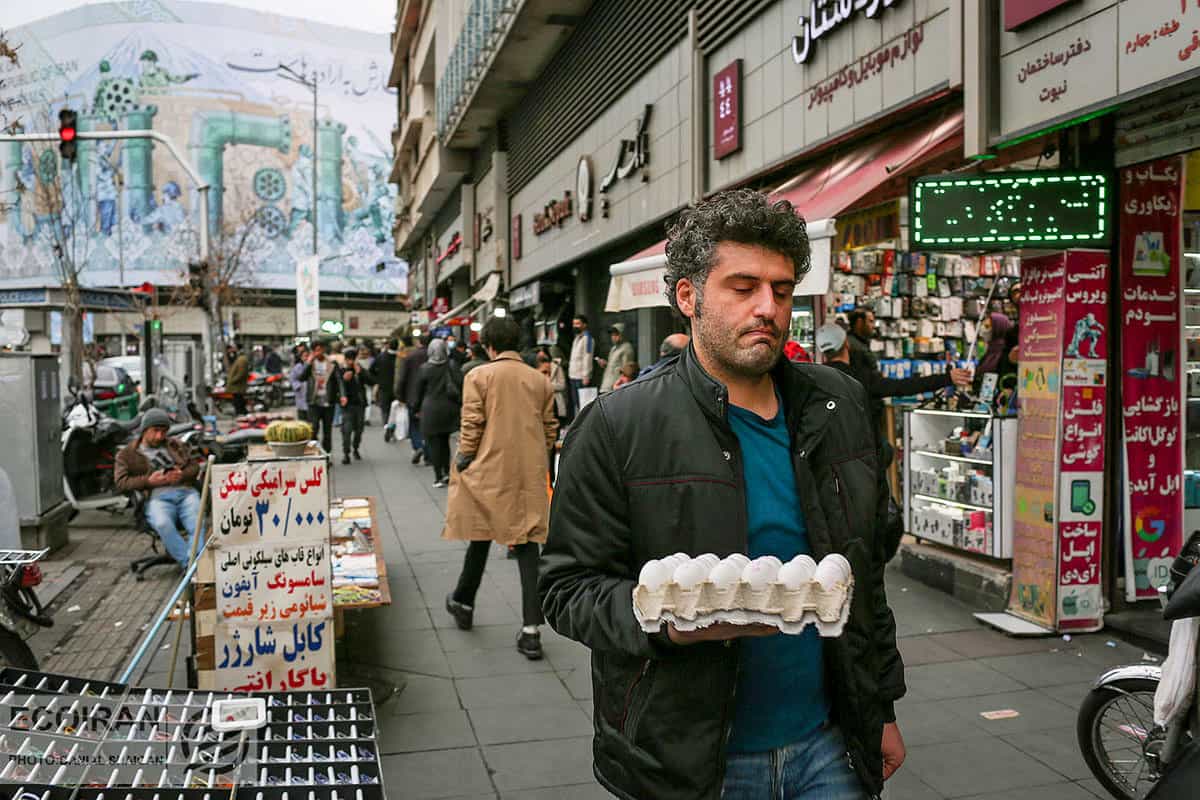
War, layered onto Iran’s existing economic crises, has produced an unprecedented surge in food prices and pushed household survival to the brink.
A 40-day war and its aftermath were enough to drive the cost of food in Iran to unprecedented levels. Even after the ceasefire was announced on April 9, prices not only failed to fall; they have continued to rise every day.
In late February 2026, before the war, Iran’s market was already under severe strain. Consumers were facing heavy inflation. At the time, chicken sold in retail shops for 230,000 tomans per kilogram, and economists predicted that, in the worst-case scenario, it might reach 270,000 tomans by the new year holidays. Today, however, the price of a whole chicken is 350,000 tomans, and in Tehran butcher shops, chicken fillet cannot be found for less than 700,000 tomans per kilogram.
With the outbreak of war between Iran, the United States, and Israel on February 28, the situation became worse than predicted. Iran’s economy was already burdened by banking imbalances, corruption, mismanagement, and sanctions, while middle-class and working-class households were already under intense pressure from rising prices. After the war, however, inflation entered a new phase.
A Tehran resident describes the situation to Zamaneh as follows:
Prices are dizzying and terrifying. Supermarkets are empty of customers, and people truly cannot afford to buy. It is not just food; detergents, soap, tissues, everything is expensive. On my last shopping trip, I could not buy many of the items I needed. Iranian rice starts at 500,000 tomans per kilogram, and meat is not available for less than 1.3 million tomans. The ice cream we bought last year for 50,000 tomans—which already seemed expensive then—is now 200,000 tomans. A liter of milk has reached 120,000 tomans, and prices keep rising every day.
Inflation Figures in March 2026
According to the Statistical Center of Iran, point-to-point inflation in March 2026, compared with March 2025, showed a 113.8 percent increase in food and beverages. The figure was 112.5 percent for food items, 140 percent for bread and cereals, 219 percent for oils and fats, and 116.8 percent for cheese, milk, and eggs.
This severe inflation occurred even before the consequences of the war and its damage to upstream industries were fully felt. Experts had already predicted that food inflation would be even higher in the second quarter of 2026.
The crisis of runaway prices began with the exchange-rate surge around the January uprising and the protests that followed. It then continued through factors such as war, the blockade of the Strait of Hormuz, internet shutdowns, and rising unemployment.
April: Fragile Stability and the Return of a Second Wave of Inflation
The announcement of the ceasefire on April 9 did not stop the rise in prices. The price of eggs has more than doubled over the past month, rising from around 300,000 tomans per tray to around 600,000 tomans, a 100 percent increase.
By late April 2026, the price of a whole chicken in the retail market had reached 350,000 tomans per kilogram, marking a 148 percent increase compared with the period before the war.
The situation in the meat and rice markets is similar. Meat prices have become astronomical. Today, it is difficult to find meat for less than 1.3 million tomans per kilogram, while lamb and beef cost more than two million tomans per kilogram.
In the rice market, before the war, the cheapest 10-kilogram bag of Indian rice cost around two million tomans. Today, its price has reached around three million tomans or more.
On April 29, the Iranian Sugar Factories Association announced that the new price of packaged sugar, including value-added tax for the final consumer, had been set at 125,000 tomans per kilogram. In March and early April, packaged sugar had cost 95,000 tomans per kilogram for consumers.
According to a report published by Mehr News Agency on April 29, dairy products experienced the sharpest price increases in the week ending that day. Full-fat milk rose by around 13 percent, while full-fat yogurt increased by around 9.8 percent.
Middleman Networks and the Growing Price Gap Between Wholesalers and Retailers
One phenomenon economists point to in post-crisis economies is “price stickiness” and the breakdown between the origin and final destination of goods.
Before the war, the gap between wholesale and retail chicken prices was around 50 percent: 152,000 tomans compared with 230,000 tomans. But in April and May, while the wholesale price of chicken stood at 330,000 tomans, it reached the final consumer at 570,000 tomans. This 70 percent gap indicates the formation of middleman networks, hoarding by some commercial units, and the inefficiency of the distribution system during crisis.
This rupture exists in the market for other food items as well. Goods are available in the market, but citizens cannot afford to buy them. Consumption of essential goods and protein-rich foods has sharply declined among low-income groups and large households.
The Cost of Living: Heavy Inflation and Shrinking Tables
To understand the state of people’s livelihood, these prices must be placed alongside macroeconomic indicators and public incomes.
Falling wages: According to reports published in early March, purchasing power had declined sharply, and the value of workers’ wages had fallen to around $66 per month.
Inflationary pressure on food: Official statistics confirm that people’s food baskets have become much smaller. According to Tasnim News Agency, the inflation index in April rose by 7 percent month-on-month. Point-to-point inflation across the overall economy reached 67 percent. But in the food sector, inflation stood at 105.5 percent in March and reached 112.7 percent by April 27.
The cost of a food basket compared with subsidies: Calculations show that the monthly cost of providing a food basket for a family of four has passed 25 million tomans. In contrast, the government’s electronic goods-voucher subsidy, known in Iran as Kalabarg, covers at most four million tomans of this cost: one million tomans per person. That leaves a 21-million-toman gap for food alone.
The Statistical Center of Iran has confirmed in its analytical reports that this price crisis is rooted in a year-long trend. Between May–June 2024 and May–June 2025, legumes became 90 to 200 percent more expensive, dairy products rose by 70 percent, and Iranian rice by 83 percent. War was the factor that pushed this already diseased structure into its current stage.
War Damages
In late April, Fatemeh Mohajerani, the government spokesperson, told the Russian news agency RIA Novosti that preliminary estimates put Iran’s losses from the recent war at $270 billion, adding that this figure was not final.
Given published reports of a $6.3 billion customs trade deficit during Iran’s 2025–26 fiscal year, the failure to return $83 billion in export currency to the country, and 40 percent growth in liquidity, experts believe that even the possible release of $100 billion in blocked foreign-exchange resources would not provide an immediate remedy for the situation.
The effects of this crisis and of sanctions on supply chains and production are visible. Damage to infrastructure such as petrochemical facilities and steel industries has increased production costs. At the same time, deliberate internet restrictions and shutdowns have not only caused heavy financial losses but also pose a direct threat to millions of jobs.
Ultimately, the naval blockade and restrictions on oil sales severely threaten the value of the national currency. Estimates show that the inflation rate in 2026 is highly dependent on political and military developments. If the current situation continues, the economy will face the risk of hyperinflation in basic living costs.
Other markets, including cars, have also faced price jumps due to reduced production and shortages of parts. From food and medicine to electronics, everything depends on the dollar exchange rate, and this dependence has intensified the pressure.
War may end through political agreements. But for a citizen who must pay more than 600,000 tomans for a tray of eggs, a ceasefire is only a word on paper.