

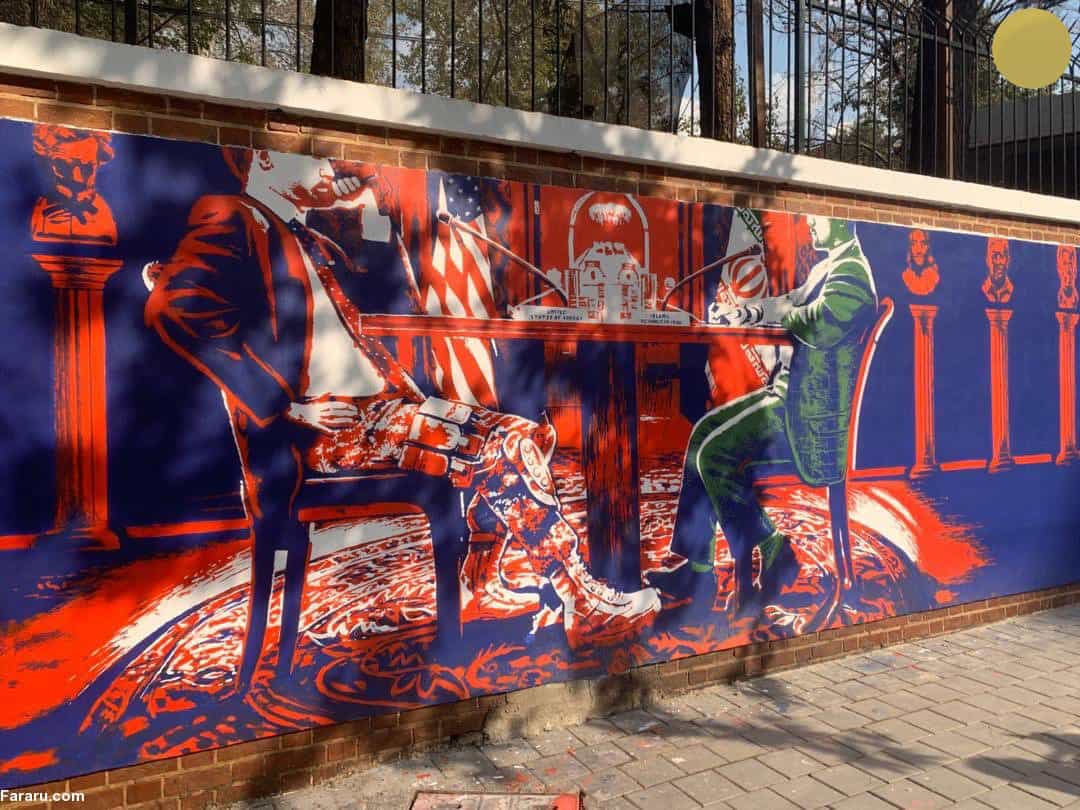
Amid renewed sanctions and regional isolation, Tehran seeks a “third way” of survival through China and Russia—but without real integration, it risks only delaying collapse.
Following the 12-Day War between Iran and Israel in June 2025 and the direct U.S. military strikes on Iran’s nuclear infrastructure, the curve of political, economic, and security pressure on Tehran within the international community has risen sharply. Early intelligence assessments in Washington concluded that the U.S. attacks “did not destroy Iran’s nuclear capability but rolled it back by several months.” The strikes, while limited, reflected Washington’s plan to maintain leverage and underscored the fragility of Iran’s “civilian nuclear deterrence.”
In this context, the reactivation of UN sanctions through the “snapback mechanism,” launched by Britain, France, and Germany on October 5, opened a new phase of pressure: the reinstatement of the arms embargo, restrictions on enrichment and reprocessing, limits on missile and drone programs, and the refreezing of blacklisted individuals and entities. Tehran warned of a “harsh response” and summoned the three European ambassadors for consultations.
Meanwhile, Moscow—one of Tehran’s key partners—rejected the legal legitimacy of the snapback and said it would not recognize the renewed sanctions.
From Bargaining Chip to Security Risk
For two decades, Iran’s nuclear program served as its main bargaining lever in talks with the West. After the 12-Day War and U.S. attacks, it has effectively turned into a security risk. Washington and Tel Aviv have sent a unified message: a rapid resumption of enrichment at prior levels will trigger military retaliation.
At the 250th anniversary of the U.S. Navy at Norfolk Naval Base on October 5 (13 Mehr), Donald Trump said, “This time, we’re not going to wait that long,” noting that his forces “have been preparing for 22 years to strike Fordow, Natanz, and Isfahan [Iran’s nuclear facilities].” The tone revealed a strategy of permanent tension toward Tehran—one designed to raise the cost of any swift nuclear rebound.
A Shift in Europe and the Gulf
That is not the only aspect of the emerging containment alignment. On October 6 (14 Mehr), at the EU–Gulf Cooperation Council ministerial meeting in Kuwait, participants once again highlighted “concerns over Iran’s nuclear and missile programs” and pledged joint coordination in the areas of maritime security, non-proliferation, and defense cooperation. The statement built on an earlier communiqué of October 2024 that explicitly called for “guaranteeing the exclusively peaceful nature of Iran’s nuclear program” and “ending the expansion of its ballistic and drone capabilities.”
Put differently, Iran’s missile and drone programs are now following the same trajectory that the nuclear issue took from 2003 to 2025: from expressions of “concern” to becoming “matters of collective security.”
This shift is not merely declarative or symbolic. The outcome of the Kuwait summit, alongside the reimposition of UN sanctions, effectively widens the operational scope of European and Gulf coordination, enabling broader enforcement against Iran’s sanction-evasion networks and logistical routes by sea and land. Tehran’s reaction was immediate: it denounced the statement as “interventionist” and summoned European diplomats in Tehran.
For four decades, Europe (along with Japan) was an important economic partner for Iran—a relationship that, in previous crises, acted as a buffer preventing escalation. That link has eroded over the past decade. The revival of Security Council sanctions and the EU–GCC statement signal that Europe has shifted from the posture of a moderate arbiter to an adversarial stance. The practical outcome is tighter banking, insurance, legal, and technological choke points for Iran—conditions that, if combined with coordinated anti-smuggling and inspection regimes at sea and on land, could rapidly increase Tehran’s economic costs.
The Maritime Front
Reports in regional and pro–“Axis of Resistance” outlets, notably Al-Mayadeen, have suggested that the United States is preparing to “restrict the movement of Iranian commercial vessels,” hinting at a revival of inspection and seizure mechanisms under the UN sanctions framework. These claims were echoed with warnings of a “firm Iranian response.”
Regardless of their accuracy, the mere appearance of such reports in Tehran-aligned media shows how sensitive Iran has become to the prospect of a new maritime front of pressure—a front that, through insurance restrictions, flagging limits, port denials, and cargo inspections, could substantially raise the cost of Iran’s foreign trade.
The “Third Way”: From Tactic to Strategy
In its official narrative, Tehran views the present moment as one in which “the entire Western order” has mobilized against it, leaving two final options on the table: total surrender or collapse—whether through war, economic suffocation, or both.
Its hope lies in a “third way”: changing the rules of the game by relying simultaneously on two shields—economic survival guaranteed by China and strategic deterrence backed by Russia. Translating this concept from rhetoric into practical mechanisms, however, requires strategic integration, not episodic transactions.
Economically, a recent Wall Street Journal investigation described how China has been paying for Iranian oil outside the global banking system, using a shadow financial entity (Chuxin) and insurance from the state-backed Sinosure to compensate Chinese contractors. Oil flows out, infrastructure projects flow in, and cash traces in global networks are minimized. This scheme gives Iran short-term breathing space, but unless it evolves into a declared, reciprocal protection framework from Beijing, it remains a tactic for sanction management—not a strategic guarantee of economic security.
On the military front, leaked documents from the Russian state firm Rostec about Iran’s potential purchase of 48 Sukhoi-35 fighter jets are symbolically significant: they suggest a rapid modernization of Iran’s aging air fleet and a message of deterrence. Yet even if the contract is finalized and deliveries begin between 2026 and 2028, without joint command, intelligence, training, and logistical systems with Russia, such purchases remain tactical upgrades, not strategic architecture.
For the “third way” to gain real security meaning, it must anchor itself in defensive pacts and stable support chains—evidence for which remains absent.
Why Strategic Integration Is So Difficult
Syria’s experience under Bashar al-Assad offers a warning. Russian airpower can shift the battlefield balance temporarily, but without a binding long-term strategic framework, it quickly becomes subordinate to the Kremlin’s changing priorities.
In the economic sphere, the opportunistic involvement of Chinese state-private firms in “Iran’s sanctions economy” is likewise tactical. Strategic alignment would require Beijing to define explicit costs and risks for defending Iran’s economy in a crisis and to fold that commitment into its broader regional security policy—something it has never done outside its immediate periphery.
Inside Iran’s power structure, there is no consensus on the “third way.” Even if one emerged, constructing a new path amid simultaneous economic and security pressures from the U.S. and its allies would demand organizational coordination, budgetary discipline, and a redefinition of regional priorities—three capacities the system currently lacks.
The Missile Line: Shorter, Sharper, Costlier
Unlike the nuclear issue, which took two decades (2003–2025) to evolve from “concern” to “security crisis,” the missile and drone files are moving much faster. On the second anniversary of the October 7 attacks, Israeli Prime Minister Benjamin Netanyahu addressed the anxieties of Trump’s political base directly, calling Iran’s missile program “a threat to New York, Washington, and even Mar-a-Lago”—Trump’s Florida residence.
On the other side, the EU–GCC statements’ references to ending Iran’s ballistic expansion, coupled with renewed UN sanctions, signal an intent to move from rhetoric to coordinated enforcement—from supply-chain tracking to financial and legal restrictions. In this domain, the adversary’s readiness to escalate—to the point of cyber, operational, or legal confrontation—was high from the outset, potentially compressing the cycle of pressure from “multi-year horizons” to “month-to-month episodes.”
The Proxy Front: Putting the Genie Back in the Bottle
In Iraq and Lebanon, pressure is mounting to redefine the role of Iran-backed militias. The clear goal is to limit their disruptive capacity and sever weapons and funding channels. Tehran faces a paradox: its main patron of these networks is itself in the deepest existential crisis since 1979. With limited financial, logistical, and diplomatic bandwidth, Iran’s ability to shift the playing field is constrained.
In other words, the very instruments of regional influence once counted as “strategic assets” can now become liabilities of survival.
The “Third Way”: Mirage or Reality?
In Tehran’s own counter-narrative, the West has confined the Islamic Republic to two outcomes: total submission or systemic collapse. Its preferred path—the “third way”—is “active survival” based on Chinese and Russian backing across two vital domains: economy and security. Recent developments, from China’s covert oil-payment mechanism to talk of Sukhoi-35 purchases, are pieces of this puzzle—but insufficient ones. Unless these elements evolve into declared defensive frameworks, economic-protection compacts, and deep integration at the levels of data, command, and logistics, the “third way” will remain fragile.
Ironically, the much-discussed maritime front could become the real test of this path. If Tehran and Beijing can demonstrate in practice that Iranian shipping continues under a “secure insurance and port umbrella,” and if Moscow provides consistent operational and intelligence support for deterrence, then one could speak of “active survival.” Otherwise, trade costs will rise, currency risks will surge, and the pressure loop will tighten.
The reality is stark: over two decades, the Islamic Republic has drifted from the image of a “revived Shi’a empire” to the daily contest of mere survival, yet it still has not converted imperial posture into survival design.
If the “third way” is to move beyond rhetoric, it will require accepting a degree of economic and security tutelage from larger powers. The North Korean model shows that such dependency has real costs and benefits for disruptive states outside the U.S.-led order. In Iran’s case, ideological identity and the domestic costs of a strategic pivot make such subordination difficult.
Operationally, the road ahead will be judged by four variables:
- The will to enforce and implement UN sanctions at sea and on land.
- The West’s capacity to maintain parallel pressure across nuclear, missile, drone, and proxy fronts.
- The willingness of China and Russia to elevate their commitments from tactical to strategic.
- The internal cohesion of Iran’s political system in redesigning its priorities under siege.
Absent progress on all four, the “third way” is less an exit route than a costly pause between surrender and collapse.