

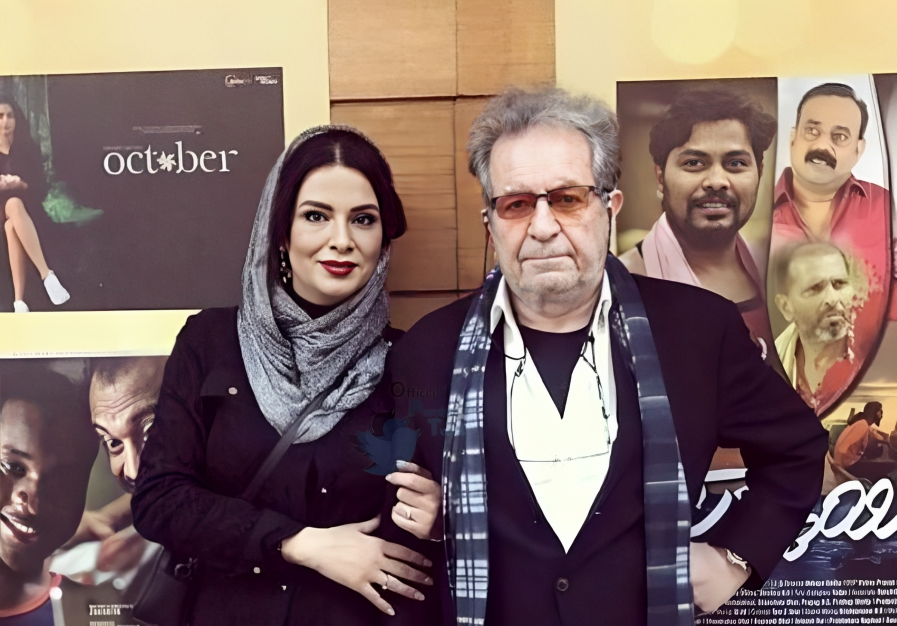
In his 100-second short film Cinema’s Blood, writer and filmmaker Ghazi Rabihavi draws inspiration from Ingmar Bergman’s Persona to frame the murder of Dariush Mehrjui, a leading director of the Iranian New Waveو and his wife, Vahideh Mohammadifar, not merely as a crime but as a profound human and cultural tragedy. Through sound, image, and philosophical references, the film explores identity, violence, and the eternal silence of the victims, staging a cinematic dialogue between two great masters.
Dariush Mehrjui, a leading director of the Iranian New Wave [best known for films like The Cow that helped redefine Iranian cinema in the 1960s] and his wife Vahideh Mohammadifar were killed on October 14, 2023, in their villa in Zibadasht, Karaj. Their bodies were discovered by their daughter. Police investigations revealed that Mehrjui died from multiple knife and blunt-force wounds, while his wife was killed by suffocation and stabbing. Forensic reports ruled out sexual assault and noted that the assailants left no defensive marks on the victims’ bodies.
The case concluded in court with the primary suspect sentenced to two executions under qisas—a form of legal retribution in Islamic law allowing victims’ families to demand equal punishment—while other defendants received prison terms. Yet uncertainty remains. Mona Mehrjui, the couple’s daughter, publicly announced on Instagram that the family did not seek executions and waived their right to qisas. The lawyer for Vahideh Mohammadifar’s mother stressed that forgiveness did not mean overlooking the crime and demanded alternative punishments, given its public dimension. The family insists that the motives attributed to the defendants do not match the brutality of the killings, leaving the case clouded in ambiguity.
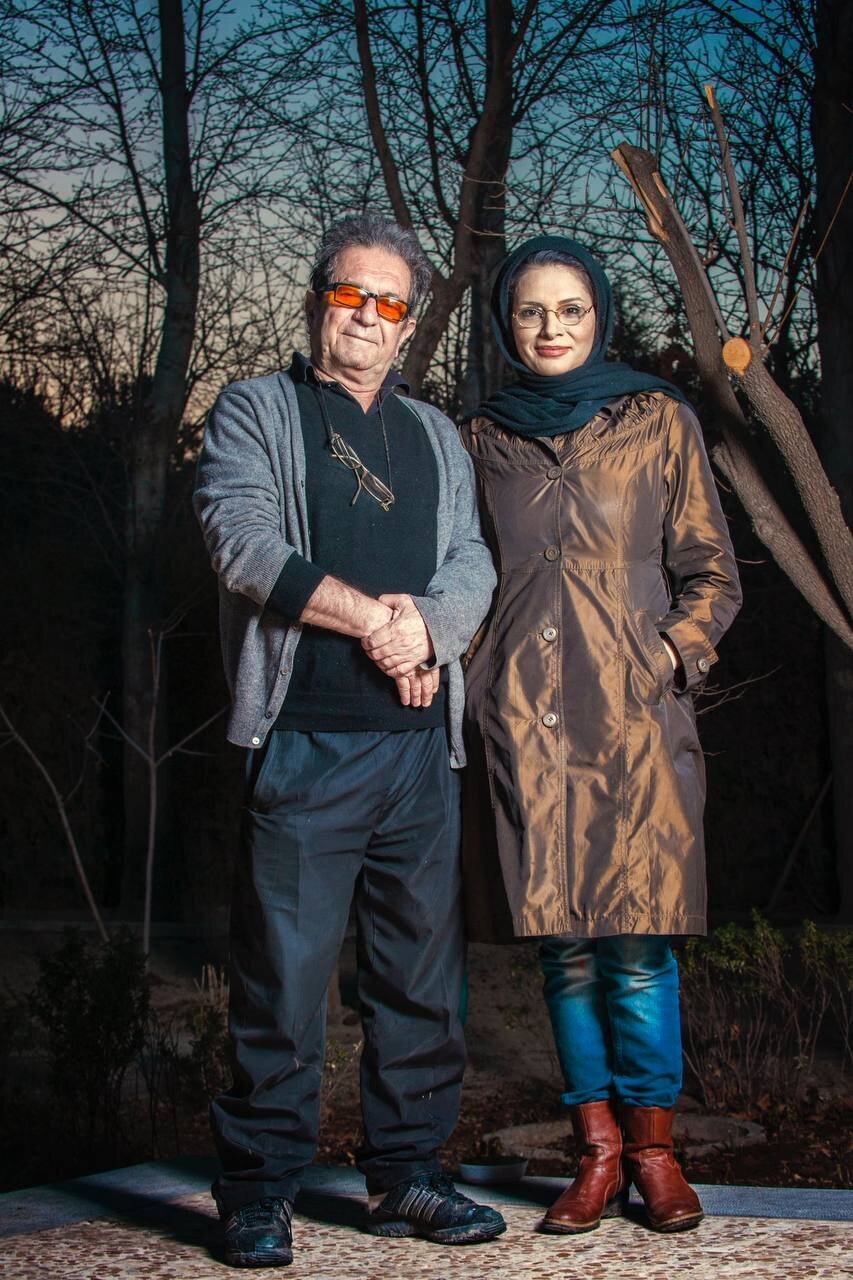
Ghazi Rabihavi, a renowned writer with a long career in theater, cinema, and screenwriting, responded by creating a 100-second short film to reflect on the murders. In Cinema’s Blood, he draws on Bergman’s Persona to offer a philosophical interpretation of the tragedy.
Warning: the film contains violent imagery.
What plays on the television screen on the night of the murder are scenes from Persona (1966), one of modern cinema’s masterpieces. This choice is not just a cinematic reference but a philosophical interpretation: Rabihavi suggests that the killing of Mehrjui was not merely a grim news item, but a profound human and cultural tragedy. By embedding Bergman’s film, Rabihavi elevates the work beyond reportage, toward questions of identity, violence, and the role of the artist in life and in death.
Merging Film and Crime
Bergman’s Persona tells the story of two women whose identities blur until the boundary between “self” and “other” dissolves. In Rabihavi’s tragic inversion, the murderers violently impose themselves into Mehrjui’s life, destroying his identity and world. It is a forced and destructive fusion, in contrast to the gradual, voluntary merging in Persona.
The murder scene in the hallway unfolds as Persona flickers on the television, merging film with crime. The abstract, psychological violence of Bergman’s work collides with the physical violence of reality.
In Persona, the character Elisabeth chooses silence as a way to escape society’s imposed roles. In Rabihavi’s short film, Mehrjui and his wife fall silent forever. Here, silence is final and compulsory.
The word persona in Latin means “mask.” Bergman’s film explores the masks people wear. Rabihavi suggests that the killers hid behind masks of personal hostility and greed, concealing their human identity. They entered the house behind these masks. The camera of Persona becomes a witness to the murder, as if society itself is silently observing and judging.
At the same time, screening Persona in Mehrjui’s home becomes a cinematic homage, as if Bergman’s great world cinema bears witness to the death of one of its gifted children. Rabihavi thus stages a cross-border, timeless dialogue between two masters: one exploring the depths of human existence on screen, the other, in front of the screen, struck down by humanity’s most brutal face.
Sound Design
To grasp Rabihavi’s craft in these 100 seconds, sound is key.
The projector continues to hum, indifferent to the human catastrophe unfolding nearby—a metaphor for the cold neutrality of machines.
Abstract, suspenseful music collides with the victims’ sounds, evoking horror both viscerally and rationally. The viewer becomes a witness: we hear the disaster, but we cannot see it fully.
By avoiding graphic depiction and relying on sound, Rabihavi both honors the victims and allows the audience’s imagination—often more terrifying than any image—to fill the space.
Ghazi Rabihavi and Cinema
As a writer and screenwriter, Rabihavi has played a vital role in shaping Iranian cinema. One of the pioneers of anti-war literature in Iran, he turned to screenwriting after enduring imprisonment, contributing scripts such as Golhā-ye Davoodi (Chrysanthemums) and Sāyeh-hā-ye Gham (Shadows of Sorrow). Both works are regarded as key films in Iran’s family and social cinema. Through these screenplays, Rabihavi steered Iranian narratives toward social realism with a humanist lens, transferring his literary and social experience onto the screen.