

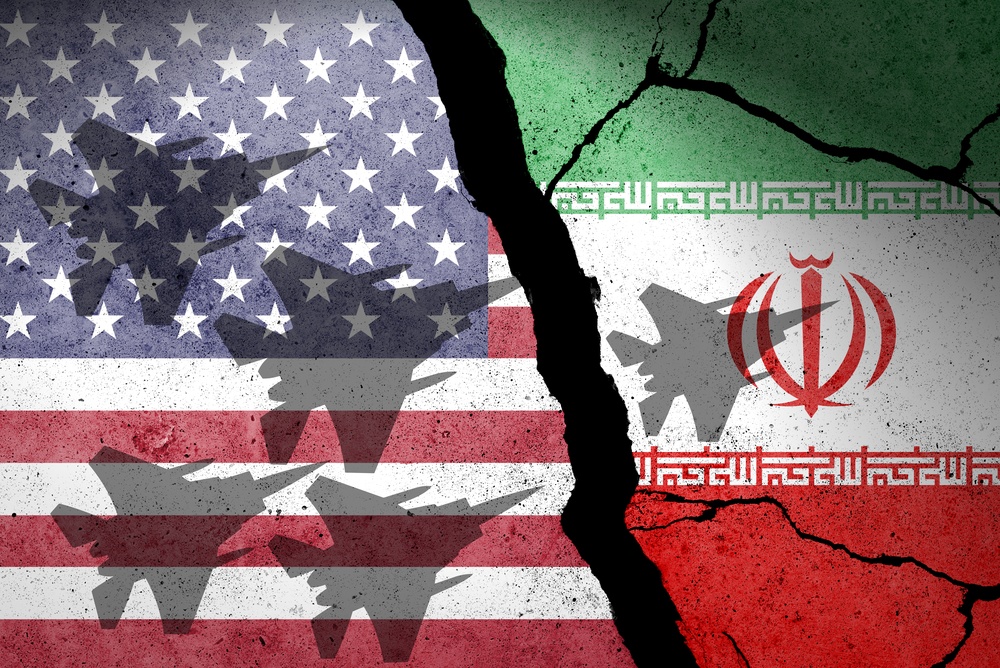
Without major reciprocal security guarantees, the current U.S.–Iran talks may amount to nothing more than a pause between two wars.
With the United States and Iran accepting a two-week ceasefire brokered by Pakistan, a small window has opened onto a large question: is there a middle-ground, tolerable solution to the forty-seven-year conflict between Washington and Tehran?
The Islamic Republic’s second leader, whose security and political legacy still governs Iran’s political system, believed, and repeatedly said, that this complex equation of enmity could not be resolved except through “growing stronger” and “imposing one’s will” on Washington. In other words, he saw this hostility not merely through the lens of a “conflict” or “clash of interests,” but as something intrinsic. He had no faith in small security-economic agreements designed to resolve areas of tension step by step. This suspicion can be seen in dozens of his speeches before and after the nuclear deal, as well as in his historic remarks to the Assembly of Experts in Farvardin 1391 (March 2012), when he directly attacked the step-by-step method of easing tensions with the United States, addressing Akbar Hashemi Rafsanjani and Hassan Rouhani.
In several speeches before he was killed, between the 12-Day War and the current 40-Days War, Ali Khamenei also said that the United States would settle for nothing less than swallowing Iran as a whole, and that for this reason compromise was impossible. Unless “we become impossible to swallow” [is this clear in the translaiton]. He considered the minimum demand of Trump’s America to be Iran’s acceptance of its guardianship over the country, and for that reason, in his last speech, he said that someone like him would not “pledge allegiance” to Yazid.
This matters because the third leader—Mojtaba Khamenei, if he is alive and is in fact the decision-maker—must decide during this brief ceasefire whether the Islamic Republic has reached the point of becoming “impossible to swallow,” and if it has not, whether he wants to remain committed to his father’s intellectual and strategic framework in dealing with the regime’s most important field of tension, namely hostility with the United States, or depart from it in some way, even tactically. In other words, if that enmity remains intrinsic, then it has no negotiated solution, and one may safely assume that without tactical flexibility no understanding will emerge between the American and Iranian delegations in Islamabad. But even if the third leader shows tactical flexibility and something is born from those talks, it will be short-lived.
Yet regardless of whether this chronic tension between the United States and Iran is intrinsic or contingent, the Islamabad talks must first respond to the question of war and its drivers, and only then make possible some form of tolerable coexistence between Iran and the United States.
Let us focus on precisely this issue and look at the negotiations first through Iran’s eyes and then through America’s.
The Islamic Republic has a four-decade security architecture that has protected it against its enemies up to now. Not in the sense that this architecture has been deterrent or effective, but in the sense that it has preserved the Islamic Republic from overthrow. This security architecture has rested on a missile-based military strategy built around long-range strikes; a security strategy of disrupting regional security processes and extracting concessions through resistance groups outside formal state structures; and a defensive deterrence strategy based on threshold nuclear capability.
The Islamic Republic has paid heavily for this security architecture. What it gained in return was survival. Sanctions, a generalized economic crisis, tense relations with its regional surroundings, and, of course, domestic discontent were all the result of pursuing and implementing this security architecture. The Islamic Republic’s second leader described these costs as the hardships of reaching the summit. Once the summit was reached, he promised, a period of prosperity, calm, and stability would follow. That promise was never fulfilled in Ali Khamenei’s lifetime, and indeed that very failure—or delay in arriving at success—made relations between the people and the state inside the Islamic Republic, and between the Islamic Republic and its regional environment, more tense by the moment.
That security architecture now lies at the heart of the current tension. In other words, the United States and Israel say or hope that Iran will abandon this entire architecture altogether: that it will neither pursue the nuclear issue, nor maintain missile ambitions, nor continue moving along the axis of the “Axis of Resistance.”
Any lasting solution reached in Islamabad must somehow answer the fundamental drivers of the war. Yet those drivers are precisely what has kept the Islamic Republic standing up until now. Can the Islamic Republic survive without this security architecture, unless it is replaced by a new and effective framework?
What would a middle-ground solution look like? Let us assume that Iran is willing to bargain over these three issues. In the first instance, Iran would have to genuinely believe that it has reached the summit. That is, in its reading of the current situation, it would have to conclude that the present war has, to a large extent, exhausted the accumulated force of four decades of hostility, and that the United States is now seeking coexistence with Iran. After this crucial stage of assessment, the first demand Iran would place on the table in exchange for such flexibility would be this: what substantial, immediate, and attractive security framework will you offer us to replace our current security architecture? And this is assuming that decision-makers in Tehran do not instead conclude that, now that they have reached the summit, there is no need to replace their strategic toolkit at all, but rather to expand it—not only preserving the old security architecture, but adding new elements to it as well.
But let us assume that the leaders of the Islamic Republic do not want to keep paying the cost of maintaining that architecture, and are open to replacing it with a new security model. In that case, what could replace the old architecture?
A binding security pact with the United States? Incorporation into security-economic corridors? Direct economic and security partnership with the United States, along with a de facto end to hostility with Israel? A new arrangement with neighboring states? A political-security package to resolve Lebanon, Iraq, and Yemen?
A broad combination of all these could be the middle-ground solution. But such a combination is not born overnight, nor can it be realized in the short term. These intermediate solutions can only be implemented through phased, step-by-step arrangements. One cannot demolish the security structure of a political order in a day, a week, or a month and rebuild it from scratch. Such a plan requires both patience and the will of both sides to carry it out properly—and not renege.
Can Trump’s America be patient? Does Iran see itself at the summit, and America in a position to accept a constructive common security design?
What makes the current situation so complicated is that there is both severe time pressure and an enormous number of issues on the table, while any lasting solution would have to remove the key elements of earlier incompatibilities.
The same holds on the American side. Just as the Islamic Republic may see itself at the summit, the United States would, in its own way, also have to accept such a picture. That is, it would have to regard the costs of regime change through military attack as intolerable, and have no hope in other models of regime change either.
But what if the American side does not see things that way?
In any event, if Washington is seeking a lasting solution, it really faces only two options: regime change, with all its costs, or coexistence with a reconfigured Islamic Republic. If Trump’s America hopes that the Islamic Republic will surrender all of its security assets while asking for nothing equivalent or commensurate in return, then either it has miscalculated, or it has an operational plan for regime change, and these negotiations will be nothing more than a short pause between two wars.
The success of the current negotiations depends on how each side assesses its own position, on their readiness for major flexibility, on their ability to overcome the pressure of time, and, of course, on the patience and commitment required to open a path altogether different from the past forty-seven years.
If that readiness does not exist on both sides, then the current negotiations will be only a blank page between two bloody chapters in the book of enmity between Washington and Tehran.