

Airstrikes, lockdowns, secret transfers, and shortages have turned prisons into high-risk zones, while authorities restrict information and respond to unrest with force instead of protection.
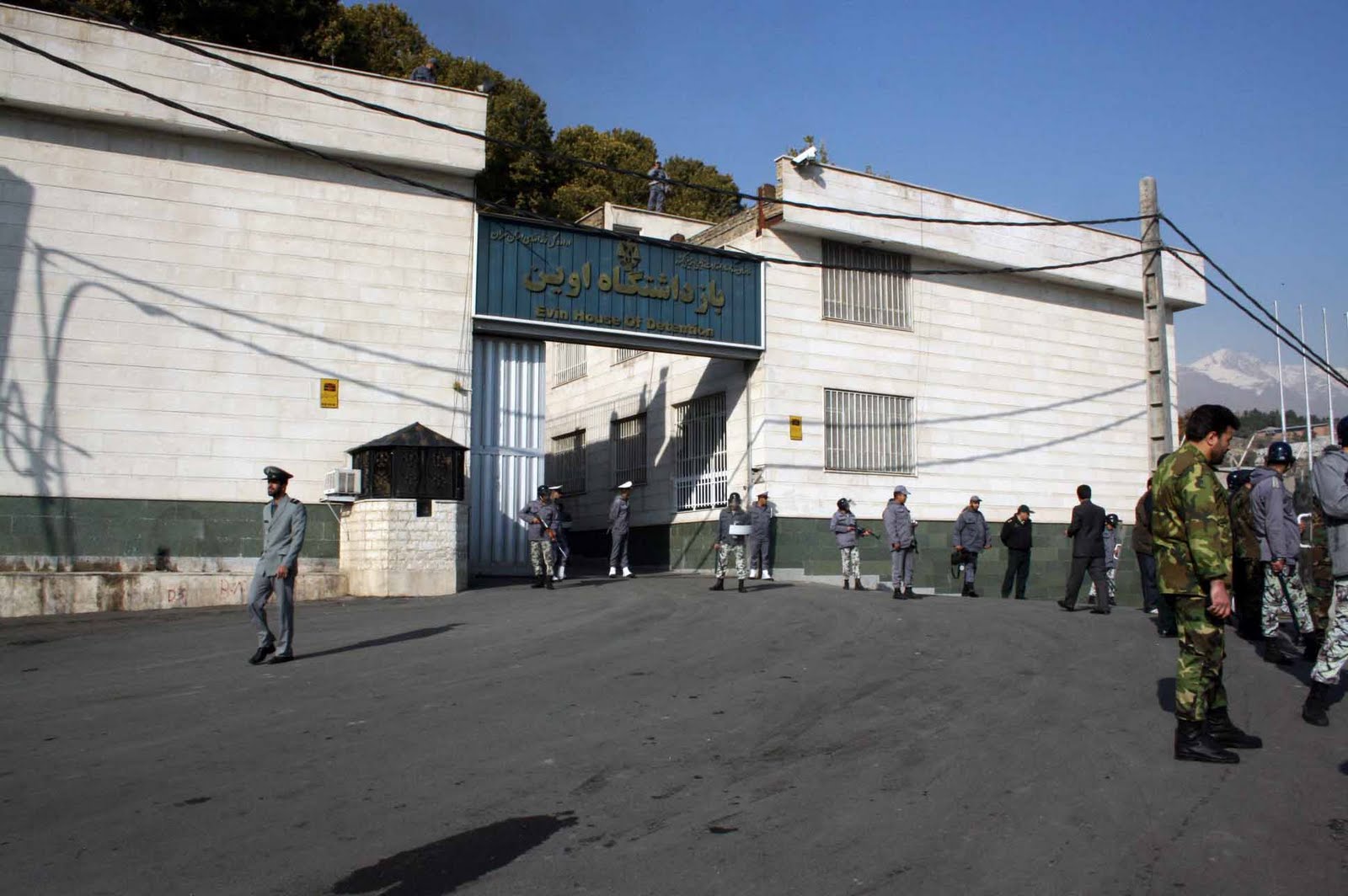
As U.S. and Israeli strikes continue, political prisoner Reza Khandan, writing from Evin Prison, warns that thousands of prisoners, many detained “unlawfully,” are being held under constant risk of bombardment. He says any repeat of a mass-casualty incident would fall directly on the judiciary and the Prisons Organization, especially after earlier warnings went unheeded.
Khandan’s latest letter was written after several days of renewed attacks and explicitly recalls the earlier “12-day war,” when air attacks reportedly hit parts of Evin and killed dozens of prisoners, staff, and visiting family members, despite legal provisions and prior calls for temporary releases in war zones. He says the state failed to implement even its own emergency measures, and insists that “this time” there can be no excuses.
Khandan had already described the Evin bombing in a letter dated September 10, 2025, writing that many prisoners were inside their rooms when the explosions hit, that fear and injury spread quickly, and that some prisoners were moved to solitary confinement while others were killed. He also pointed to “the lack of a safe shelter” and what he described as the failure of any effective protective system, leaving prisoners, staff, and families exposed.
In his warning now, Khandan is blunt about accountability. One of his key passages reads:
“Despite repeated letters and warnings from me, Reza Khandan, and other cellmates, prisoners in Evin were prevented from being released, and the catastrophe of dozens of deaths among prisoners, staff, families, and others took place.”
“This time, no excuse or pretext will be accepted. Direct responsibility for prisoners’ lives lies with the judiciary and the Prisons Organization.”
He also warns that war conditions are already cutting prisoners off from basic services, and that if the conflict continues, shortages of food rations and hygiene supplies are predictable.
Evin: Militarization, Isolation, and Basic Services Breaking Down
Multiple accounts describe Evin shifting from prison administration toward security control. Families report that Ward 209, the Intelligence Ministry’s detention ward, was evacuated and prisoners were moved to an unknown location. Relatives received no clear information and, in some cases, contact was delayed or cut, producing acute fear about where detainees have been taken and under what conditions.
Reports from monitoring groups describe intensified pressure in Ward 209 before the evacuation, including restricted communications, harsher interrogation, and prolonged uncertainty for families. One family account describes a bail process that suddenly collapsed once strikes began, reinforcing the sense that wartime conditions are being used to suspend even minimal procedural predictability.
Other testimonies depict Evin under the control of NOPO, a special police operations unit. In these accounts, prison officials reportedly left the facility, leaving a vacuum with immediate consequences: food provision became difficult, the prison store stopped functioning, and routine services were interrupted. Families warn that in a prolonged conflict, this kind of breakdown can quickly turn into hunger, hygiene collapse, and medical emergencies.
Tehran Great Prison: Explosions Nearby, Panic Inside, and Violent Suppression
Reports from Tehran Great Prison (Fashafuyeh) describe multiple explosions in the vicinity, apparently linked to a strike on a nearby military site, followed by damage such as shattered windows and cracked walls. Sources say prisoners rushed out of wards in fear, and guards responded with harsh repression, including gunfire. The number of injured or dead remains unclear, which itself is part of the danger: in wartime, prisons can become spaces where information is blocked precisely when accountability is most urgent.
The pattern emerging here is not only physical vulnerability to strikes, but also a security response that treats collective fear as “disorder,” meeting it with force rather than evacuation planning, shelter provision, or transparent emergency protocols.
Secret Transfers: Disappearance Risk and Fear of “Human Shield” Placement
Beyond Tehran, sudden prisoner transfers have become a defining wartime risk. A major case involves the reported transfer of political prisoners from Dastgerd Prison in Isfahan on February 28, 2026, reportedly carried out by bus convoy to an undisclosed location, without notice to lawyers or families.
Rights groups warn that such wartime transfers can place prisoners in even greater danger by moving them into unknown facilities, cutting access to legal counsel, and exposing them to violence, enforced disappearance, or coercion. In war conditions, secrecy plus coercive transfer creates a setting where prisoners can be harmed with minimal visibility and no immediate recourse.
A more alarming claim circulating in parallel is the fear that prisoners may be transferred to military or security sites and used as “human shields.” Videos shared online, described as showing detainees being moved to Basij bases, have intensified these concerns. Whether every instance can be independently verified, the underlying risk is clear: unannounced relocations and blackout conditions dramatically raise the danger of abuse.
Former political prisoner Atena Daemi describes detainees as the “most defenseless” group at this moment, caught between two threats at once: the possibility of external strikes hitting prisons, and the risk of internal retaliation or violence by state forces as security control tightens.
Adel-Abad Shiraz: Protest Met with Riot Forces and Underground Punishment
In Adel-Abad Prison (Shiraz), prisoners reportedly protested what they saw as unsafe conditions and official indifference during wartime. Accounts describe prisoners briefly taking control of parts of the wards before riot-control units intervened. Some protesters were reportedly moved to underground sections, described as lacking basic human conditions and associated with severe punishment, and subjected to beatings and torture.
This episode adds a crucial dimension to the wartime prison crisis: when prisoners demand safety, the default response becomes coercion and isolation, not protection. In a conflict environment, where outside attacks, shortages, and anxiety intensify, this reflex sharply raises the probability of lethal outcomes.
Emergency Release Demands and Legal Off-Ramps
Across these reports, calls for action converge on a clear set of measures:
- immediate transparency about prisoner locations after any transfer
- restoration of contact rights (family calls), lawyer access, and medical care
- emergency furloughs or releases for political prisoners, the sick, and other vulnerable groups
- use of existing legal mechanisms (alternatives to imprisonment, suspension of sentences, conditional release) under emergency conditions
- independent monitoring and clear accountability if harm occurs
The Narges Mohammadi Foundation frames these steps as a basic humanitarian necessity, especially as explosions are reported near multiple prison areas and civilians, including prisoners, are directly exposed to harm.
How War Endangers Prisoners: The Mechanism in One Picture
Taken together, the five reports map a single wartime pattern:
- prisons become de facto frontline spaces, often near military infrastructure or within strike corridors, without shelters or evacuation planning
- security forces militarize prisons, restrict information, and cut routine services
- shortages and medical neglect worsen as logistics break down
- transfers to unknown sites increase disappearance risks and amplify fear of coercion or “human shield” placement
- protests over safety are met with violence, deepening the likelihood of injury, torture, or death
The overall narrative is not only that war creates danger, but that the prison system compounds that danger through secrecy, militarized control, and the refusal to implement even minimal protective measures.