

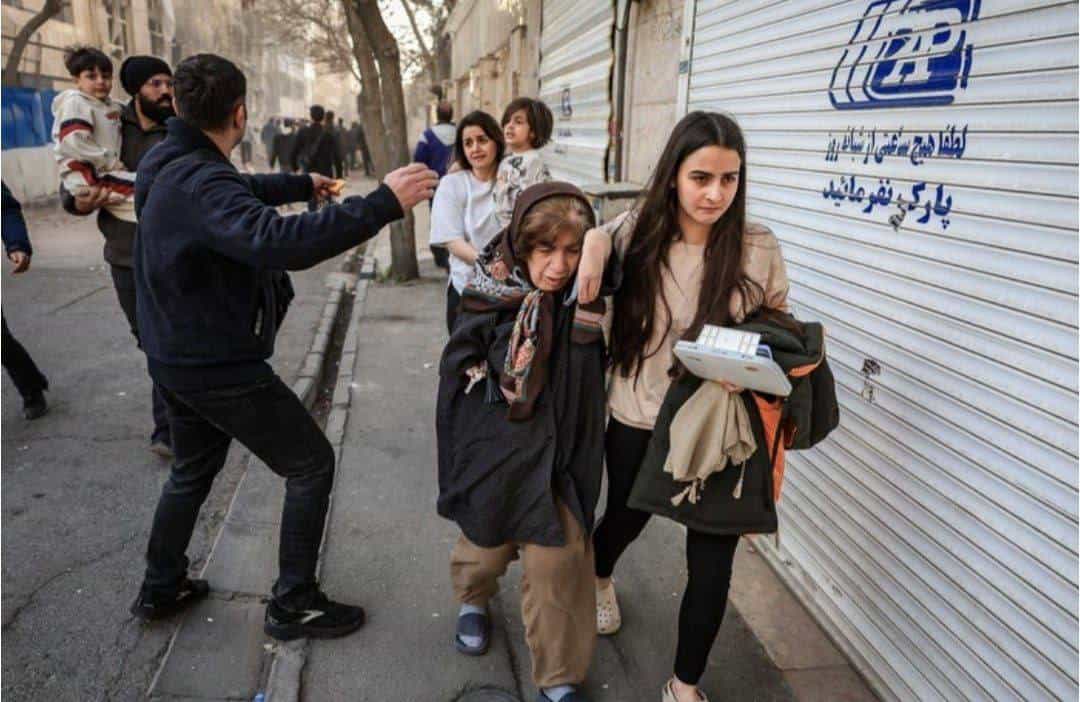
March 8 marks both women’s long struggle for equality and a chance to reflect on war’s human toll and the urgency of defending women’s rights in times of crisis.
The coincidence of International Women’s Day with the intensification of military confrontation between the United States and Israel, on the one hand, and the Islamic Republic of Iran, on the other, once again underscores a basic truth: war is not merely a military event. It is also a profoundly social phenomenon that reproduces structures of power, inequality, and gender relations. In such conditions, women — especially working-class and marginalized women — often stand on the front lines of war’s less visible consequences.
In the scholarship on war and gender, researchers have repeatedly shown that wars do not simply reflect existing power relations; they intensify them. Across both gender studies and war studies, scholars have argued that gender roles become more sharply visible in wartime than at almost any other moment. As Joshua S. Goldstein writes in War and Gender, “Nowhere are gender roles more prominent than in war.” Wars are typically shaped by patriarchal structures and, as a result, deepen gender inequality within the family, the labor market, and political institutions.
War directly disrupts everyday life and transforms social relations at every level. In many societies, women are the first to bear the economic consequences of war: job loss, wage cuts, the spread of informal employment, and an increased burden of family care. In addition, wars often leave large numbers of women widowed, abandoned, or solely responsible for supporting their families — a situation that imposes added economic and psychological pressure on them.
In Iran, this vulnerability has already taken shape within the context of a deep economic crisis. In recent years, poverty has become increasingly feminized. Estimates indicate that more than four million women who head households live in the country, and a large proportion of them belong to the poorest sectors of society because of the absence of social support and restrictions in the labor market. In Tehran alone, reports suggest that more than 60 percent of the roughly 200,000 identified women heads of household are struggling with poverty. Nationwide, while around 30 million people live below the poverty line, women remain in an even more precarious position in the labor market because of structural and legal discrimination, and their rate of economic participation is estimated at around 26 percent.
These conditions have pushed many women into informal work, small workshops, or street vending — jobs that often lack insurance, job security, and legal protections. In such a structure, any economic or security crisis, including war, can quickly shatter this fragile balance. In wartime, women are usually the first to be pushed out of the labor market or to see their wages reduced.
With the outbreak of military conflict, these vulnerabilities are intensified still further. War not only redirects economic resources toward the military sector, but also, through insecurity, population displacement, infrastructure destruction, and rising living costs, places even greater pressure on poor households. In such conditions, women who head households are more exposed than others to falling into absolute poverty.
Moreover, in a multi-ethnic society such as Iran, the combination of different forms of discrimination — including gender, ethnic belonging, and religious or belief-based identity — can make women’s situation even more complex and severe. Women who simultaneously face gender-based, ethnic, or belief-based discrimination encounter multiple layers of deprivation and structural violence under wartime conditions.
From this perspective, commemorating March 8 is not merely a reminder of women’s historic struggle for equality; it is also an opportunity to rethink the human consequences of war and the necessity of defending women’s rights in times of crisis. Any strategy of peace, reconstruction, or political reform in Iran that fails to address the condition of women — especially working-class women and women heads of household — cannot, in practice, lead to lasting social justice.
International experience shows that wars truly end only when societies are able to prevent the reproduction of unequal structures. Defending women’s rights, guaranteeing their economic participation, and creating support mechanisms for vulnerable women are not only human rights demands, but also preconditions for the moral and social reconstruction of a society emerging from deep crises.