

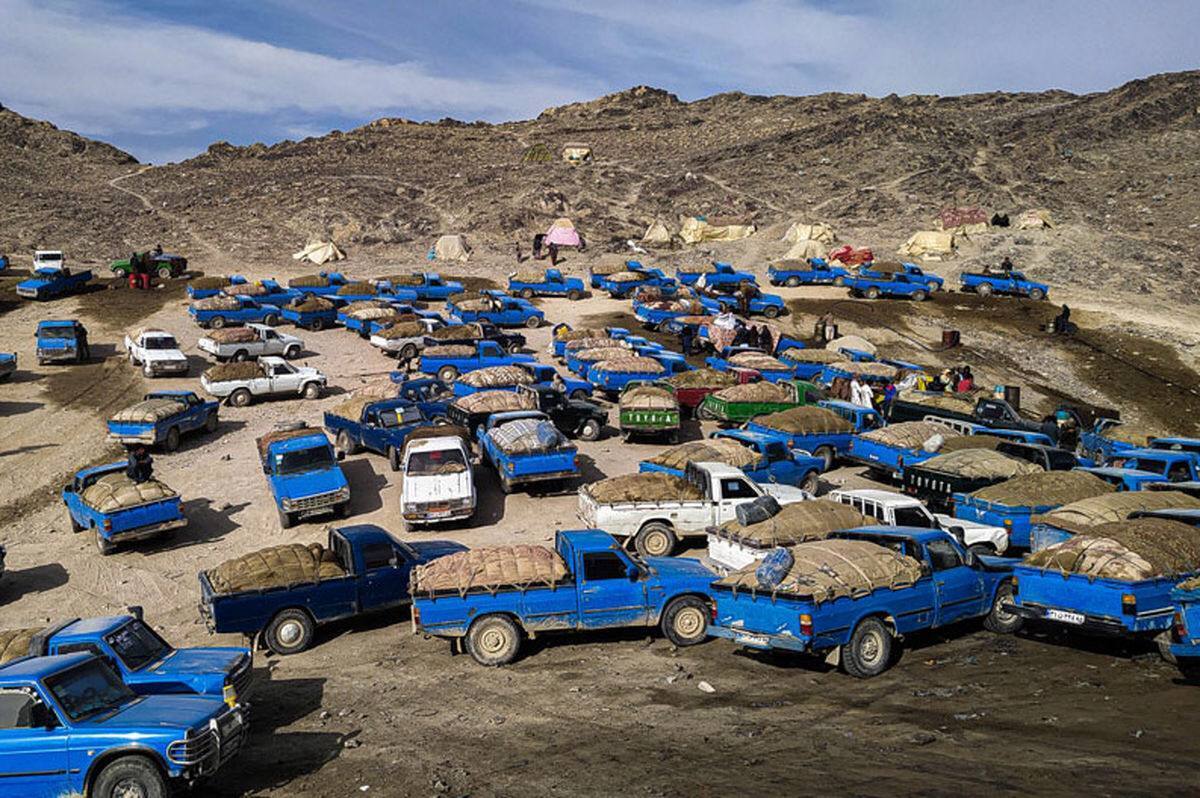
Strikes shuttered markets across eastern Sistan and Balochistan as residents protested border closures and a fuel-carrying crackdown. At least 18 killed in October; demands center on safe work and open crossings.
According to the Baloch Activists Campaign, on Saturday, October 4, 2025 (12 Mehr 1404), residents of Panjgur, Mashkid, and Nok Kundi—border districts along the Iran–Pakistan frontier—staged demonstrations and a general strike against ongoing border closures and harsh restrictions on fuel carriers, the workers who move small fuel loads across the border informally. Local sources said markets, shops, and main routes had been shut for days as crowds demanded the reopening of crossings and an end to violent tactics. Witnesses reported a heavy security presence, with officers firing into the air and issuing threats to disperse gatherings.
These protests come after months of unrest across Balochistan—the wider region spanning southeastern Iran and southwestern Pakistan—and in Iran’s Sistan and Balochistan Province, home to the Baloch ethnic minority. Similar actions have been reported in other border zones, including Mirjaveh, over closures and pressure on fuel carriers. As one Panjgur resident told the campaign:
“People are at their limit. There’s no work, and the borders are shut. Young men carry fuel—risking death—to put bread on the table, but bullets are the answer.”
What “fuel carrying” is and why it persists
In Iran’s southeast, “fuel carriers” (Persian: soukhtbar; the practice: soukhtbari) move small loads of subsidized petrol or diesel toward neighboring countries, earning slim margins from cross-border price gaps. It is a survival, informal economy driven by chronic unemployment, water scarcity and wider ecological crises, shrinking grazing lands and livelihoods, underinvestment in job creation, and tight security controls.
Although typically family-based and small-scale, soukhtbari is criminalized and policed as “fuel smuggling.” When official crossings close or are heavily restricted, thousands of border households lose their main income and carriers take longer, riskier routes—raising the odds of high-speed chases, rollovers, and lethal confrontations. Organized networks capture most of the profit; frontline carriers bear nearly all the risk.
A sharp rise in fatalities
The Baloch Activists Campaign reports that in October 2025 alone, at least 18 Baloch fuel carriers were killed—either by direct fire from security forces or in crashes during high-speed pursuits in the borderlands. In just 11 days, six died from gunfire or chases, and seven in rollovers and collisions involving fuel-laden vehicles. These deaths point to a mounting humanitarian crisis in Sistan and Balochistan rooted in structural poverty and repressive border policies.
Longer-term figures show the scale. In calendar year 2024, 375 Baloch fuel carriers were killed or injured (240 killed, 135 wounded)—an increase of more than 54 percent over 2023. In the Persian year 1403 (March 2024–March 2025), at least 228 carriers died: 61 from shootings, chases, land-mine blasts, or military repression, and 167 from rollovers and fuel explosions. Another 118 were injured and 114 detained. Sixteen of the dead were children under 18, pushed into soukhtbari by family poverty and the absence of safer work.
Economic impact and local demands
Border closures have stalled the small-scale trade many towns rely on, pushing transport owners, mechanics, and market vendors into sudden unemployment.
Protesters and local civic groups are calling for the reopening of official crossings, licensing or safe corridors for small-scale fuel trade, and an end to “shoot-to-stop” tactics by border forces. They also demand independent investigations into deaths, guaranteed medical care for the injured, and targeted livelihood programs—micro-credit; “drought-resilient” employment (jobs less dependent on scarce water and rainfall, such as solar installation and maintenance, logistics, repair services, and small urban enterprises); and basic infrastructure—to reduce reliance on soukhtbari.
Security response and rights concerns
Witnesses in Panjgur, Mashkid, and Nok Kundi reported reinforced checkpoints and patrols, along with warning shots to break up crowds. Human-rights advocates argue that a security-first approach has not reduced cross-border flows but has increased the human toll—especially while official crossings remain shut. The Baloch Activists Campaign calls this a “silent humanitarian crisis,” citing lethal force, dangerous pursuits on poor roads, and the lack of viable alternatives.
A situation at a tipping point
Protesters say closures and crackdowns have turned a precarious coping strategy into a deadly trap. With no clear path to licensed small-scale trade or alternative income, soukhtbari is likely to persist—pushed onto remote routes and night travel, where accidents and violent encounters multiply. Local unions and community leaders warn that without swift policy shifts—reopening crossings, regulating low-volume trade, and investing in jobs—fatalities will keep rising and the crisis will deepen.
As markets in Panjgur, Mashkid, and Nok Kundi remain partly shuttered and security deployments continue, residents stress that their demands are basic: the right to work safely and bring goods to market without facing bullets. For many border families, that is the difference between subsistence and destitution—and increasingly, between life and death.