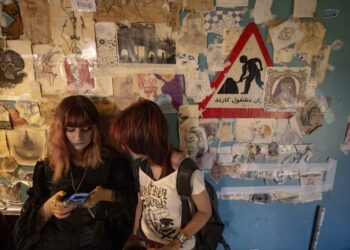
Women students transformed individual testimony into collective action, challenging unequal power relations and institutional impunity in the aftermath of the Jina uprising.
Following the Jina uprising, many women became more alert to violence against women within the family, at university, in the workplace, and across society. They found greater courage to challenge the unequal power relationship between male professors and female students and to speak about their experiences of violence, sexual assault, and harassment. For survivors of sexual harassment and assault, telling their stories became a courageous political act.
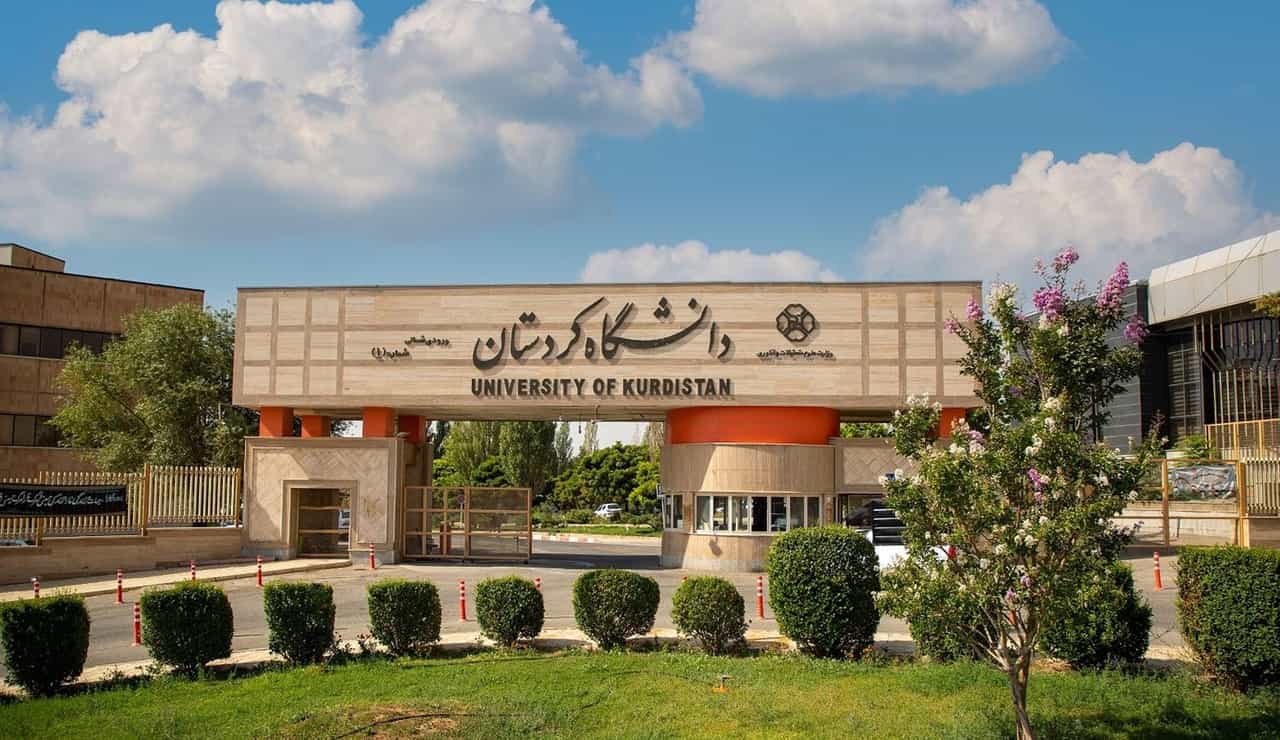
Numerous students have come forward with accounts of sexual harassment and assault allegedly committed by a professor at the University of Kurdistan. According to a student who spoke to Radio Zamaneh, most of these accounts concern incidents alleged to have taken place in the professor’s university office and involve the abuse of power attached to his academic position.
There have also been reports of students dropping out, having their studies disrupted, or avoiding the university because they felt psychologically or physically unsafe after receiving sexual propositions from the professor or directly experiencing verbal or physical sexual harassment by him.
According to students, a case was opened against the professor in August 2025, when women students formally registered complaints describing their experiences of alleged sexual harassment and assault by him.
Following the opening of the case, repeated pressure from students in the sociology department, and the publication of their first statement—which was signed by 100 students—the persistence of those who had come forward and filed complaints led to the professor’s suspension from his duties on October 18, 2025.
He was barred from entering the university, teaching, or entering classrooms until the investigation and review of the evidence had been completed. He was subsequently removed as head of the National Elites Foundation’s branch in Kurdistan Province.
On February 1, 2026, the University of Kurdistan’s first-instance disciplinary board ordered his dismissal from the university. Sometime later, however, the case was sent to Tehran for appeal. On June 21, 2026, the appeals board cleared him of all allegations.
Students report that following the ruling, the professor returned to the university and was seen inside the faculty building.
The appeals ruling and his return prompted protests by a group of master’s students in sociology at the University of Kurdistan. On Monday, June 29, the students held a demonstration against the Ministry of Science’s decision to clear the professor, who had been accused of harassing female students.
Carrying placards and chanting together, the students began their protest outside the Faculty of Social Sciences and marched toward the university’s central administration building. They remained outside the building, demanding a meeting with the university president and answers to their demands.
In their statement and public remarks, the students criticised the process through which the professor’s case had been reconsidered. They stressed that the issue was not simply one individual, but the way the university and the Ministry of Science understand and address power, responsibility, and accountability.
The protesting students argued that power does not circulate only through political institutions. It is also present in the classroom and in the relationship between professor and student. Abusing that position, they said, breaks the bond of trust and jeopardises the university’s ethical integrity.
According to the student who spoke to Zamaneh, after the June 29 protest—and after reports of the demonstration appeared on the University of Kurdistan Students’ Guild Council channel and in numerous other media outlets—the professor published three posts on Instagram titled “Final Acquittal,” “Unethical Conduct,” and “A Scenario of Symbolic Assassination.” In them, he defended himself and claimed that a scenario had been fabricated against him.
Student Solidarity, Inadequate Institutional Support
The student who accompanied other women students throughout the complaint and the subsequent proceedings told Zamaneh:
“Throughout this process, our strongest support came from the solidarity among students. Students at the University of Kurdistan, particularly those in the sociology department, listened empathetically and without judgement to the accounts shared by some of us. Without placing us under pressure, they supported us and amplified our voices.
“They sought to protect the identities of those who came forward. Without expecting anything in return, and despite accepting the possible costs and risks, they stood beside us and became our voice.”
According to her, however, the university authorities and its formal structures failed to provide the necessary support for students reporting experiences of sexual harassment.
Despite the sensitivity of the accounts and the vulnerability of those recounting them, the board examining the case consisted predominantly of men. No support mechanism informed by a feminist approach—or sensitive to the psychological effects of recounting sexual harassment—was incorporated into the proceedings.
She emphasised that the specialised psychological support required to reduce the harm caused by such a process was also absent.
The appeals board’s decision has now intensified the sense of insecurity among those who came forward. For some students, the return of the professor against whom they complained has generated fear and anxiety.
Not only have adequate measures not been introduced to allow students to return safely to the university, but the decision may also have severe psychological and social consequences for those who courageously spoke about their experiences.
From Individual Testimony to Collective Action: Women’s Changing Consciousness at University
One of the shortcomings of Iranian universities is how they understand and address the relationship between professors and students.
There is still no widespread recognition in Iran that, because of the inequality of power involved, any romantic or sexual relationship between a professor and a student may constitute an abuse of position.
This issue is neither explicitly addressed in law nor widely established as a professional norm within universities. Consequently, conduct such as making flirtatious advances toward students, telling sexual jokes, or making inappropriate propositions has sometimes become so normalised that neither university authorities nor students themselves treat it seriously.
The personal experiences of many women during their university education reflect this reality. Students may find that they have virtually no opportunity to object or respond, even when a prominent professor makes sexual jokes.
Under these conditions, the response of University of Kurdistan students to the alleged sexual harassment appears to have emerged from a collective awareness capable of producing tangible results.
The student told Radio Zamaneh that this collective awareness had not emerged overnight. It was the product of a broader process of political and social change across Iran and Kurdistan:
“Had something like this happened several years ago, many of us might have responded like previous generations of women students: we might have ignored the behaviour of abusive professors or been unable to find the strength to confront it. But social conditions have now changed.”
According to her, one of the most important foundations of this change was the experience of the “Jin, Jiyan, Azadî”—“Woman, Life, Freedom”—movement.
For many women, not only in Kurdistan but across Iran, the Jina uprising marked a decisive turning point. In its aftermath, many women became more alert to violence against women within the family, at university, in the workplace, and throughout society.
They found greater courage to challenge the unequal power relationship between male professors and female students. They began speaking about the violence and verbal and physical sexual harassment they experienced at university rather than remaining silent.
For women who had survived sexual harassment and assault, telling their stories became a courageous political act.
This new atmosphere meant that when the first accounts concerning the professor emerged, other women students felt that they were not alone and were able to speak about their own experiences.
She continued:
“In my view, the most important awareness that must develop within universities is the recognition that the university in Iran is both a site of knowledge production and a site where unequal patriarchal power relations are produced and reproduced, particularly in the relationship between professors and students.
“For this reason, any sexually charged conduct—from sexual jokes and messages that cross professional boundaries to requests for romantic or sexual relationships—must be understood in the context of this inequality of power, rather than simply as a private relationship between two individuals.
“Women students must also recognise that their experiences and accounts of sexual harassment and assault are valid. They must not allow social pressure to force them into silence.
“Speaking about these experiences is the first and most powerful step toward challenging unequal patriarchal power relations within the university.
“Ultimately, change begins when scattered testimonies and individual voices become a collective cry of solidarity and collective action.”