

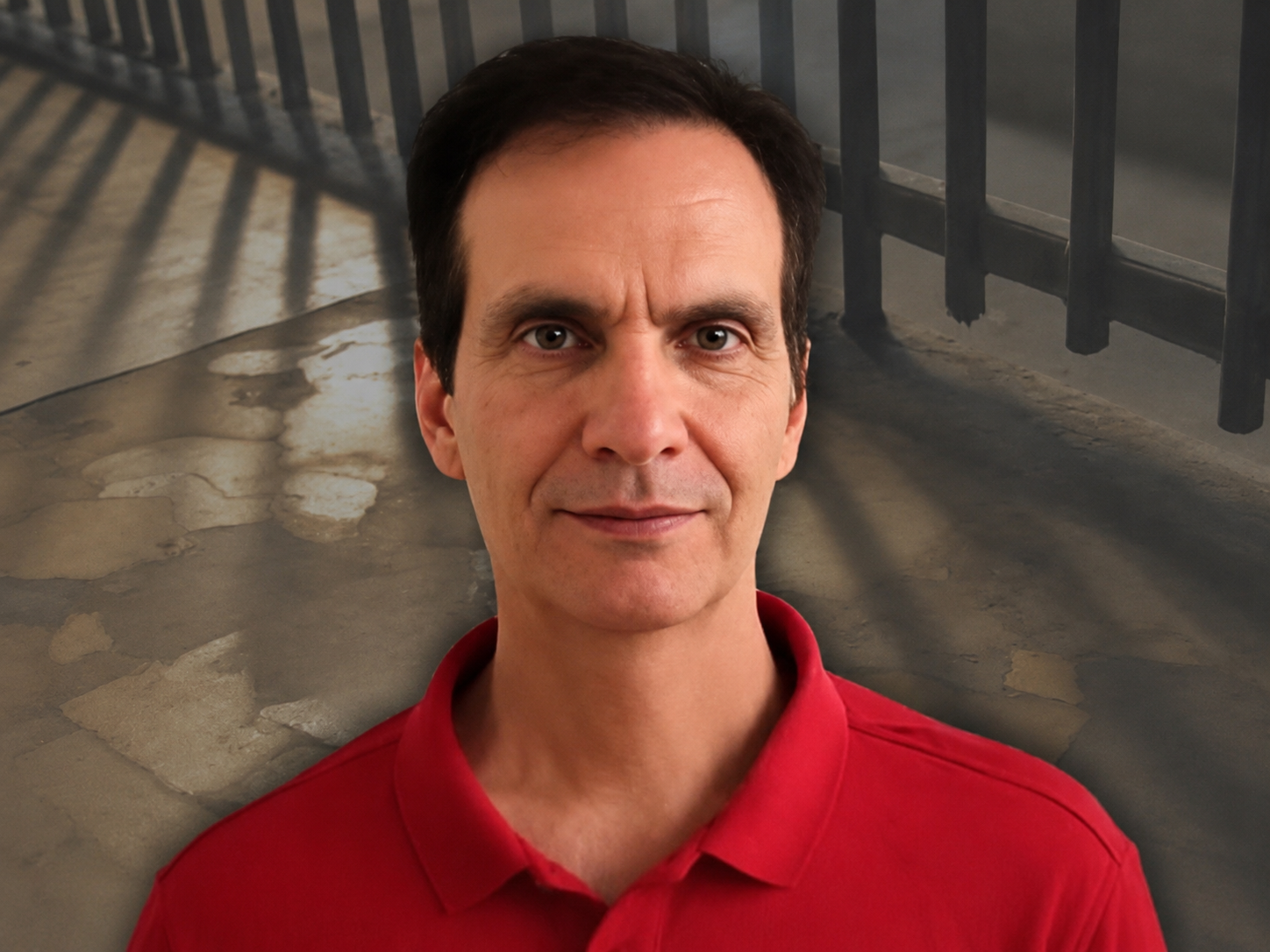
Siamak Amini’s worsening condition and Jabar Mustafa’s death expose a recurring pattern: prisoners denied timely medical care in Iran’s prisons.
The health of Siamak Amini, a 64-year-old political prisoner held in Ward 7 of Evin Prison, has deteriorated after a rib injury and the worsening of his underlying medical conditions, raising serious concern among his family and fellow prisoners.
Amini was transferred to Taleghani Hospital on Monday, June 22, 2026, after experiencing severe pain caused by a rib injury. His transfer took place only after persistent follow-up by other prisoners. According to people close to him, however, doctors and medical officials did not provide a clear answer as to whether his ribs had been fractured or cracked. They only said that no specific medical intervention was possible and that time would have to pass. He was eventually returned to Evin Prison around midnight.
Amini suffers from Behçet’s syndrome, an inflammatory autoimmune disease, and also has other underlying health problems. His family had previously sought recognition that he is medically unfit to endure imprisonment, as well as medical leave, citing his physical condition.
His situation became more complicated after the Israeli strike on Evin Prison on June 23, 2025. The attack, which took place during the 12-day war between Iran and Israel, damaged parts of the prison, including administrative buildings, guard facilities, the Evin prosecutor’s office, the women’s ward, the infirmary, and the library of Ward 4. After the attack, Amini’s family was told that his medical file had been destroyed.
According to those close to him, even after that, despite his need for urgent medical attention, Amini was denied emergency transfer because he refused to wear prison uniform.
Now, one year after the attack on Evin, and with a rib injury added to his existing conditions, concerns over Amini’s health have grown. His family says osteoporosis and the severity of his pain increase the risk of further deterioration. They are demanding his immediate transfer for treatment and the granting of medical leave outside prison.
Amini has been imprisoned since July 2024 and has been sentenced to four years in prison, along with additional penalties. He had also previously been a political prisoner in the 1980s, spending five years in prison before being released in 1989.
After the 12-day Iran–Israel war, a number of civil, social, and political organizations and activists from different political tendencies called for the release of political prisoners and prisoners of conscience, especially elderly prisoners and those suffering from serious illnesses.
Jabar Mustafa’s Death and the Broader Pattern of Medical Neglect
Amini’s case is part of a broader crisis of access to medical care for political prisoners in the Islamic Republic’s prisons — a crisis that has repeatedly led to preventable deaths.
On June 23, 2026, the Telegram channel Consolidation of the Nation reported that Jabar Mustafa, son of Jaber, an Iraqi-born political prisoner, died in Tehran’s Evin Prison on the evening of Monday, June 22, 2026.
Mustafa had been sentenced to one and a half years in prison on the charge of “propaganda against the Islamic Republic.” He had spent around five months of his sentence in Evin Prison and was held in Hall 2 of Ward 7 — the same ward where Siamak Amini is imprisoned.
According to the channel’s sources, Mustafa showed symptoms of a heart attack and needed immediate medical care and intervention. Prison authorities, however, failed to provide the necessary treatment, and he died inside the prison.
His death has once again drawn attention to the condition of medical care in prisons and to the responsibility of Iran’s Prisons Organization to protect the lives and health of people in custody.
Families of prisoners and human rights groups have repeatedly warned about delays in transferring sick prisoners to medical centers, the shortage of medical facilities inside prisons, and the denial of adequate healthcare to prisoners.
In 2025–2026, several prisoners died after being denied timely access to medical treatment, including Jamileh Azizi in Qarchak Prison in Varamin, Mohammad Mongoli in Yazd Prison, Maryam Shahrokhi in Kachouei Prison in Karaj, Sudabeh Asadi in Qarchak Prison, Amir Nisi in Sheiban Prison in Ahvaz, and Abolfazl Hosseini in Malayer Prison.
Together, the worsening condition of Siamak Amini and the death of Jabar Mustafa point to a recurring pattern: prisoners with urgent medical needs are left untreated, medical transfers are delayed or obstructed, and the state’s duty to preserve the lives of those in custody is repeatedly violated.