

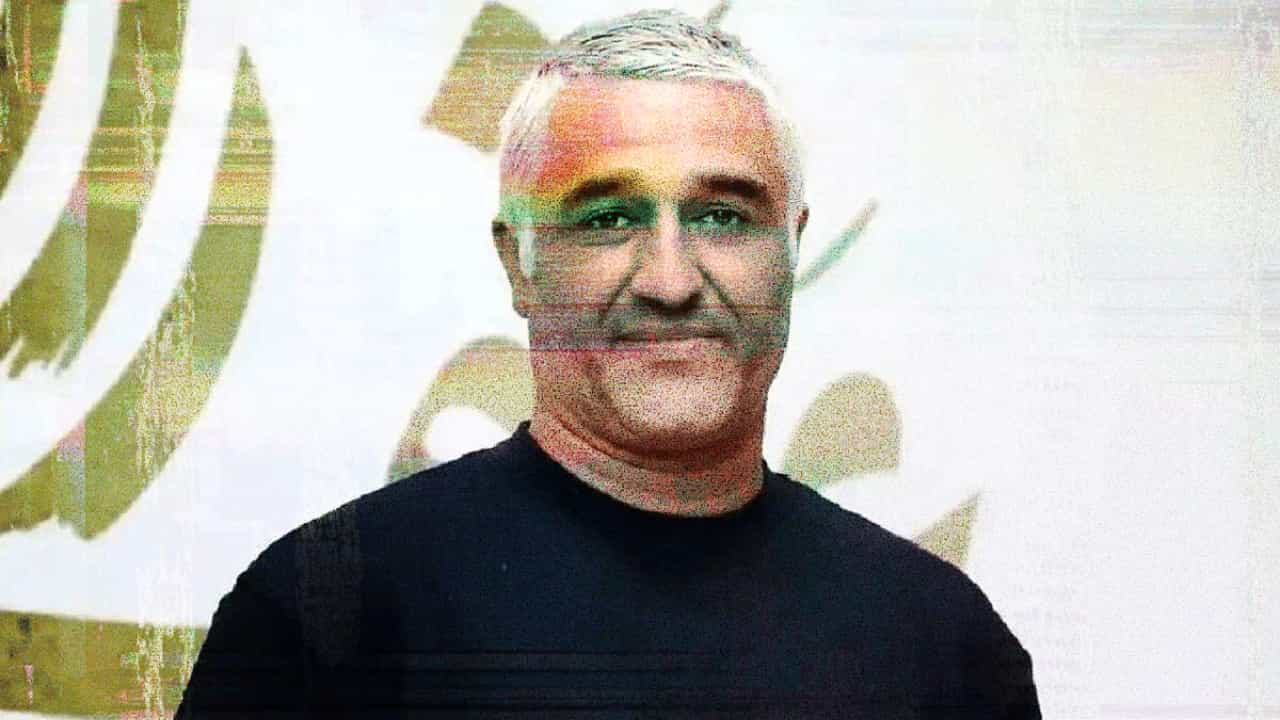
A high-profile rape accusation has become a test of power, gender, silence, and women’s refusal to remain silent in Iran.
Pejman Jamshidi is one of Iran’s most recognizable public figures: a former footballer who became a major actor in cinema and television. The accusation against him marked a significant moment because the complainant’s account of sexual violence did not remain confined to social media or private rumor: it entered criminal court, was reported by mainstream media, and forced a wider public confrontation with celebrity power, sexual violence, and the question of whether Iranian society is prepared to hear women’s testimonies. In this essay, Mahzad Elyasi examines why the case carries a significance that extends far beyond one judicial file.
While the second court hearing in Pejman Jamshidi’s case, on charges of rape, was held on Wednesday, 6 May 2026, a state-affiliated news agency reported the possibility of a ruling in favor of the accused. The significance of this case is not limited to the accused man’s fame or the nature of the charge against him. On a broader level, it carries political and social symbolic weight. The unequal and discriminatory treatment of the accused and the complainant in this case reveals how the state, the judiciary, and wider society approach women. For this reason, the case has social dimensions that go beyond an individual or purely legal matter. The different layers of events that took shape alongside this controversial case require interpretation and analysis; even the timing of these events deserves attention.
This case became public in the months after the 12-day war between Iran and Israel in June 2025, a period in which, according to many analysts, a “golden window” had opened for rebuilding the relationship between the state and society. During that period, part of the public, for nationalist reasons or out of fear of insecurity, showed a temporary convergence with the structures of power in the face of an external threat. It was expected that the Iranian government might use this relative convergence as an opportunity to repair deep social fractures, reduce internal tensions, and redefine its relationship with society. Yet this opportunity not only failed to lead to reformist or trust-building policies; it was gradually lost through the continuation of the same old patterns. The state-society gap returned to its prewar condition, revealing itself again a few months later in the January 2026 protests and massacre.
The tense relationship between Iran’s political structure and women had already remained in a state of suspension and deep mistrust in the years after the killing of Mahsa (Jina) Amini. This relationship was further strained by intensified monitoring and control of women’s clothing, the implementation of the “Noor Plan” under Ebrahim Raisi’s presidency as a continuation of earlier morality police policies, and the closure of cafes and restaurants under the pretext of failure to observe compulsory hijab rules. Still, the suspension of hijab warning text messages during the 12-day war was interpreted by some as a possible sign of a change in approach, or an attempt to reduce tensions between the state and women. This could have been read as a message aimed at repairing the relationship between women and the government.
But in autumn 2025, two almost simultaneous events revived the Iranian government’s hostile approach toward women: first, the parliamentary plan to amend the dowry law and limit the ceiling of imprisonment enforcement for unpaid dowries, without a comprehensive revision of family laws in favor of both genders; and second, the rape accusation against Pejman Jamshidi, which received wide media coverage in September–October 2025. At a time when any event related to sexual violence or any highly controversial case could have served as a test of the judiciary’s support for women, what happened after the arrest of this famous figure indicated the persistence of unequal power and the difficulty women face in pursuing legal justice. Pejman Jamshidi did not remain in detention for long after posting bail, and despite an open judicial case, he left the country. Support from a wide range of Jamshidi’s colleagues in cinema and football was widely reflected in the media, while the website of the newspaper Ham-Mihan became inaccessible after publishing the only interview with the complainant in the case. Some members of Jamshidi’s family publicly threatened the complainant without regard for the legal consequences. Months later, during the later U.S.-Israeli war on Iran, Jamshidi visited Red Crescent relief activities as a well-known public figure, and this visit was widely covered by state media without the slightest mention of the open case against him.
A Complainant Without Power Facing a Powerful Accused Man
On the other side of the case stands a 20-year-old woman who, without the economic and social backing enjoyed by the accused, has continued to pursue her complaint despite facing accusations of lying, fabricating a scenario, and attempting to destroy someone’s reputation. Victims of rape and sexual violence are usually blamed through familiar patterns: “Why were you there?” “What were you wearing?” “Do you have a witness?” or “How do we know rape actually occurred?” The complainant has provided answers and evidence for all these questions, evidence that, according to her lawyers, has been cited in the judicial process. This evidence was strong enough, even within the deeply sexist judicial structure of the Islamic Republic, to lead to Pejman Jamshidi’s arrest.
Women who have survived sexual violence and had the courage to take legal action against their abusers have repeatedly described how the Islamic Republic’s judiciary has even refused to appoint female investigators to handle such cases. They have been forced to endure the painful experience of repeatedly recounting the details of sexual violence before male investigators who often approach their claims with deep suspicion. The reversal of the positions of accused and complainant in rape and sexual harassment cases, and the unequal treatment of complainant and accused in this case, once again raises the question: are the Islamic Republic’s formal judicial mechanisms, which impose many restrictive laws on women in the name of “women’s dignity” and theorize war with Israel under the slogan of “supporting the oppressed,” actually willing to convict powerful and influential men when serious and documented evidence is presented by women who lack power?
Male Solidarity and the Social Life of Denial
The Pejman Jamshidi case, beyond its political and judicial layers, also has important social dimensions, including the way Iranian society responds to such accusations. As soon as news of Pejman Jamshidi’s arrest became public, a wave of reactions began on social media and in website comment sections. Among these reactions, both supportive and opposing voices could be seen, but most of the opposition followed a similar logic. Many users described the case as a “setup” or a scenario against Jamshidi; some even framed it as an attempt to divert public attention from economic crises, rising prices, and the government’s performance.
What is striking is the almost uniform support of many male users for Pejman Jamshidi, which can be understood as a form of “male solidarity”: a solidarity that ultimately sustains and reproduces the patriarchal system. Ali Daei’s hasty support for Pejman Jamshidi can also be understood within this framework of male solidarity. Even before a final court ruling had been issued, this prominent figure used his power and symbolic capital to offer unconditional support to his friend and “brother,” without later being challenged, or even questioned, for this abuse of power and the dehumanization of the complainant, a 20-year-old woman without power or influence.
The denial that rape could have occurred, without reflection or any attempt to hear the complainant’s account, came from men who, usually from adolescence onward, become closely familiar with all kinds of jokes, threats, and rape-based language that normalize sexual violence. More than any other group, they know that the possibility of rape is far more real and serious than its total denial. Yet in a case like this, most of them forcefully rejected any possibility of rape or violence and cast doubt on the complainant’s real motives.
Silence, Victim-Blaming, and Internalized Misogyny
Meanwhile, many women thinkers and activists approached the matter from feminist and women’s rights perspectives, writing and speaking about it. Yet almost none of the well-known male thinkers and public figures took a position on rape and sexual harassment, organized a meeting or roundtable, or analyzed the issue in YouTube programs. The response of many male intellectuals and commentators to this case was absolute silence. It was as if the issue were considered purely “women’s” business, unrelated to them; or perhaps addressing a subject that has caused so many women pain was not seen as worthy of their intellectual status. Or perhaps “male solidarity” was at work here in another form. This silence itself becomes part of the same structure that treats women’s suffering as insignificant, pushes violence against women to the margins, and removes it from the realm of public concern.
Support for the accused, whether through attacks on the complainant or through silence and hidden solidarity, was not limited to men. Surprisingly, many women users also attacked the complainant and addressed her with degrading language. Women, more than anyone, are familiar with the masculine structure of the judiciary, the way society treats women who refuse to remain silent about sexual violence, the common stigmas, and the pathological fear of “dishonor” in Iranian culture. Yet instead of empathizing with the victim, some became part of the process of blaming and destroying her. It seems that simply seeing an actor in films and television series was enough for some users to feel that they knew him and had to defend him. These reactions show how deeply misogyny is rooted in the layers of Iranian society, and how women who stand as complainants or victims are often met with doubt, blame, and lack of support, even from other women.
A Generational Confrontation After Woman, Life, Freedom
Another layer that must be considered in this case is the question of generational difference. Pejman Jamshidi belongs to the generation born in the late 1970s, while the complainant belongs to the generation born in the 2000s. For some men of earlier generations, accustomed to the authority produced by money, fame, and social status, the agency and persistence of a young woman from Gen Z carries a meaning that goes beyond an individual complaint. According to her own account, despite threats and bribery offers, she has insisted on pursuing the case so that “no other man can do this to other women.” This insistence reveals, above all, the different outlooks and positions of two generations.
The new generation of women in Iran, especially after the Woman, Life, Freedom movement, is more willing than previous generations to pay the cost of disclosure and standing up to power, even when they know that the judicial, media, and social structures will not necessarily work in their favor. For this reason, this case can be understood not only as a confrontation between a complainant and an accused man, but also as a confrontation between two worldviews: one that still believes in the immunity of powerful men, and another that is no longer willing to remain silent in the face of that immunity.