After years as a shadowy power broker, Mojtaba Khamenei must now openly rule a battered system and test whether myth can become authority.
Mojtaba Khamenei did not see his ambition go unfulfilled. For years, he waited and planned to inherit his father’s throne. Throughout that time, his name surfaced at every turning point in Iranian politics — praised by allies, denounced by enemies — yet he rarely stepped out from behind the curtain.
The Islamic Republic has always had a deep appetite for mythmaking. For years, Shiite clerics built stories around Ali Khamenei’s unseen virtues and likened him to the Shiite Imams. That culture of mythmaking did not stop with Khamenei the father. It extended to grand narratives about senior clerics and to the legends built around military figures from the Iran-Iraq War. Among all these manufactured legends, Qassem Soleimani — the Quds Force commander assassinated by the United States in 1398 (2020) — held a special place. At times he was described as “the phantom America fears”; at others, as “the man in the shadows,” impossible to track. Soleimani rarely appeared in the media or even at official ceremonies. And when he did, cameras were careful not to damage that carefully cultivated image.
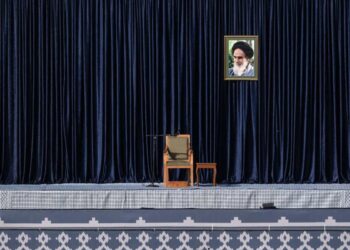
Mojtaba Khamenei, who now sits on the throne of supreme leadership, followed a similar path. Even now, in days of crisis when he cannot easily appear in public to receive pledges of loyalty in person, he remains a figure more discussed than seen. For years, he has been presented as an enigma, a shadowy presence whose role in the structure of power, political weight, and capabilities were mostly described by others.
His name entered open political controversy after the 1384 (2005) presidential election, when Mehdi Karroubi wrote to Ali Khamenei to complain about reports that the Leader’s “honorable son, Agha Seyyed Mojtaba,” had backed one of the candidates. Karroubi, who as speaker of the sixth parliament had often restrained reformists in Khamenei’s favor, wrote that one senior figure had warned him Mojtaba was being treated not as a mere son of the Leader but as a political actor in his own right. Karroubi added that he had become convinced that Mojtaba’s support for one particular candidate was a personal intervention, citing his repeated visits to that candidate’s campaign headquarters.
In that 1384 (2005) election, Mohammad Bagher Ghalibaf was initially presented as the main candidate backed by the Revolutionary Guards. But in the final days, Mahmoud Ahmadinejad took his place. Later, when Ahmadinejad’s conflict with Khamenei escalated during his second term, campaign staff and senior military figures revealed that without the support of Basij and IRGC networks, Ahmadinejad would never have reached the presidency.
Ahmadinejad’s presidency coincided with the emergence of Mojtaba Khamenei as a backstage power broker. Before that period, his name had rarely surfaced in elite political circles or in the media. Karroubi’s letter, however, pulled “Agha Mojtaba” into the struggle over who might one day inherit his father’s position. Four years later, after the disputed 1388 (2009) election, protesters chanted, “Mojtaba, may you die before you see the leadership,” making clear that many believed the Leader’s son had long had his eye on his father’s seat.
Step by Step Toward the Crown
Mojtaba Khamenei came of age during the years when the Khomeini household and the circle around Hossein Ali Montazeri still dominated the system. As the son of the president — one who was openly at odds with Mir Hossein Mousavi, the prime minister favored by Khomeini — he carried political baggage even when he went to the front during the Iran-Iraq War. Some accounts say that fighters in the Habib ibn Mazahir Battalion were reluctant to accept him because of his father’s right-wing politics.
That situation did not last. The death of Khomeini, and before that the removal of Montazeri, marked the beginning of Mojtaba’s rise, along with that of his brothers. Ali Khamenei unexpectedly took the seat of the Supreme Leader and, with the help of Akbar Hashemi Rafsanjani, gradually pushed Khomeini’s inner circle to the margins.
From 1368 to 1384 (1989 to 2005), Mojtaba Khamenei was largely absent from political conversation. The only stories that surfaced concerned his marriage to the daughter of Gholam-Ali Haddad-Adel and repeated praise for his piety and simple lifestyle. According to official accounts, he went to Qom after the war to study under Mahmoud Hashemi Shahroudi and later under Mohammad-Taqi Mesbah Yazdi, Safi Golpayegani, and other hardline clerics. Very little is known about those years, beyond claims that he quietly rose to the rank of teacher and even a source of emulation.
In Mehr 1403 (September–October 2024), when Mojtaba Khamenei announced in a video message that his advanced jurisprudence class would be suspended until further notice, it became public that he had been teaching seminarians for around thirteen years. As with his father, however, claims about his clerical standing remain contested. But Mojtaba had one major advantage: the sectors of the Shiite clergy most sensitive to questions of religious authority had, over time, either died out or lost the power to mount meaningful opposition.
Accounts of the rest of Mojtaba Khamenei’s life are equally sparse. Supporters have offered little beyond praise for his virtues and abilities. Critics, so long as they preserved formal respect for the father, cast him as one of the chief agents of the regime’s brutality, the head of the security clique, and the apex of the military cartels. In Mehr 1390 (October 2011), for example, the website Tebyan quoted Ahmad Marvi as saying that Ali Khamenei did not want his relatives — especially his sons — involved in economic affairs, and that Mojtaba and his brothers had no desire for wealth, savings, or material advancement. According to Marvi, their concerns were study, religious discussion, and the conditions of the people and the seminarians.
In another approving account, Mohammad-Hassan Khoshvaght, a relative of Mojtaba, described him as the son most similar to Ali Khamenei, both in appearance and temperament, while denying that he played any direct role in politics. At most, he said, Mojtaba might occasionally offer advice.
The Son-in-Law, According to His Father-in-Law
Gholam-Ali Haddad-Adel, Mojtaba Khamenei’s father-in-law, said in 1391 (2012), in an interview with Pasdar-e Islam, that all the stories told by opponents about his son-in-law were false and malicious. He claimed Mojtaba lived more simply than an ordinary mid-level government employee in a provincial town, and that his apartment could not be compared with the homes of the men who had, in Haddad-Adel’s words, manufactured claims of electoral fraud.
Farid al-Din Haddad-Adel, Mojtaba’s brother-in-law, said that Mojtaba’s worldview was fully aligned with that of the Leader. He insisted that Mojtaba was not politically active in any ordinary sense, but that he studied intensely, taught advanced jurisprudence, and approached those lessons with unusual complexity and depth.
Elsewhere, Haddad-Adel called Mojtaba the most ethical person he had ever known. He said that over twelve or thirteen years he had never heard him raise his voice or speak rudely, never heard his sister complain about him, and never seen their home become cold, bitter, or lifeless. In his telling, Mojtaba was warm and humorous with children and young people, yet serious, disciplined, hardworking, and deeply religious. He stayed up until two or three in the morning to study, was scrupulously careful in his language, and even spoke fairly about his worst enemies.
The Haddad-Adel family was not alone in offering such lavish praise. Years earlier, Ali Fazli, a commander in the IRGC, wrote admiringly that Mojtaba expected no more than other fighters at the front, and often less. He said Mojtaba preferred to be where danger was greatest rather than remain in protected areas, made a point of visiting the front line, joked easily with soldiers, and had a special devotion to prayer. According to Fazli, when there was no congregational prayer, Mojtaba would seek out remote and dark tents to pray alone.
A similar story was told by another IRGC commander, Nour Ali Shoushtari, who was later assassinated in Baluchestan. He claimed that during Operation Beit ol-Moqaddas 3, Mojtaba Khamenei and the son of Hashemi Rafsanjani set off toward the front line while he was busy with radio communications and other tasks. He said he tried to stop them, failed, and then called their division commander to warn him not to let them take part in the assault. The next day, he said, he found them positioned at one of the most dangerous points on the heights of Qashan.
Building a Network for the Decisive Day
Whenever debate over Ali Khamenei’s eventual successor intensified, Mojtaba’s name resurfaced. Some of those close to him denied that he wanted his father’s throne. Others argued that he had been raised inside the Leader’s household precisely for such a role and that his name belonged in the conversation.
Mojtaba Khamenei had been preparing for that possibility for years — in fact, since the early days when his father succeeded Ruhollah Khomeini. He built networks patiently. Across Iran, representatives originally appointed by Khomeini were gradually replaced by younger Friday prayer leaders, men who had either sat at Ali Khamenei’s feet or studied under, and become loyal to, Mojtaba.
This was accompanied by the sidelining of older clerics, by careful placements inside the Revolutionary Guards — including men who until only a few years ago sat at the top of the organization’s intelligence apparatus — and by appointments within the executive branch designed to cultivate a loyal cadre for the younger Khamenei. Mohammad Mokhber, who rose to become first vice president under Ebrahim Raisi and later became a special aide to Khamenei the father, was only one of many figures said to belong to Mojtaba’s trusted network.
According to journalists and political figures from within the system who opposed his father, Mojtaba acted as the hidden commander of the repression unleashed during successive waves of protest. After the 1388 (2009) protests, the family of Mostafa Tajzadeh said they had been arrested and imprisoned on Mojtaba Khamenei’s direct orders.
Mohammad Sarafraz, the former head of state broadcasting, has also spoken publicly about Mojtaba Khamenei’s special role, alongside Hossein Taeb — his longtime associate from the Habib Battalion — in shaping both the broad strategy and the day-to-day details of governance. In recent years, international media have also reported extensively on the wealth accumulation and business activities of Ali Khamenei’s second son. Mojtaba’s allies dismissed all such accounts as lies designed to damage the Leader by smearing his son.
The claim that “Agha Mojtaba” lived simply and kept his distance from worldly wealth has been repeated by several admirers of Ali Khamenei. Mojtaba himself remained out of sight throughout those years, quiet and hidden, until his wish was finally fulfilled — even if only through a military attack that killed his father.
The Regime’s “Savior”: A Manufactured Image of the Leader’s Son
In recent years, as Ali Khamenei’s death appeared increasingly likely and the system was beset by multiple crises, Mojtaba’s name circulated more openly than ever. As before, figures working in the father’s orbit spoke in his name about the abilities and virtues of the heir to the crown of supreme leadership. But the effort to present “Agha Mojtaba” as a savior did not stop with members of the Assembly of Experts, military officers, or relatives.
In the summer of 1404 (2025), Faezeh Hashemi — the daughter of Akbar Hashemi Rafsanjani, who believes her father was murdered and holds the IRGC responsible — said that she considered Mojtaba a suitable option to lead the Islamic Republic after his father, and even suggested that he might have something like Saudi Crown Prince Mohammed bin Salman’s capacity to carry out change.
Abbas Palizdar voiced a similar view, though more flamboyantly, in Aban 1403 (October–November 2024). Palizdar, who had once been jailed after exposing corruption among senior officials, described Mojtaba as the most knowledgeable figure in the country when it came to executive affairs and national conditions. If he came to power, Palizdar said, he would break the backs of economic corruptors. He went further still, portraying the man long accused of helping engineer repression and the elimination of opponents as someone who believed in social freedoms, the release of political prisoners, and the creation of conditions for a genuinely functioning press. “Fundamental reforms,” he argued, would become possible under Mojtaba’s leadership.
Yet these accounts sit uneasily beside Mojtaba’s actual record. During his father’s rule, he was widely seen as one of the managers of the sprawling financial, military, and security web surrounding the institution of the Supreme Leader. Hidden from public view, he spent those years planning and executing what he needed to turn the day of his father’s death into a coronation.
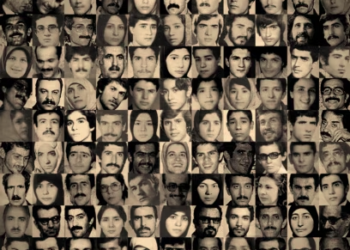
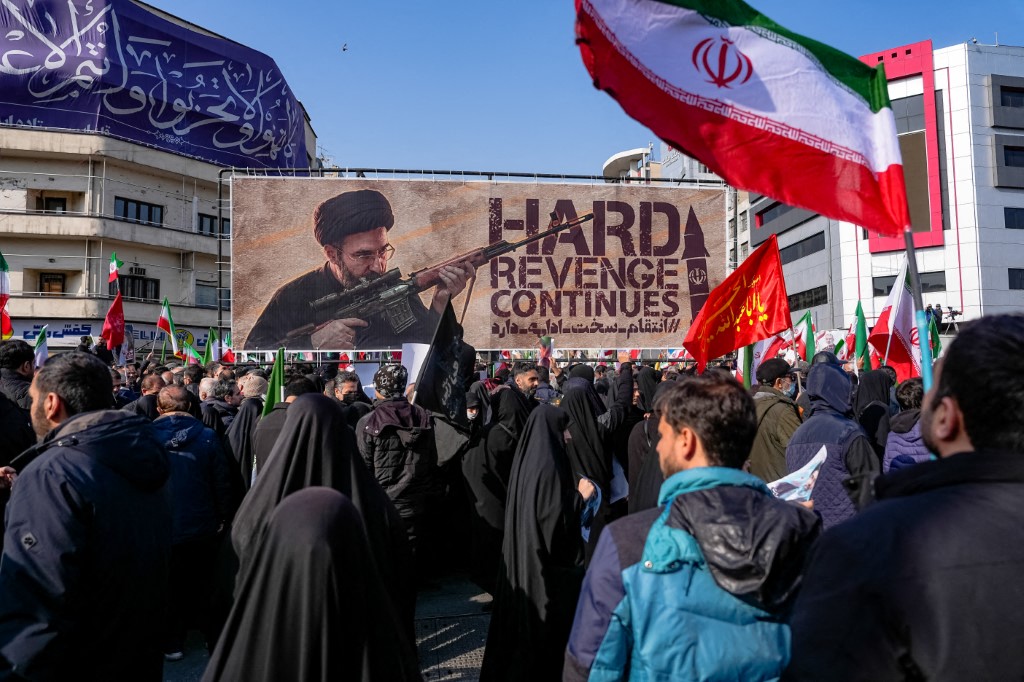
His bad luck is that, unlike his father, he begins his reign under far harsher conditions. Before Ali Khamenei consolidated power, the state had already cleared part of the ground through mass executions of political prisoners and by accepting a ceasefire that stabilized the system. Mojtaba, by contrast, begins his rule in the middle of a hard war and amid broad public anger. Shortly before the U.S.-Israeli military attack, the January uprising of 1404 (January 2026) and the regime’s bloody crackdown had already pushed the system into another crisis. The attack itself, landing in the middle of a budget crisis, made the regime even more fragile.
Even before becoming Leader, Khamenei’s son had already lost large numbers of senior military commanders. That may also create an opening for him, since he has always had a talent for placing his own people in key positions. But he can no longer remain hidden behind the curtain, silent and unseen, as he did during his father’s reign. He is now the “Leader” of those still loyal to the regime and to Shiite Islam, and the commander of a war that has shaken the region.
It is a harsh test at the very start. If he survives it, he will present that survival as proof of doubled authority. If he does not, his time as Leader may be short.