

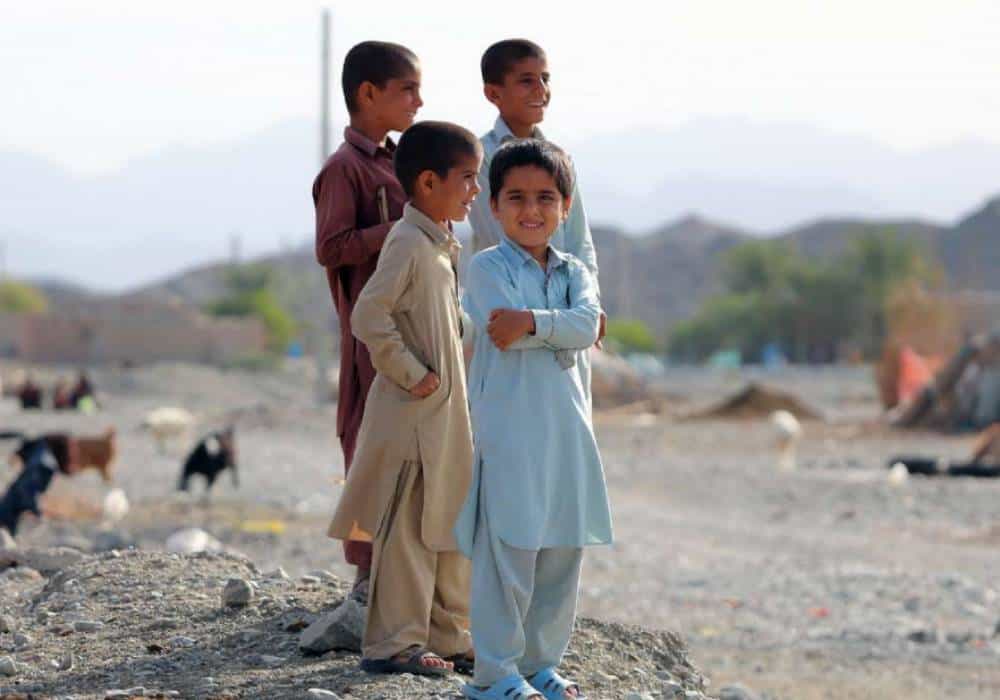
Systemic denial of identity papers forces Baloch children into hazardous seasonal labour, deadly transport, and school dropout—entrenching intergenerational poverty amid weak protections and discriminatory governance.
Many Baloch people in Iran lack identity papers—the basic civic document every citizen should have—because of systemic discrimination and state practices that exclude Sunni and ethnic minorities. This is not just red tape or bias at the margins; it’s a structural denial of a fundamental right. Without papers, families are shut out of schools, formal jobs, social protection, and even basic services. Forced into the informal economy, children become breadwinners, trading education and childhood for day-to-day survival. The result is a vicious, intergenerational cycle: children who miss school are far less able to escape poverty and exclusion, so deprivation repeats in the next generation.
Seasonal Migration, Deadly Roads
Recent reports show more Baloch children migrating seasonally to other provinces for farm labour often via unsafe roads. According to Zamaneh, one family—Delkhaah Pakar and Hashem Baranzahi—set out with their four children (Osman, 11; Amir-Ali, 6; Omar, 14; Farahnaz, 17) and five other workers to pick tomatoes and saffron. On the road their vehicle struck concrete blocks left on the carriageway. Three children—Osman and Amir-Ali Baranzahi, plus another minor among the workers—were killed. Delkhaah (the mother), along with Omar and Farahnaz, were taken to hospital in critical condition.
Hashem Baranzahi, the father, who wasn’t on the trip, told Ham-Mihan: “I feel shattered.” He said there were ten Baloch workers in the pickup and the driver—also a laborer—was killed. “My wife, 47, is badly injured. We rent, and we have to do day labor on saffron and tomato fields.” Speaking of his 11-year-old son Osman:
“He was a fine boy. We didn’t have money or identity papers to enroll him in school, so he dropped out and worked other people’s fields—for about 200,000 tomans a day (≈ $1.8/day). I make about 450,000 tomans (≈ $4.1/day).”
Baranzahi’s family is one of countless cases shaped by systemic discrimination against ethnic minorities and entrenched poverty in Balochistan. Reliable counts of child labourers do not exist. In recent years (especially 2023–2025), provincial welfare officials report that up to 500 child labourers entered state support centres in some six-month periods, and roughly 300 are “identified and assisted” each year. Depending on the period, identified cases have ranged from 1,000 to 1,257—but the real number is likely higher.
Children face layered disadvantages: severe poverty, a lack of local jobs, and weak legal protection. “Masoud,” 18, from Maskutan (Fanouj County), has worked since age 14 while studying:
“I have always done day labour—in heat and in cold. This year was my final year of high school. I tried to pass the finals so I could study at a teacher-training college, but after the exam the vetting result came and I was rejected.”
His family of four migrates seasonally to Bam, Rafsanjan, and Bandar Abbas:
“Pay is 7–8 million tomans per person. We are very poor—four of us work in the fields about six months a year: dates in Bam, pistachios in Rafsanjan, tomatoes and aubergines in Bandar Abbas. After a month in Bam, they paid us a total of 30 million tomans.”
Masoud describes bare, employer-provided lodging: “They give workers these houses; theirs are clean and well-equipped.” These shelters often have timber roofs, mud or concrete walls, and lack basic amenities.
Work also disrupts schooling: “Some months I could attend school only ten days. Many students from our village who work in the fields have still not returned 23 days into the school year—they are in Rafsanjan picking pistachios.”
No jobs nearby, risky travel
With few local jobs, families migrate for work and pay their own transport. “If the employer covers bus fares, he deducts it from our wages,” Masoud says. Getting to orchards is dangerous: “The boss loads everyone into a single pickup—sometimes fifteen people in one vehicle. When they used regular cars, younger children were put in the trunk because there were too many workers.” His plea is simple: “We want to study and go to university, but poverty forces us into labour—without hope, without dreams.”
A province of out-of-school children
Local and national reporting shows a crisis: many Baloch children leave school because of severe household poverty and weak educational infrastructure, turning to hazardous work such as fuel-carrying. Official accounts in 2025 (1404) indicate that Sistan and Baluchestan has the country’s highest out-of-school rate—an estimated 100,000 to 150,000 children, roughly one quarter of pupils in rural and border areas.
Child labourers are hired for very low wages without safety standards. Baloch journalist Mohammad Baloch-zahi told Ham-Mihan that contractors exploit workers’ lack of information and provide no safety training to children, sharply increasing accident risks. Labour migration to cities such as Shiraz and Bandar Abbas brings further social and psychological harms; many children travel alone and work on construction sites or farms with no preparation.
Iran’s Law on the Protection of Children and Adolescents (passed 2020; updated 2024) sets a framework for child rights. In practice, weak enforcement, poor inter-agency coordination, and neglect of marginalised groups—including Baloch children—mean many provisions have limited effect.
A grim example: an execution at seventeen
One case illustrates the stakes. Mehdi Barahouei from Khash was involved in a group altercation with a foreman in 2019, at age seventeen. He was executed in October 2024 in Zahedan Central Prison. According to the Haalvsh human rights organization, the death occurred unintentionally during a work dispute; yet severe poverty and lack of legal representation prevented an effective defence. Rights groups say such cases reflect a broader pattern of executing Baloch youths amid structural discrimination and poverty.
Systemic neglect, systemic risk
Extreme poverty together with weak oversight creates an environment where the most vulnerable—especially women and children—face constant harm. Balochistan is not the only deprived region in Iran, but it is among the most deprived. Jobs such as fuel-carrying with unsafe, decrepit vehicles; dangerous worker transport (including placing children in car trunks); and persistently hazardous roads point to structured lawlessness and disregard for life—sustaining a chain of structural inequality, weak governance, and widespread rights violations.
What would change the trajectory?
A national commitment is needed to:
• close identity-document gaps;
• guarantee free, compulsory schooling with real access in rural and border areas;
• build safe transport and enforce labour safety; and
• create stable local livelihoods so families do not have to send children to work or on dangerous trips.
Until then, Baloch children will keep paying—with their schooling, their health, and too often their lives—for the papers and protections they never received.