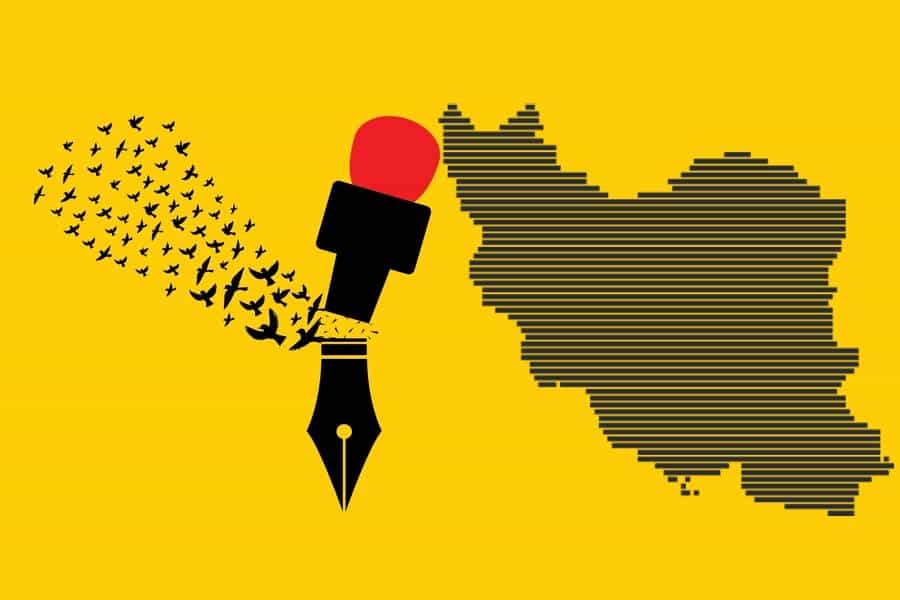
The blacklist names Zamaneh Media, dozens of other outlets and individuals, and hundreds of online accounts under a sweeping anti-espionage law
Iran’s Ministry of Intelligence has issued a directive listing 44 media outlets, 61 “hostile media figures,” and 310 online pages and accounts covered by the note to Article 4 of the country’s law intensifying punishments for espionage.
In a letter addressed to Hojjat al-Islam Mohammad Movahedi-Azad, Iran’s prosecutor general, the Intelligence Ministry formally announced the entities it classifies as “hostile networks,” “hostile media figures,” and “hostile online pages.”
The directive was issued as part of the implementation of the Law on Intensifying Punishments for Espionage and Cooperation with the Zionist Regime and Hostile States against National Security and Interests.
A Sweeping Law Passed in the Shadow of War
Iran’s Parliament first approved the bill titled the Law on Intensifying Punishments for Espionage and Cooperation with the Zionist Regime and Hostile States against National Security and Interests on June 23, 2025, shortly before the end of the 12-day war with Israel. The Guardian Council subsequently described several provisions as “ambiguous.”
Following the Guardian Council’s objections, Parliament revised the original legislation on July 13, 2025. The Guardian Council finally approved it as law on October 1, 2025.
Before the Guardian Council returned the legislation to Parliament for revision, 57 lawyers and legal scholars publicly objected to it. Pointing to what they described as violations of several constitutional principles, they said the law had been drafted and adopted hastily and warned that it represented a “major catastrophe” for Iran’s legal and judicial system.
Zamaneh Among 44 Blacklisted Media Outlets
The list, published in the country’s National Legal Information Database on July 12, establishes a framework for enforcing the law and identifying those who may be prosecuted under it.
The first section names 44 media outlets and networks. They include Persian-language organisations such as Radio Zamaneh, IranWire, BBC Persian, Voice of America, Simay-e Azadi, Iran International, and several other television and radio networks. Radio Zamaneh is listed twice.
In the second section, the Intelligence Ministry names 61 people under the designation “hostile media figures.” The original Persian term, ensan-resaneh, refers to an individual who functions as a media actor in their own right.
Alongside activists and social-media users based outside Iran, the list includes prominent figures such as Hamed Esmaeilion, Hassan Shariatmadari, Hossein Razagh, Maziar Bahari, Hossein Ronaghi, Golshifteh Farahani, Zahra Amir Ebrahimi, Shaghayegh Norouzi, Fereshteh Ghazi, Masih Alinejad, Shirin Ebadi, and Reza Pahlavi, as well as other journalists, political and civil-society activists, and media personalities.
The third section identifies 310 pages, channels, websites, and accounts operating on platforms including Instagram, Telegram, X, YouTube, and independent websites.
Human Rights Organisations and Online Accounts Also Targeted
In addition to accounts associated with the media organisations and individuals already named, the list includes numerous news channels, organisations, and groups that the Intelligence Ministry considers subject to the note to Article 4.
Among them are the Human Rights Activists News Agency, or HRANA; Iran Human Rights; the Iran Human Rights Documentation Center; the Kurdistan Human Rights Organization; the Campaign of Baloch Activists; and Haalvsh.
The Intelligence Ministry states that the designations were made according to criteria including alleged “affiliation or contact with the Zionist regime,” connections with “terrorist groups,” promoting or providing instruction in terrorist acts, encouraging violence, creating insecurity, and adopting a hostile position towards the Islamic Republic of Iran.
The directive also states that the addresses and account details provided are intended only for the initial identification of the designated entities. Changing an address or continuing operations through other platforms will not remove a media outlet, individual, or online page from the scope of the list.
Citing Article 4 of the law, the Intelligence Ministry warned that political, cultural, media, or propaganda-related cooperation with the designated networks, individuals, and online pages may result in criminal prosecution.
Publishing certain forms of content or sending videos, photographs, or information to the listed networks, media figures, or online pages may also constitute a criminal offence if judicial authorities determine that the relevant legal conditions have been met.
The directive further states that sending information to foreign networks or pages in a manner considered contrary to national security may be prosecuted even when the recipient has not been included in the published list.
The ministry said the list would not remain fixed. Under the note to Article 4, it will be reviewed continuously, updated when deemed necessary, and publicised through the relevant authorities.