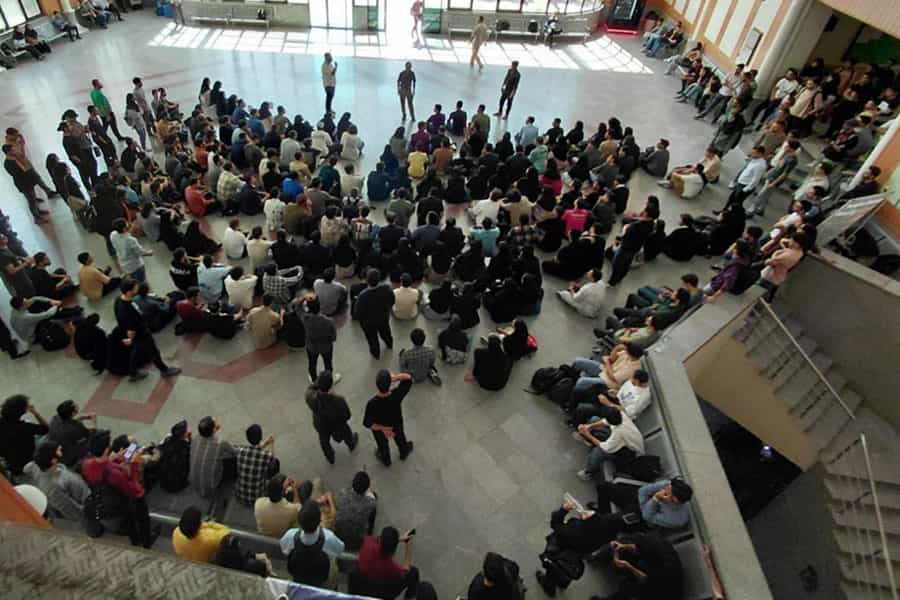
Khajeh Nasir students staged a rally against securitization and welfare cuts, demanding restored shuttles, affordable meals, better dorms, and an end to expulsions and plainclothes policing.
Students at K. N. Toosi University of Technology (Khajeh Nasir) in Tehran staged a large campus protest against the securitization of the university and the commodification of education at midday on Tuesday, October 7, 2025 (15 Mehr 1404). They first gathered in the lobby of the Electrical Engineering Faculty at the Seyed Khandan campus, then moved to the courtyard, the cafeteria building, and back to the main lobby.
Organizers said the rally was independent of formal student bodies and followed four consecutive nights of dorm protests at the Danesh residence hall. Reported demands include restoring student transport services—especially for women’s dorms—reducing dinner prices and improving food quality, upgrading dorm conditions, halting security-style policing on campus, and ending expulsions and threats against protesting students.
Ahead of the rally, campus security tightened checks at the Seyed Khandan gate. Students reported unidentified plainclothes agents inside the campus checking student IDs without badges or security uniforms. Videos and student channels showed slogans such as “No barracks, no corporations — long live the university,” “Students would rather die than accept humiliation,” and “No dorms — the looting continues,” echoing grievances over welfare cuts and punitive discipline.
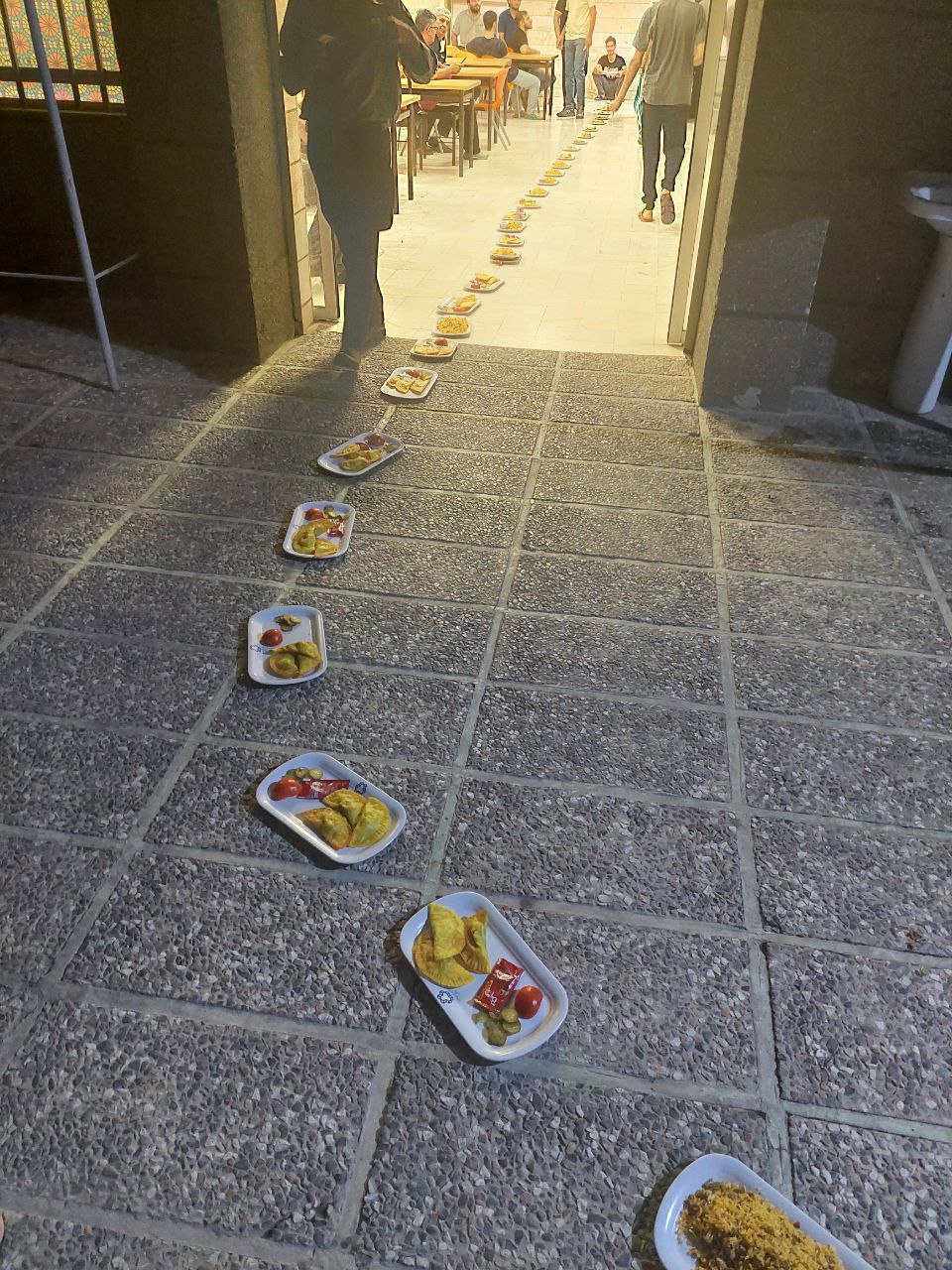
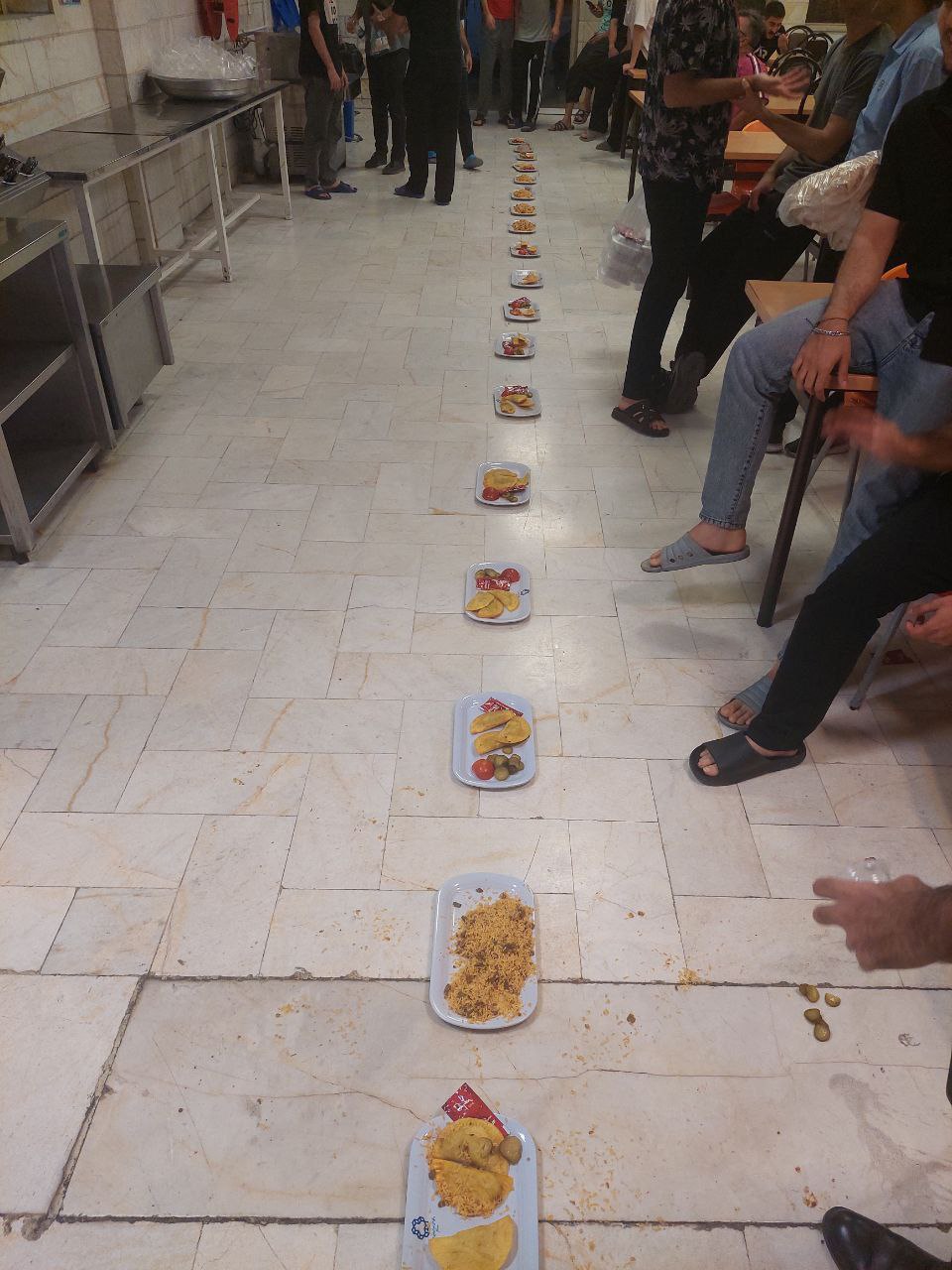
The protest followed a month of escalating actions over cafeteria prices and hygiene, dorm overcrowding, and reduced shuttle services. On September 4, students at the Danesh dorm laid out their cafeteria meals to protest declining quality—an action recorded by student media. University-affiliated and pro-government outlets have acknowledged the welfare-driven nature of the grievances; on October 8, the semi-official Mehr News Agency carried the administration’s response to “union/welfare protests,” without addressing reports of plainclothes intervention.
A wider wave on campuses
The Khajeh Nasir actions form part of a broader uptick in campus mobilization this fall, with repeated night protests and sit-ins reported elsewhere. Chants and statements have targeted the monetization of basic services and the use of expulsions to deter dissent. Independent and diaspora outlets highlighted the size of the Khajeh Nasir rally, describing it as the university’s largest in two years.
Background
Student mobilization has resurfaced periodically since the 2022 “Woman, Life, Freedom” uprising, when universities were central to protest networks and faced mass disciplinary measures. From 2023 to 2025, grievances have increasingly combined welfare issues—food prices, dorm conditions, transport—with objections to security presence and disciplinary boards. At Khajeh Nasir, this pattern is evident in dorm-based organizing, the rally’s independent character, and the mix of social and political slogans documented by student channels.
The repression of the student movement
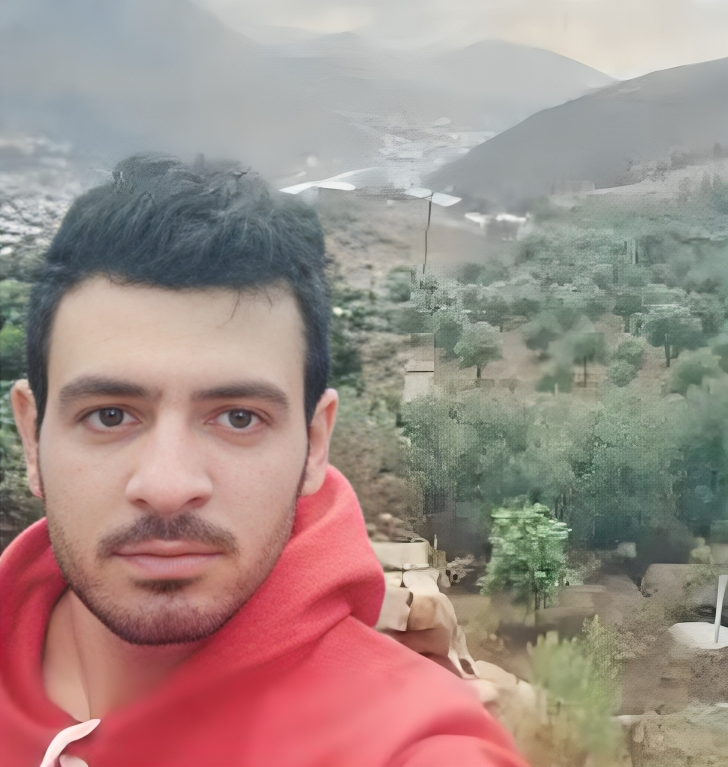
Recent cases underscore a sharp escalation in pressure on students. Ehsan Faridi, a 22-year-old engineering student at the University of Tabriz, has been sentenced to death by Branch 3 of the Revolutionary Court on the charge of “corruption on earth.” Relatives say the court disregarded his and his lawyer’s defenses and pressured the family not to publicize the case. Faridi had previously received a six-month sentence for “propaganda against the regime” before prosecutors escalated the charges.
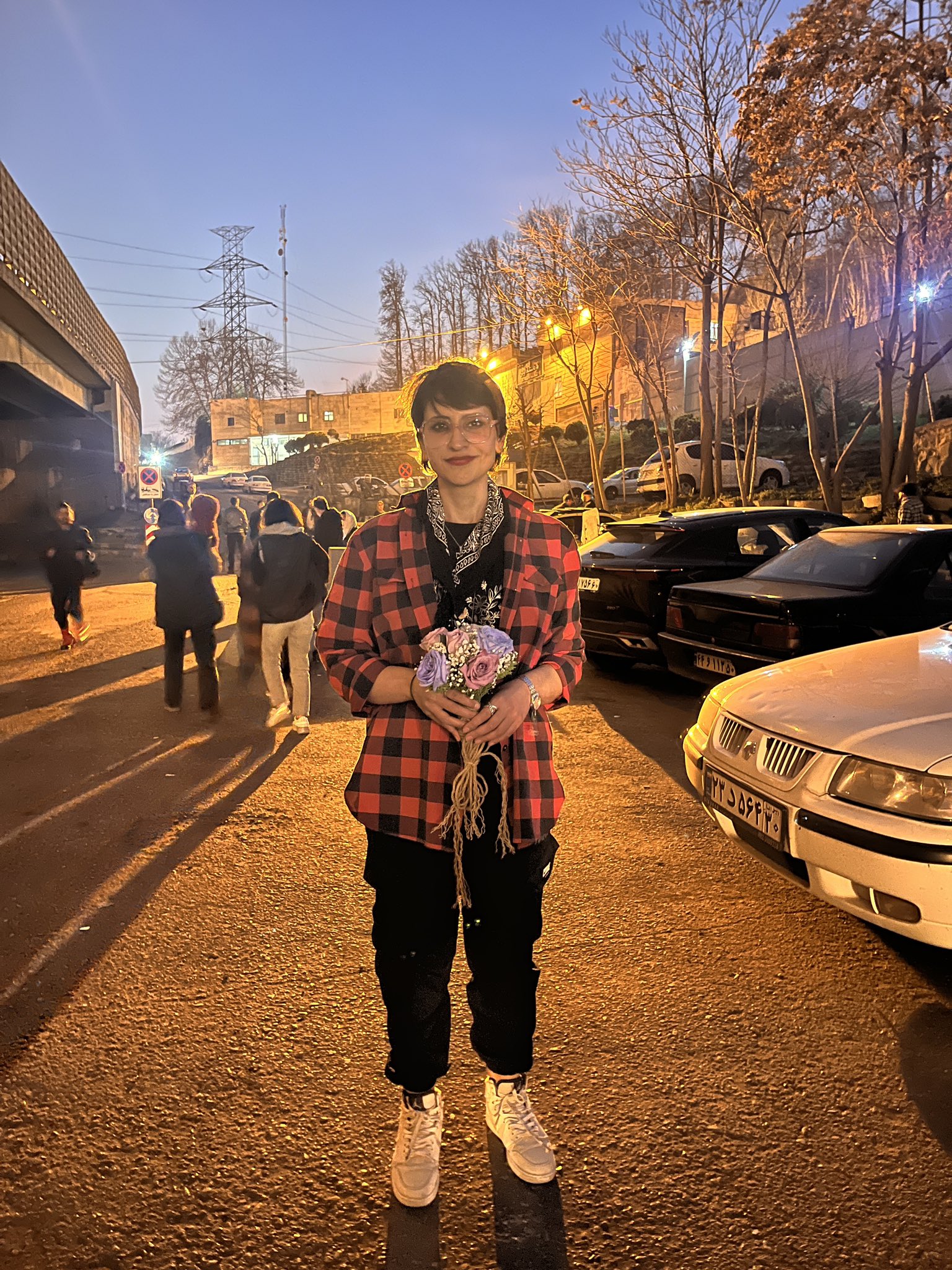
Other punitive measures continue against campus activists. Student activist Motahereh Gounei has been sentenced by Branch 29 of the Revolutionary Court to a total of 21 months in prison—15 months for “propaganda against the Islamic Republic” and six months for “insulting Khamenei”—with her phone confiscated as alleged evidence.
Separately, Ali Parvin, a student at Tabriz University of Medical Sciences, has been summoned again to a disciplinary committee over social-media posts; his prior three-semester suspension and academic exile for involvement in the “Woman, Life, Freedom” protests remain in effect and could be reimposed. Taken together, these cases point to a pattern of criminalization, reactivated files, and stacked penalties aimed at deterring student dissent.
Demands and next steps
Students’ demands center on practical fixes with wider implications for campus autonomy: restore shuttle services (notably for the Andisheh women’s dorm), reduce dinner prices and improve quality and hygiene, repair and decongest dorms, halt security-style interventions and threats, and reverse expulsions linked to protest activity. Students say they will continue actions until these demands are met. University officials have framed the unrest as “union/welfare” protests and offered limited explanations; no timeline has been announced for restoring transport, adjusting pricing, or reviewing disciplinary measures.