A peaceful environmental protest in the Kurdish city of Saqqez ended in gunfire when guards at the Qolqoleh gold mine opened fire on villagers demanding an end to its toxic operations—killing a 22-year-old man and injuring several others. Far from an isolated tragedy, the incident exposes a recurring pattern in Iran’s Kurdish regions, where state violence, ecological destruction, and the silencing of dissent converge—scarring both land and lives.
A Protest Turns Deadly
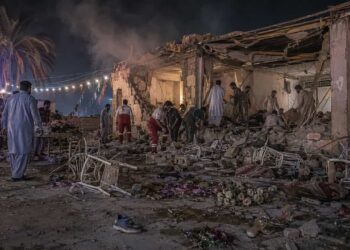
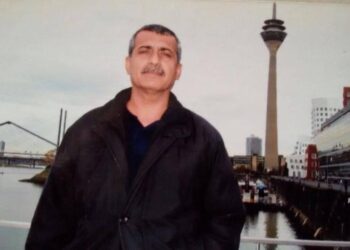
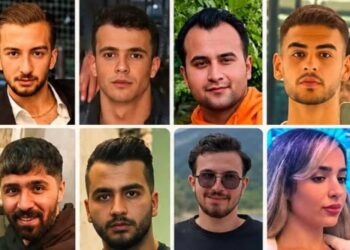
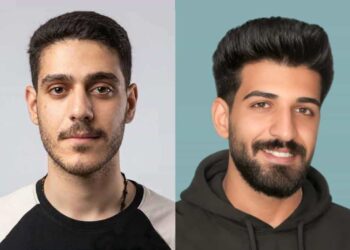
On Monday afternoon, September 15, 2025, a peaceful protest in the village of Pir Omran, Saqqez County—a Kurdish-majority region in northwestern Iran and the hometown of Jina (Mahsa) Amini—turned into a scene of bloodshed. Villagers had gathered to denounce the operations of the Qolqoleh gold mine and its unchecked expansion, including the construction of a road cutting across farmlands. Without warning, armed guards opened fire. Mohammad Rashidi, a 22-year-old villager, was killed instantly; three of his relatives—Ramyar, Mohammad Amin, and Hemin Rashidi—were critically wounded.
Authorities were quick to frame the incident as an “armed confrontation,” claiming mine guards fired in self-defense. Colonel Mohammad Sadegh Pirouzi, Saqqez’s police chief, stated that two mine employees had shot into the crowd, causing the casualties. Yet Kurdish human rights groups and eyewitnesses insist the protest was entirely peaceful and the gunfire unprovoked.
Local sources report that Rashidi’s body was taken to Salah al-Din Ayoubi Hospital in the nearby city of Baneh, where security forces sealed off the facility, restricting access even to relatives. The wounded remain in critical condition under tight security.
Deep Roots of Environmental Grievance
This eruption of violence was no sudden accident but the culmination of years of anger. For months, villagers and environmental activists had warned of the Qolqoleh mine’s devastating impact: toxic contamination of groundwater, heavy-metal pollution, soil erosion, and threats to local agriculture.
Earlier in 2025, citizens and experts across Kurdistan and neighboring provinces submitted a petition with more than 16,000 signatures demanding the immediate closure of three gold mines—including Qolqoleh—citing risks to public health and the region’s scarce water resources.
Environmental agencies and natural resource authorities in Kurdistan had previously opposed the mine’s expansion on ecological grounds. Yet civil society actors say political pressure from Tehran pushed the provincial Industry, Mining and Trade Department to reissue extraction permits, bypassing all environmental objections.
As local activist Keyvan Zendkarimi put it, the tragedy was the inevitable result of “mismanagement and the persistent refusal to listen to people’s voices—a breaking point after years of neglect.”
The Silence of Civil Power
After the shooting, judicial and security officials announced that the shooters had been arrested and an investigation launched. Yet skepticism runs deep. The region has long been marked by restricted media access, tight security control over hospitals and evidence sites, and the absence of independent inquiries. Local reports even suggest phone networks were cut shortly after the incident to prevent residents from coordinating or sharing information.
The crackdown is not new. In July 2025, authorities arrested five citizens—including the village head and a local lawyer—for speaking out against the mine. This pattern exposes a broader campaign to suppress dissent in rural and Kurdish communities, where environmental rights, land access, and local autonomy remain tightly contested.
Between Power and Pain: The Human Toll
Mohammad Rashidi was not simply a victim; he was the son of Pir Omran, rooted in the land his community has long struggled to defend. The three wounded men are his relatives—tied by blood and by soil, their fates now intertwined with the violence unleashed upon them.
Their families carry a double burden: grief and fear. Many worry the injured will not survive—or that, if they do, their lives will forever bear the costs of bullets fired at unarmed farmers.
As one family member told local reporters:
“We came to protest what is ours—our water, our soil, our health. Instead, we were shot at like criminals.”
The Larger Pattern: Extraction, Exclusion, and Repression
This tragedy reflects deeper systemic realities in Iran. In resource-rich yet marginalized regions like Kurdistan, extractive industries have long operated with minimal oversight. Profits rise to political and corporate elites; environmental destruction and human suffering stay behind.
The timing also matters: Saqqez, home to Jina (Mahsa) Amini, has become a symbol of resistance since her killing by the morality police in 2022 sparked nationwide protests. Now, as Iran faces renewed tensions, the violence in Saqqez sends a chilling message: dissent—whether over women’s rights, political freedom, or environmental protection—will be met with force.
To rural Kurdish communities, it confirms a grim reality: the state treats their voices not as legitimate claims but as threats to be neutralized. Human life, local ecology, and communal rights remain secondary to the machinery of extraction and authoritarian control.
A Call to Witness
The killing of Mohammad Rashidi and the wounding of his relatives cannot be dismissed as a tragic accident. It is a stark reminder that in Iran’s peripheral regions, the right to protest, the right to water, and even the right to life itself remain precarious.
If nothing changes, more villagers will be silenced, more lands poisoned, more lives cut short. Yet this story must not be buried. Every bullet that strikes a farmer echoes beyond Kurdistan—demanding justice, accountability, and the defense of both life and land.