

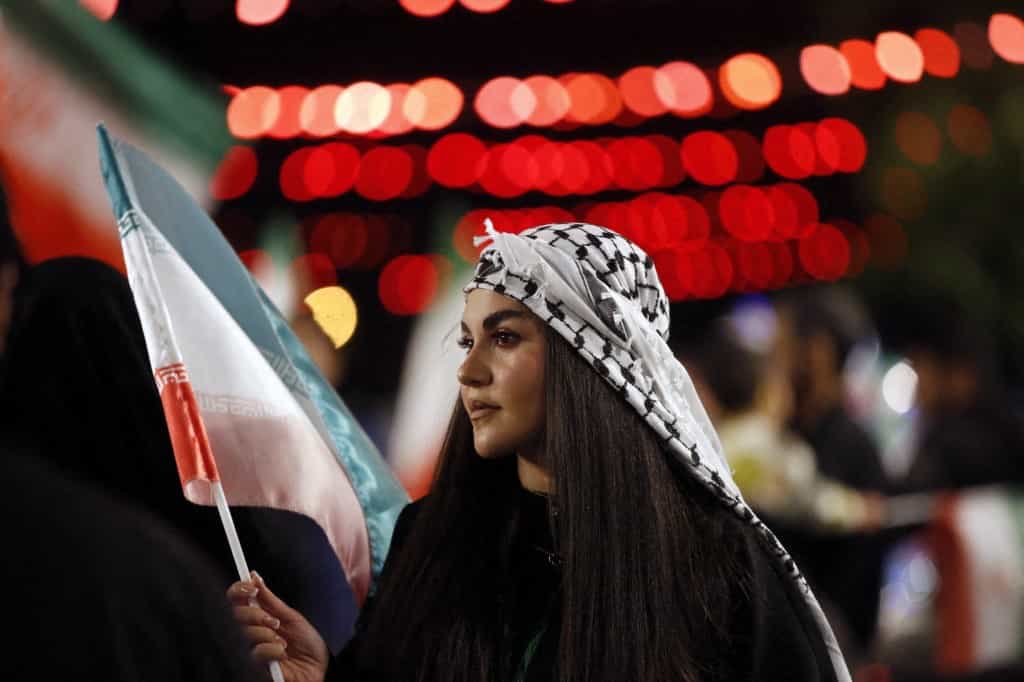
Women’s growing presence in state-sponsored rallies has become a contested political and gendered field, exposing both social diversity and state mobilization strategies.
As women’s presence in state-sponsored nighttime rallies in Iran has increased during the war and even after the ceasefire, this presence has become not only a social issue but also a political and gendered field of contestation. Some see it as a sign of social diversity; others view it as part of a targeted project to mobilize and control society.
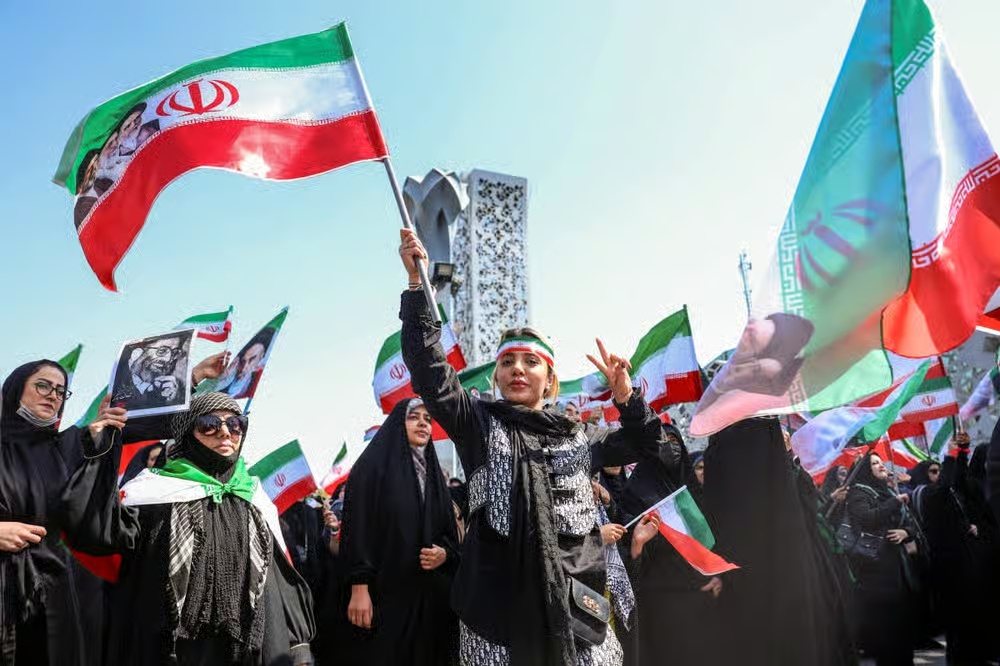
Women’s presence in pro-government nighttime rallies during the days of war and even during the ceasefire has become highly controversial. These women come from different groups and are not homogeneous. Yet some view them as a single category, calling them pro-regime women or even the “regime’s parastoos”—a Persian political slang term often used to refer to women accused of acting as security-linked seduction agents for the state.
We spoke with Azadeh Kian, professor of gender studies in Paris, about these women: from women who support the state to those who say they do not support it at all, and who even criticize the political system and its system of gender discrimination, but have joined these rallies solely to defend Iran. In this interview, we asked Kian about this issue, about the diversity of women’s groups present in these rallies, and about the extent to which this situation may positively or negatively affect the continuation of secular feminist movements in Iran’s future.
At the beginning of the conversation, Azadeh Kian emphasizes the diversity of the women present in these rallies:
Some of them, at least in terms of their appearance and the slogans they chant, seem to be staunch supporters of the state. They may well be Basiji women, members or supporters of the Basij paramilitary force; they may be women whose relatives or networks are present within the state, at various levels. So their presence is, in fact, a serious form of support for the state. And we know that a certain percentage of the population—we do not know exactly how large—supported this system even before the war, for different reasons: religious, financial, or otherwise.
She then points to another group of women in the rallies:
Among the women one can see in these nighttime demonstrations, some do not wear the hijab; some even wear makeup. They are young or middle-aged. In my view, one cannot say that these women are “regime parastoos.” No. Their numbers are too large, and this also shows that they may not necessarily support the system. The reason for their presence in the nighttime demonstrations may be their opposition to war or their support for their country. In other words, one can also understand this as patriotism: they want to show it actively.
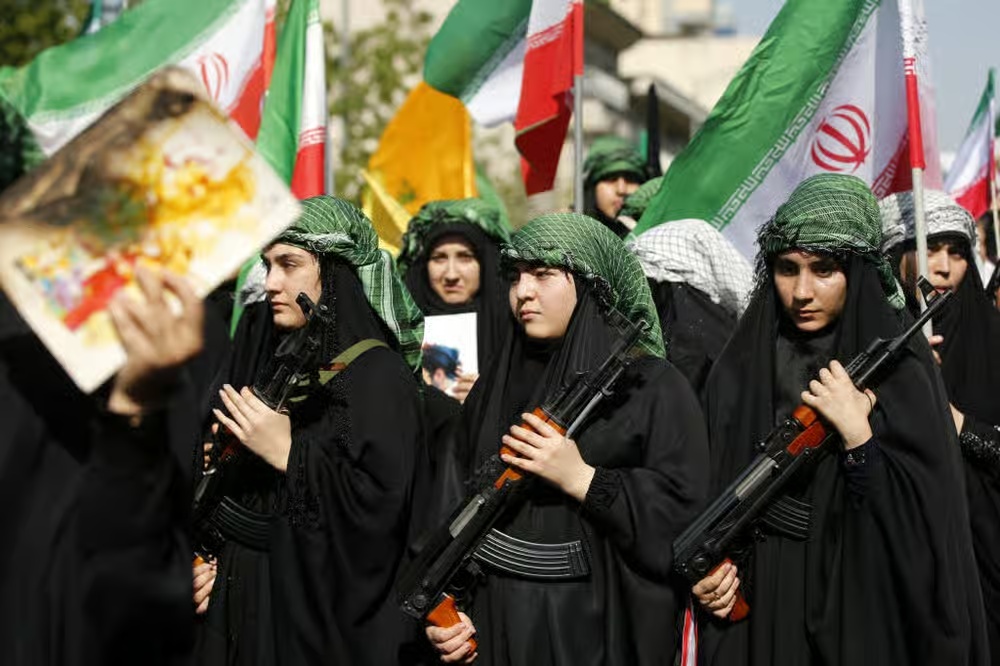
Kian also points to a newer phenomenon: the presence of armed women in some rallies and neighborhoods. According to her, this practice serves several purposes: displaying the state’s power and continuity, while also creating a form of intimidation toward citizens who do not participate in these rallies. She sees this process as part of the “militarization of women.”
Kian says:
Recently, we have also seen another side of women. For several days now, some of these women who are serious supporters of the state have even been armed with weapons, Kalashnikov rifles, and sent into different neighborhoods. They move around in large SUVs, so to speak, chanting slogans and so on. One reason is precisely to show that this state exists, that it remains in place and stands firm. At the same time, it is also somewhat about frightening different people, or intimidating residents of different neighborhoods who do not take part in these demonstrations and who, in a sense, belong to that “silent majority.” That is why I think we must distinguish between different groups among the women we see in these squares: ideologically, and also in terms of their closeness or lack of closeness to the regime. Some women, for example, are fully veiled, wearing chadors and hijab, while others are not veiled at all. This shows that these demonstrations have, in effect, agreed to accommodate a wider spectrum of women.
She explains:
What we are seeing is a kind of “militarized femininity”: an attempt to align the image of women with a militaristic discourse. The message being conveyed is that militarism is not in contradiction with femininity; rather, it can absorb femininity into itself.
Instrumentalizing Women and Nationalism
Kian as a gender-studies scholar analyzes the process within a broader framework: in periods of crisis, especially during war, the state tries to use women as instruments of social mobilization. This instrumental use is accompanied by an emphasis on nationalist discourse—a discourse that has become more prominent than before even in official messaging, with fewer references to religious elements.
She adds that under such conditions, the state even shows flexibility toward its previous restrictions, for instance on the issue of hijab, in order to bring a wider spectrum of women into the streets. This is a political-cultural strategy aimed at displaying public support both domestically and internationally.
Kian says:
You see that at a time when this state has needed the presence of different social groups or different spectrums of women, it has closed its eyes to women who, until just yesterday, could even be killed because of a hijab that, in the state’s own language, was “bad.” What I mean is instrumentalization: the instrumental use of women and the instrumental use of Iranian nationalism, which you see greatly intensified during war. We also witnessed this in 2025, when Iran was targeted by Israeli attacks: the same instrumentalization of women in order to gain support from broader groups of women who are not necessarily veiled and not necessarily supporters of the state. But now the state needs their presence more than ever to fill the squares, whether Enghelab Square in central Tehran, Tajrish Square, or other major squares. Of course, this is not the first time. We have seen throughout history that authoritarian regimes have always tried to use women’s presence at sensitive historical moments. This is not the first time they are doing this.
Referring to the Iran-Iraq War and the different ways women were used in the public sphere, Kian says that the state did not use today’s tactic at that time, but:
These are things they gradually learned. This state has learned that it is useful to mobilize half the population as well in support of itself.
Consequences for the Feminist Movement
In response to the question of what effect this situation might have on the future of women’s struggles, Kian argues that this process could be dangerous for the secular feminist movement, especially if it does not provoke a serious analytical and critical response. Some of these women may move toward nationalism or even closer alignment with the state, and later become anti-feminist forces.
Kian says:
In my view, this danger can be serious if Iranian feminists do not respond seriously. Unfortunately, because of the war, we do not hear much from Iranian feminists at the moment. Most of what we do hear is limited to memoir-like accounts of how they experienced the war. But I have not yet seen anything written in relation to this “feminization of militarism,” or militarism itself.
She also emphasizes an important point:
Do not forget that we already had women Basijis, female members of the Islamic Revolutionary Guard Corps (IRGC), and women security forces. During the “Woman, Life, Freedom” protests, they were actively present. They beat women severely, arrested them, and even shot at them. This is not the first time. But they were already Basijis or IRGC members, already embedded in those institutions. Today, however, there seems to be a demand from some women who were not members of these institutions, but who now, in the name of national defense, want to come forward and say: give us weapons so that we can defend the country armed. These women will certainly be harmful to the future feminist movement in Iran. The process they will go through will naturally push most of them either toward nationalism, which is itself a patriarchal ideology, or toward the state itself. The state can very easily absorb and train them, and, for example, turn them into serious anti-feminist forces to be used against other women.
Azadeh Kian concludes:
We do not have research on this, and everything I am saying is speculative. But at the same time, we have seen the effects of women’s presence, even pro-state women’s presence, in different kinds of activity. When many of these women become active and enter the public sphere, they interact with other women who oppose the state, and they influence one another. In feminist sociology, we call this civic practices: the impact that these movements in and out of public space, and these exchanges of views, can have on different women.
In one sense, the presence of women in state-sponsored nighttime rallies cannot be reduced to a single narrative. This phenomenon simultaneously carries signs of political mobilization, the instrumental use of gender, and complex social and identity dynamics. While the state tries to use this presence to strengthen its legitimacy, its real consequences—especially for the future of women’s movements—remain uncertain.