


In 1988, the Islamic Republic of Iran (IRI) executed at least 4000 political prisoners. IRI has never acknowledged these executions, nor provided any information as to how many prisoners were killed.
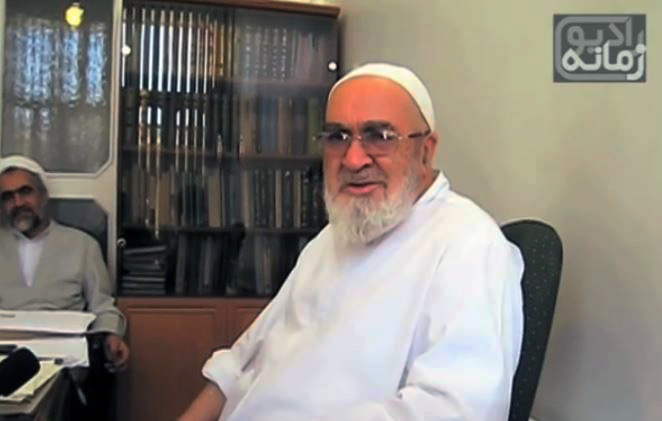
On 9 Aug 2016, the house of ayatollah Hossein Ali Montazeri, a high-ranking political and religious cleric and jurist who passed in 2009 has released a audio file for the first time revealing the conversations of the late ayatollah with a number of high ranking officials in the Islamic Republic regime that all played key roles in the mass execution of political prisoners in Iran in the year 1988.
The file is an audio conversation that is taking place in 1988 when ayatollah Hossein Ali Montazeri was named to succeed Ayatollah Khomeini, as the future leader of the Islamic Republic. Montazeri has called to his house members of what the public came to call the “death commission”( Heya’t Marg) – a special commission for the 1988 state-sponsored executions of political prisoners in Iran which had 16 members representing the various authorities of the Islamic government.
Of the 16 members of the death commission, four high ranking officials have showed up at Montazeri’s house to hear his grave concern and opposition to the executions. These conversations are recorded on an audio device and are now releases in format of an audio file.
The officials who are hearing Montazeri objection and concern and are in turn conversing with him and arguing in favor of the executions are:
1. The chair of the death commission: Morteza Eshraqi;
2. The special assistant to Eshraqi and the jurist and Shriate judge of the courts: Hujjat al-Islam Hossein Ali Nayeri;
3. The representative of the Ministry of Information and Intelligence in charge of questioning prisoners in Evin Prison: Mustafa Pour-Mohammadi;
4. And the Assistance to Tehran prosecutor: Hujjat al-Islam Sayyed Ebrahim Raeisi.
Montazeri, in his memoir, writes about a meeting with Pour-Mohammadi and three other members of the death commission which took place on 15 August 1988. The file that was just released after 28 years by Montazeri’s family is the details of this meeting. In the file, you can hear members of the death commission arguing with Montazeri to justify the killings.
In his memoir Montazeri write: “I met with Mr. Nayeri, who was the religious judge in Evin, Mr. Eshraghi who was the prosecutor, and Mr. Pour-Mohammadi who was the representative of the Ministry of Information. I told them that they should stop the executions during the month of Moharram. Mr. Nayeri responded: ‘We have so far executed seven-hundred and fifty people in Tehran, and we have identified another two-hundred and fifty people. Allow us to get rid of them and then we’ll listen to you.’”
In the file that is released, this whole conversation is reordered with the voices of officials who are still high ranking officials in IRI and one of whom is considered a candidate for the succession after the current leader Ayatollah Ali Khamenei passes. Some analysts have suggested that Hujjat al-Islam Sayyed Ebrahim Raeisi, who is now the Custodian of Mashhad’s Astan Quds Razavi, could be the next leader of IRI.
The file is important evidence that documents the voice of those carrying out a massacre of prisoners and captives without due process or trails. It is important because those involved with the executions are still in power.
The majority of those killed were supporters of the People’s Mujahedin of Iran, although supporters of other leftist factions, including the Fedaian and the Tudeh Party of Iran (Communist Party), as well as ethnic minority groups like the Kurds and religious minorities like the Baha’is were executed as well.
According to Ayatollah Montazeri, IRI formed a three-person committee to oversee the executions in each prison. The committees interrogated all political prisoners. The trials just lasted a few minutes. They asked the prisoners: Are you a Muslim? Do you pray? Do you support the Islamic Republic? A negative answer sent them to execution.
In the audio file that was just released, Pour Mohammadi (or possibly Nayeri) tries to convince Montazeri that the trials were just. The group from the death commission tells Montazeri: “we begged these prisoners to repent.” Montazeri asks: “did you tell them that if they do not repent you were going to kill them?” the reply is negative.
In 1988, over the course of two months, some estimates suggest that between four to five thousand prisoners were killed.
Montazeri, because of his oppositions to these killings and the state principle of the Rule of the Jurist (Velayat-e Faqih) in IRI, was put under house arrest from 1997 to his death in 2009.
His family has released this audio file in a time that IRI still executes political prisoners in masses and without due process or a trial.
On 2 Aug 2016, 20 Sunni prisoners were executed in Rajai Shahr prison in Karaj.
Listen to the audio file released in Persian: