
Iran’s 2013 presidential election will have rippling effects on the fate of reform in Iranian politics, on political alignments, interaction amongst political camps, relations between the branches of government, between the clergy and the Revolutionary Guards, as well as on the relations between the government, specifically the Supreme Leader, and the many social movements in Iran. However, the most important outcome of the election speaks to Iran’s nuclear policy and the nuclear negotiations with the P5+1.
No to Jalili, No to Current Nuclear Policy
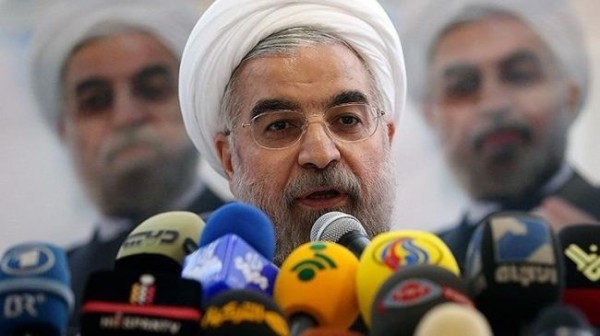
Saeed Jalili, Iran’s current top nuclear negotiator, ended up in fourth place behind Hassan Rohani, the winner of the election, and the two runners-up, Mohammad Bagher Ghalibof and Mohsen Rezai. This could very well be regarded as a rejection of the country’s nuclear policies and an expression of how the majority of the public views the progress of the negotiations.
Those who in the early years of Mahmoud Ahmadinejad’s presidency wanted a kind of referendum on the nuclear issue have perhaps been given that referendum as a byproduct of the 2013 election, remembering that one of the main challenges for the candidates in their televised debates was Iran’s nuclear policy.
Jalili saw the objective of the negotiations as defusing threats and rejecting any form of compromise. He emphasized words like resistance and perseverance. The electorate’s rejection of Jalili is a firm “no” to this approach.
Of course Jalili was only executing the prescription dictated by Ayatollah Khamenei, the Supreme Leader, and it is up to him to recognize the message sent by voters. Ayatollah Khamenei should, therefore, remove Jalili and reconsider Iran’s nuclear policies.
Reconciliation; Not Creating Tensions
The sweeping victory for Rohani is a sign that more than the approach to these talks needs to be altered. The candidates’ third televised debate revealed a growing sentiment that the Islamic Republic, rather than Western countries, has been to blame for the lack of progress in the nuclear negotiations.
Now, after eight years of empty slogans instead of meaningful diplomacy that seeks common ground and reconciliations, it is time to look for a settlement that would encompass the interests of both sides.
Interaction between the President and the Leader
It is a common belief that the Islamic Republic’s nuclear policies are under the supervision of the Supreme Leader and will not be affected by the presidential election. The current foreign minister, Ali Akbar Salehi was quoted as saying in May: “The nuclear issue is not related to the election.” However, such a statement neglects two points. First of all, is it possible for the Leader of the Islamic Republic to deny the will of the public majority to make changes to the nuclear policies? Secondly, the Supreme Leader, even if he is the final decision-maker on nuclear issues, cannot treat a president that has been elected on the platform of change in nuclear policies, in the same way as he dealt with Mahmoud Ahmadinejad. We must not forget that the president is also head of the Supreme Council of National Security and could further his views along other paths.
The election fulfilled two objectives:
• A show of political legitimacy on the international level
• A show of political stability through the conduct of peaceful elections. The majority of the people have voted for change in the nuclear policy, and the international community has received this message and will refer to it at the negotiating table.
Nuclear Issue and the Administration
 The nuclear policy goes far beyond the scope of the administration; however, the way in which the administration chooses to move forward will affect the nuclear negotiations on three levels:
• the administration may choose to adopt an aggressive or a conciliatory approach, which would effect all its subsidiary bodies;
• economic policies could direct dissatisfaction toward nuclear enrichment efforts; and
• the adminsitration's approach may influence the international response.
John Kerry and Alexander Hague’s statement that they’d hold out on intensifying sanctions until the end of the election means Western countries have also claimed a stake in the result, despite knowing the final decision-maker is the Supreme Leader.
The Win-Win Game
Changing Iran’s nuclear policies is a win-win game. The people of Iran will benefit, as it will result in the easing of sanctions, an increase in national revenues and possibly a decline in inflation and unemployment. The world community will benefit from the dissipation of threats from the Islamic Republic. And even Ayatollah Khamenei will come out a winner by showing that he can correct a strategic mistake.
[translated from the Persian original]