

Many politicians regard economic sanctions as a tool for forcing governments to back down or even bringing about regime change. The apparent logic is simple: restrict a government’s resources, increase social pressure and eventually force those in power to change their behaviour or relinquish power. Yet history rarely follows such a straightforward path.
Governments, particularly authoritarian ones, find ways to survive under economic pressure. They channel scarce resources towards security institutions, loyal forces and the ruling elite, establish networks to circumvent sanctions, expand informal markets and shift the costs of the crisis onto society.
The central question, therefore, is not simply whether sanctions can weaken a government. More importantly, what do they do to society? In many historical cases, long before the structures of power have collapsed, household budgets have shrunk, the middle class has been worn down, healthcare and education have suffered, and everyday ethical norms have begun to fracture under the pressures of scarcity and survival.
Sanctions may wound a government, but it is often society that suffers the deeper injury.
Historical Examples: Governments Survived, Societies Were Worn Down
Cuba offers one of the clearest examples. More than six decades of US sanctions have failed to overthrow the country’s communist government. Cuba’s political system has endured, while its society has been worn down by cycles of shortages, emigration, energy crises and despair. Some of Cuba’s present difficulties can be attributed to government mismanagement, but sanctions have deepened the pressure. The outcome has been neither regime change nor the creation of a freer society, but a more difficult life for ordinary people.
Iraq in the 1990s presents an even harsher example. The sweeping sanctions imposed after the Gulf War were so severe that the UN introduced the Oil-for-Food Programme in 1996, allowing Iraq to sell oil under UN supervision to purchase food, medicine and other essential supplies in an effort to avert a humanitarian catastrophe. Nevertheless, Saddam Hussein remained in power until the military invasion of 2003. His security apparatus survived, while healthcare, nutrition, education, the middle class and social trust suffered devastating damage.
Libya and Syria also demonstrate that governments rarely fall as a result of sanctions alone. Muammar Gaddafi’s regime was not brought down by sanctions; its end came through the convergence of a domestic uprising, civil war and NATO military intervention. In Syria, too, extensive sanctions did not, on their own, remove Bashar al-Assad from power. What altered the balance was the civil war, military attrition, the destruction of infrastructure and shifts in the involvement of foreign powers.
North Korea has faced one of the world’s most stringent sanctions regimes for decades. Yet its government has neither collapsed nor abandoned its missile and nuclear programmes. The population lives with poverty, shortages and political isolation, while the repressive state remains intact through information control, a tightly controlled security apparatus and limited external support.
Sanctions can undoubtedly generate pressure, but they are rarely, by themselves, the driving force behind political change. Whether a government actually loses power usually depends on other factors: divisions within the ruling establishment, the weakening of the repressive apparatus, organised social mobilisation, the loss of foreign support, civil war, military defeat or foreign intervention.
Why Do Governments Survive Under Sanctions?
The principal reason is that governments and societies do not suffer equally from sanctions. Governments have access to resources, networks, smuggling operations, grey markets and security mechanisms. They can preserve funding for the military, propaganda and institutions of repression, even as ordinary people struggle to obtain medicine, food, electricity and employment.
Sanctions can also serve the government’s propaganda. Those in power can blame every failure on an external enemy, tighten security controls and portray social protest as “collaboration with the enemy”. Under such circumstances, external pressure can strengthen the government’s justification for repression rather than undermine it.
At the same time, sanctions weaken the middle class, a social group often capable of shaping public debate, organising civil society and articulating political demands. When pushed towards poverty and insecurity, its priorities change. Instead of political participation, people become preoccupied with emigration, finding a second job, obtaining medication, paying rent and preserving the bare necessities of life.
Society may become angrier, but anger does not automatically translate into political power. Poverty can generate protest, but lasting change requires networks, organisation, social trust, political imagination and fractures within the structures of power. A society struggling for survival every day does not necessarily have the capacity for sustained political action.
The Erosion of Society’s Moral Fabric
The deeper effects of sanctions are not always visible in economic indicators. Sometimes they emerge in the ethical norms that govern everyday life.
When medicines become scarce, black markets expand. When goods are in short supply, hoarding and profiteering proliferate. When formal incomes are no longer sufficient to make ends meet, bribery, middlemen, smuggling and personal connections begin to take the place of the law. Prolonged scarcity pushes society towards an ethics of survival, in which staying alive takes precedence over other principles.
Under such conditions, social trust deteriorates. Rather than relying on one another, people begin to fear one another. Everyone tries to secure whatever share of resources they can. Solidarity weakens, and competition for scarce resources replaces cooperation.
Sanctions may be introduced under the banner of putting pressure on a government, but in practice they can drive society towards informal economic activity, distrust and corruption. Repressive governments can also benefit from these conditions, because a society entangled in patronage and smuggling is less capable of building healthy, independent and lasting institutions.
Iran: The Risk of Erosion Before Collapse
The same question arises in Iran. If the objective of sanctions is to change government behaviour or bring about regime change, historical experience suggests that economic pressure alone cannot guarantee either outcome. The government can find ways to circumvent sanctions, sell resources at discounted prices, conduct transactions through informal networks and maintain the resources required by its security apparatus.
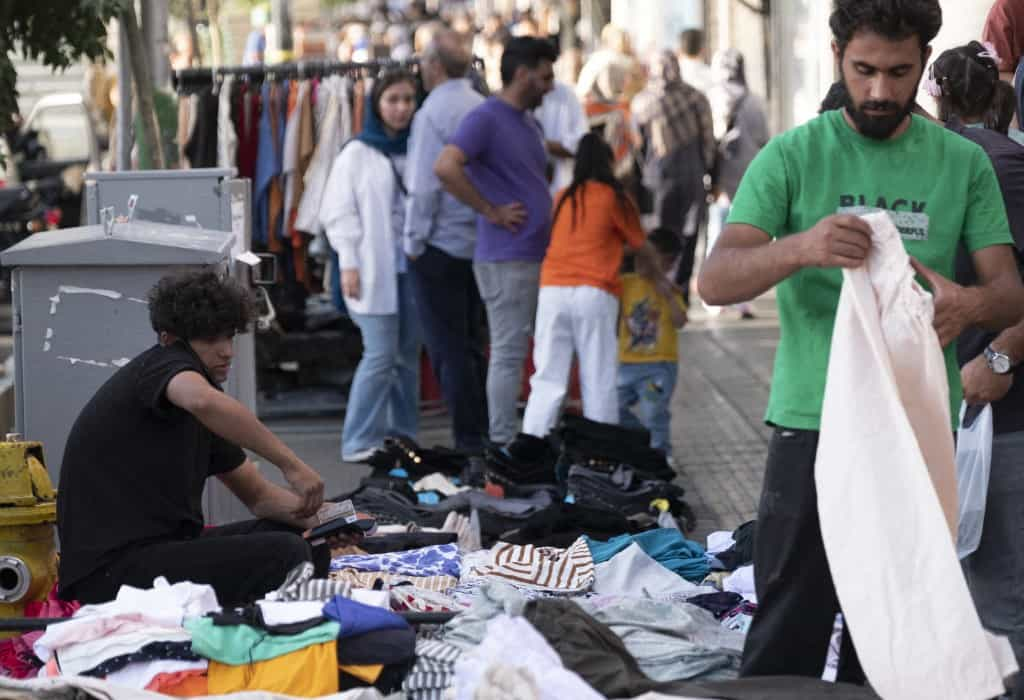
Iranian society, meanwhile, becomes increasingly vulnerable. Food and medicine prices rise, the middle class shrinks, emigration accelerates, corruption becomes more commonplace, social hope diminishes and public morality is eroded by the pressures of survival.
Under such circumstances, the government may indeed become weaker, but society becomes weaker as well. This is the central contradiction of sanctions: they are supposed to target the government, yet ordinary people bear much of the cost. A society consumed by the struggle for survival has less capacity to build a future, organise collectively and preserve its moral resources.
This is where the greatest danger of sanctions lies. A government may eventually change, but a society that has lost its social trust, its middle class, its hope and its shared ethical foundations cannot easily be rebuilt.
Revolution Is Not Simply a Product of Poverty
One common mistake is to assume that extreme poverty naturally leads to revolution. History does not support this assumption. Poverty can generate protest, but revolution requires networks, organisation, political imagination, an active middle class, social trust and divisions within the ruling establishment.
If economic pressure merely leaves people hungrier, more exhausted, more fragmented and more distrustful, it may actually diminish their capacity to bring about change. A society struggling every day to afford food, medicine and rent does not necessarily have more energy for political organisation.
In many cases, extreme poverty does not make people more revolutionary; it simply wears them down. Someone preoccupied with survival may be furious with the government yet lack the capacity for sustained political action. If sanctions destroy the middle class, they weaken precisely the social force that might otherwise have carried political change forward.
This does not mean rejecting every form of pressure on repressive governments. The point is that indiscriminate and prolonged sanctions, particularly when they affect ordinary people more severely than those in power, neither guarantee political change nor necessarily strengthen society.
If the objective is to support the population, pressure must be precise, targeted and directed at the networks of power, repression, corruption and government financing, rather than paralysing ordinary social life. Sanctions that destroy access to medicine, food, education, communications and legitimate trade, while devastating the middle class, can leave society weaker for years, even if they succeed in putting pressure on the government.
History has shown that sanctions alone do not bring down governments, but prolonged sanctions can break societies from within. This breakdown is not always sudden or dramatic. Sometimes it takes the form of emigration, poverty, distrust, corruption, violence, despair and the erosion of everyday ethical norms.
Sanctions may wound a government, but if they bring society to its knees, the outcome is not liberation. Instead, they may leave behind a country whose government remains in power while its society is far weaker, more deeply wounded and increasingly deprived of hope for the future.