

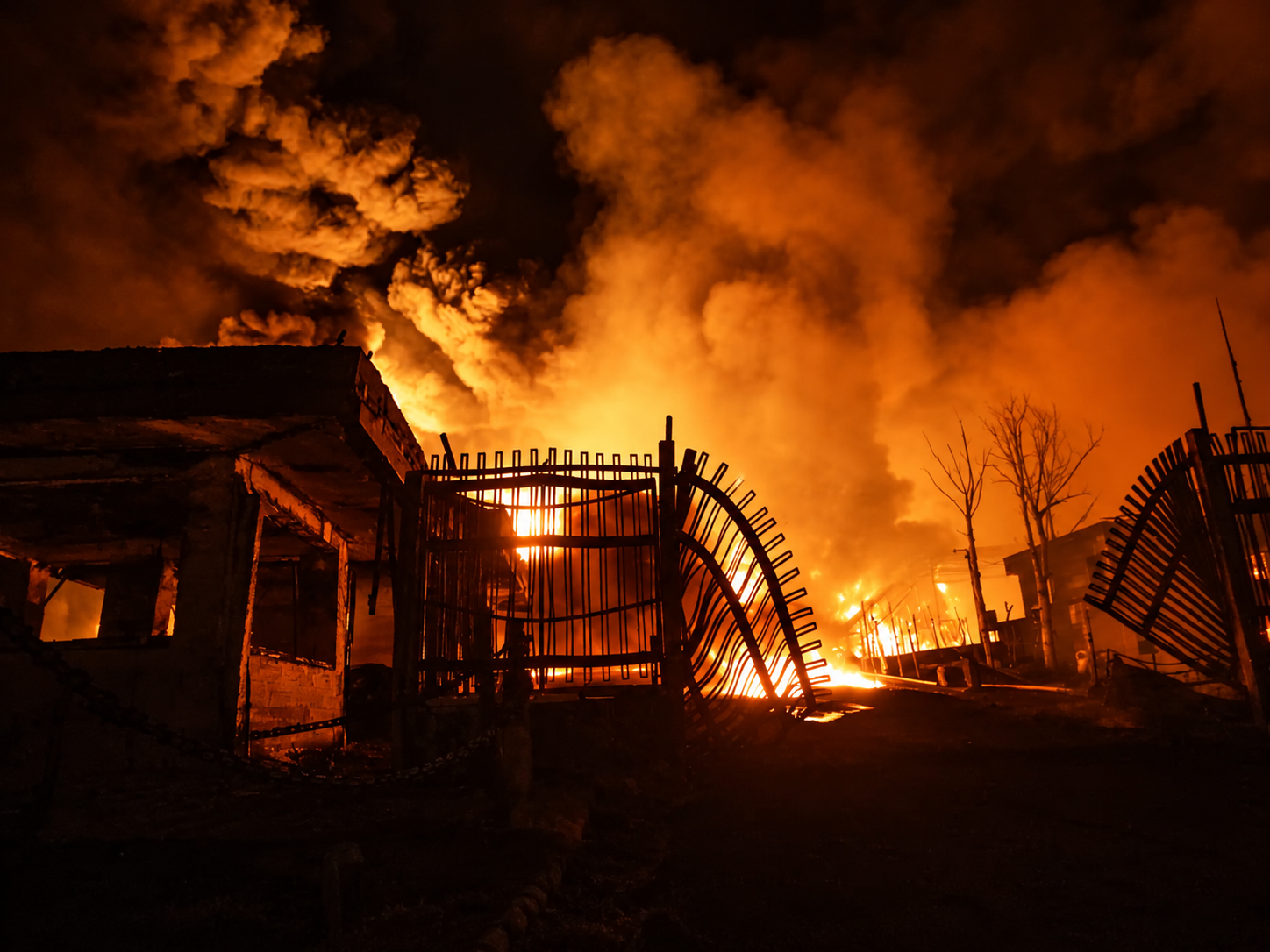
The damage caused by the U.S. and Israeli wars with Iran has not been limited to the destruction of cities and infrastructure. The effects of explosions, fires and leaking pollutants can remain in water, soil, forests and natural habitats for years. The two recent wars have left fresh wounds on Iran’s already fragile environment, from fires that consumed thousands of hectares of natural land to damage inflicted on marine habitats and wildlife. The full extent of the destruction has yet to become clear.
For years, human activity has left deep scars on the environment. These range from global warming and the refusal of the world’s industrial powers to take responsibility for reducing greenhouse gas emissions, to recurring droughts in some parts of the planet and the submergence of others. Mining, nuclear testing, the waste crisis, which has now even reached outer space, pollution of seas and oceans that threatens marine life and coral reefs, the extinction of animal species, and the melting of Arctic ice are all manifestations of a global environmental crisis.
Wars, wherever they occur, intensify these environmental crises. Significantly, some of the planet’s most valuable natural areas are continually exposed to threats created by armed conflict.
Iran’s environmental situation is shaped by global conditions, but its own ecosystems are also confronting numerous crises. Wetlands and lakes are drying up. Poorly planned dam construction, drought and forest fires have taken their toll. At the same time, newer forms of environmental destruction, such as mountainside encroachment and land grabbing, have destroyed forests and green pastures. Little room has been left for the land to breathe. Under such conditions, war has delivered another devastating blow to Iran’s already fragile environment.
The damage inflicted by the 12-day and 40-day wars on Iran’s natural resources, forests, water supplies and wildlife may have received less attention than the loss of human life. Yet the environment is itself part of a country’s vital infrastructure, and the consequences of wartime destruction can persist for years, sometimes even across generations.
The environment is always a silent casualty of war. Destruction in cities and residential areas is immediately visible and therefore tends to be addressed sooner. The consequences of war in nature, however, can remain for decades. In Iran, the environmental legacy of the eight-year Iran-Iraq War is still visible in parts of the west and south of the country. This article examines the environmental damage caused by the two most recent wars.
War and the Scale of Damage to Nature
According to experts, 118 armed conflicts took place around the world in the closing years of the twentieth century alone, displacing six million people. The abandonment of farmland, destruction of forests, drying of wetlands and phenomena such as dust storms are among the long-term consequences that can follow population displacement.
When conflict erupts in one part of the world, its environmental effects can extend far beyond that location because ecosystems do not stop at political borders.
During the 1990–91 Gulf War, Iraqi forces set fire to Kuwaiti oil wells as they retreated, burning more than six hundred wells. Oil released into the Persian Gulf, together with pollution caused by the burning wells and the release of chemicals and fine particles into the water and air, created widespread environmental contamination whose effects were also felt in neighbouring countries. This assessment appeared in Hakim Journal in autumn 2007, in a study of deaths associated with environmental pollution resulting from the Iraq-Kuwait war.
Thick deposits of oil and tar in the sea also killed marine birds. The Gulf War resulted in the deaths of at least 30,000 seabirds.
Another wartime strategy that continues to be used today is the scorched-earth policy. During the Second Sino-Japanese War from 1937 to 1945, Chinese authorities deliberately flooded vast areas in an attempt to halt the advance of Japanese forces. Thousands of soldiers and civilians were killed, and extensive areas of farmland were inundated. Similar tactics have been used in numerous conflicts, including the American Civil War, and can be traced back to antiquity. The destructive effects of warfare on the natural environment were eventually addressed in international humanitarian law, including the Geneva Conventions and their additional protocols.
Landmines left behind after the eight-year Iran-Iraq War continued for years to endanger both humans and other living creatures.
For a more precise assessment, the environmental damage caused by Iran’s two recent wars can be divided into three categories: damage occurring during attacks, post-attack damage, and additional pressure placed on natural resources during reconstruction.
Damage during attacks included strikes on oil facilities in Shahran, Shahr-e Rey and Kouhak. As a result, 360,000 cubic metres of petroleum products burned, releasing around one million tonnes of carbon dioxide into the atmosphere. The resulting pollution was enormous.
Beyond carbon dioxide, explosions and fires also released fine particles and volatile organic compounds. Once these substances penetrate water and soil, they can contaminate ecosystems for years. Fires that destroyed vegetation surrounding targeted areas were another immediate form of wartime environmental damage.
Other effects emerged later. Oil contamination affecting mangrove forests in southern Iran is one such example. Damage along Iran’s coastline, particularly around Minab, caused serious harm to unique mangrove habitats.
When pollutants seep into water and soil and remain there, vegetation is gradually destroyed. Restoring these areas requires removing contaminants from the soil, a process that itself places additional pressure on ecosystems that have already been damaged.
Damage to industrial areas in southern Iran, including Assaluyeh, Mahshahr, parts of Hormozgan and Chabahar, resulted in the destruction and contamination of coastal areas and bodies of water. In Tehran, Isfahan and other industrial cities, attacks contributed to air and soil pollution.
According to the head of Iran’s Department of Environment, “Based on preliminary estimates, damage to the country’s natural areas on land during the 12-day war alone, which involved fires across approximately 8,450 hectares, is estimated at more than 19 trillion tomans.”
She stressed that “this figure relates only to the natural environment on land, while calculations concerning human and marine environments are still continuing.”
Specialist assessments of the damage caused by the 40-day war have not yet been completed. Nevertheless, it appears that during the second war, terrestrial habitats suffered less damage than marine environments.
“During the 40-day war, seven terrestrial areas and six marine habitats and coastal wetlands were damaged. In terrestrial areas, the damage was largely limited and localised. Because the attacks occurred during winter and coincided with rainfall, fortunately no extensive fires broke out in these areas,” Salamat News reported on April 26, 2026.
Assessing the Damage
The most immediate effects of an explosion, destruction and death, are plainly visible. Its secondary consequences, however, continue long afterwards.
Every explosion releases large quantities of dust containing toxic substances into the atmosphere. These may include heavy metals such as mercury, which can penetrate soil and water. Cleaning up such contamination is extremely costly, while even determining the full scale of the damage is difficult and time-consuming.
The official responsible for monitoring environmental hazards and assessing environmental damage has said: “Similar calculations were carried out for the 12-day war, including an assessment of greenhouse gases produced by the attacks. The damage was ultimately calculated according to the equivalent weight of carbon dioxide and its global price, which is approximately $80 per tonne.” The statement was published by the Mazraeh Sabz information service on March 11, 2026.
This is despite the fact that, during the 40-day war, the number and intensity of attacks were, even by the attackers’ own account, twice those of the 12-day war. No precise assessment of the resulting environmental damage has yet been completed.
The head of Iran’s Department of Environment has also referred to 9,000 hectares of forests and rangelands that caught fire as a result of remnants of projectiles during the 12-day war.
“At least 13 protected areas in the provinces of Fars, Ilam, Kermanshah, Isfahan, Khuzestan, Hamadan, Lorestan, Kohgiluyeh and Boyer-Ahmad, and Gilan suffered severe damage. The impact of these fires is not limited to the loss of vegetation. The disruption of habitats, the death of wildlife, particularly plant species and small animal species, and the displacement of wildlife into neighbouring habitats will have long-term consequences for wildlife populations in the affected regions.” The statement was reported by Donya-e Eqtesad on July 5, 2025.
Soil contamination by nitrogen oxides, sulphur oxides and other substances released through explosions can also cause long-term damage to plant life and biodiversity. The earliest consequences may include plant disease, pest infestations and the drying of vegetation.
“Explosions contain heavy metals as well as nitrogen, sulphur and plastic compounds, all of which are highly polluting to the environment. The accumulation of these pollutants in the ecosystem affects soil pH, changes its chemical properties and destroys microorganisms. As a result, biodiversity is either destroyed or severely weakened,” the spokesperson for Iran’s Natural Resources and Watershed Management Organization told Mehr News Agency in April 2026.
Many of us witnessed the distressing scenes of Kharg Island’s gazelles fleeing during the attacks. Blast waves and shrapnel killed dozens of gazelles in the wildlife refuge. Sudden and extreme fear also disrupted the animals’ normal patterns of life and caused them to panic and flee.
Some were killed after colliding with obstacles while trying to escape. Others reportedly suffered cardiac arrest or miscarried because of the extreme stress. Because the island is surrounded by water, terrestrial mammals had no possibility of migrating overland to safety. The result was an ecological crisis confined within the island itself.
All of this has occurred despite the existence of international legal provisions intended to protect the environment during armed conflict.
The 1977 Additional Protocol I to the Geneva Conventions contains provisions protecting the natural environment against widespread damage. The United Nations Environment Programme, UNEP, also has specialised mechanisms for assessing environmental damage during conflicts and assisting countries affected by war in evaluating destruction and planning the restoration of damaged natural areas.
In practice, however, these legal provisions lack effective enforcement mechanisms and remain largely symbolic.
Article 35(3) of Additional Protocol I prohibits the use of “methods or means of warfare which are intended, or may be expected, to cause widespread, long-term and severe damage to the natural environment.”
Yet what is gradually destroyed in the silence of war is the land, the water, the soil and the living creatures that inhabit them. Even when ecosystems are not entirely destroyed, the lives of animals and plants can remain altered for years by a crisis in whose creation they played no part.
The consequences ultimately fall not only on the environment and its living creatures, but also on the people who live in war-affected areas.
Given the already fragile state of Iran’s environment and the multiple crises that preceded the wars, the latest conflict has added another severe layer of damage. With Iran also facing economic crisis, sanctions and runaway inflation, environmental restoration is unlikely to rank high among the country’s reconstruction priorities.