Four years on, Woman, Life, Freedom has moved from the streets into everyday life, even as repression, war, economic crisis, and new forms of violence threaten its gains.
Four years have passed since the nationwide Woman, Life, Freedom uprising began, a movement that marked a turning point in Iran’s contemporary history and reshaped the country’s political, social, and cultural landscape. Over these years, Iranian society itself has undergone profound changes that have inevitably affected the character of the Woman, Life, Freedom uprising. Yet what remains clearly visible is that, despite all the challenges, obstacles, and repression it has faced, the movement’s achievements continue to shape Iranian society at multiple levels.
Today, the movement’s effects have moved beyond the phase of street demonstrations and into the fabric of everyday life, generating diverse forms of civic practice. To understand this phenomenon properly, we need to examine a two-way dynamic: on the one hand, the gains society has wrested from structures of power and entrenched social norms; and on the other, the acute legal, economic, international, and media-related challenges that threaten the continuation and deepening of those gains.
Key Achievements of the Woman, Life, Freedom Uprising in Iranian Society Today
The achievements of the Woman, Life, Freedom movement in contemporary Iranian society can be understood through several key dimensions:
1. The Visible Presence of Women Without Compulsory Hijab and the Normalisation of Voluntary Dress
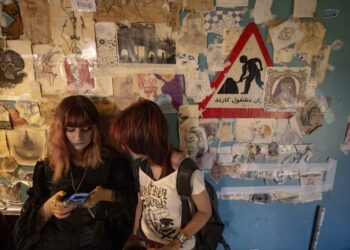
The visible presence of women without compulsory hijab across Iranian cities is perhaps one of the uprising’s most significant achievements for women. Despite government pressure, financial penalties, vehicle seizures, and police enforcement over the past four years, the normalisation of voluntary dress has, at least to some extent, forced the state into retreat on this issue. According to James C. Scott, resistance does not always take the form of major revolutions, formal political parties, or organised demonstrations. Everyday acts of non-compliance, such as moving through public space without observing official rules on compulsory hijab, can themselves constitute an open yet decentralised form of resistance that raises the cost of enforcement for the state. Something of this can be seen in the government’s partial retreat on the question of compulsory hijab.
This practice has not only normalised voluntary dress for women, particularly among younger generations; it has also substantially transformed public attitudes towards compulsory dress. In some instances, men themselves have defended women’s right to choose how they dress when confronted by enforcement agents or individuals attempting to police their appearance.
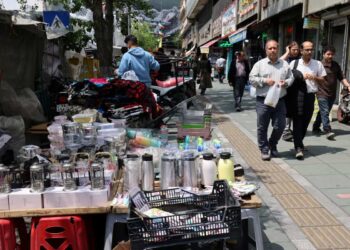
What is happening in Iran today around women’s clothing is therefore not simply about raising the cost of enforcing compulsory hijab. Women’s protest has moved from the home into the streets, and this is one of the undeniable and irreversible achievements of Woman, Life, Freedom. The street has been transformed from a space merely used for movement and transit into a space claimed for diverse ways of living.
2. Greater Public Awareness and a Different Presence of Women in Urban Space
A second achievement is the significant increase in public awareness of women’s lives and rights, together with women’s increasingly visible and assertive presence in society. The Woman, Life, Freedom uprising destabilised taboos that had shaped dominant understandings of how women should live for decades.
Positive public responses to women singing, dancing in public spaces, riding motorcycles in different cities, and taking part in athletic displays and performances in neighbourhoods and public places, often to the encouragement of bystanders, have all contributed to greater public awareness and a fundamental change in social attitudes towards such practices. It can be argued that after Woman, Life, Freedom, a large part of society increasingly sees women beyond the stereotypes imposed both by the state and by dominant traditional norms, recognising women’s agency throughout urban space.
3. Practising Civil Resistance in Everyday Life and Developing Strategic Maturity
Another important development has been the continuous practice of civil resistance within everyday social relations. Since the Woman, Life, Freedom uprising, these forms of resistance have matured and undergone significant strategic changes. In his influential work Domination and the Arts of Resistance, James C. Scott describes persistent, often less visible forms of resistance as “infrapolitics”. From this perspective, when the space for mass protest is suppressed, resistance does not disappear; instead, it becomes embedded in everyday habits and practices that the state cannot completely eliminate. The many changes that have taken place in women’s daily lives can therefore be understood as gradually and continuously eroding formal structures of power.
Women in Iranian society today have learned that even without centralised political leadership, they can individually or through small local networks develop spontaneous forms of struggle. After several years of practising resistance, this civil struggle has changed and acquired greater strategic maturity. By developing different strategies and adapting their everyday behaviour to changing social conditions, women have been able to continually reinvent and sustain these forms of resistance.
Challenges and Obstacles Facing the Development of the Women’s Civil Movement
Although the achievements of Woman, Life, Freedom are clearly visible in public practices across Iranian society, it is impossible to ignore recent developments and the severe structural obstacles threatening the continuation and expansion of those gains. Women in particular, and civil movements more broadly, face numerous structural and social challenges in attempting to develop and expand their activities.
1. The Absence of Structural Legal Reform and the Persistence of Violence Against Women
Despite women’s growing economic and educational independence and broader changes in public attitudes, many women continue to experience domestic violence because the underlying legal structures have not changed. The state’s unwillingness to reform laws protecting women, despite profound changes in women’s social position and independence, continues to produce an unsafe environment. Recent figures on femicide and violence against women demonstrate the persistence of this problem. Based on monitoring of judicial data, media reports, and figures recorded by independent organisations, an estimated 120 to 200 femicides occur in Iran each year, equivalent to one woman being killed every two to three days.
More than 80 to 85 per cent of these killings are committed by close family members. Husbands are the most common perpetrators, followed by fathers, brothers, and former husbands. Motives recorded in judicial cases frequently include “family disputes”, women seeking divorce or separation, attempts to gain financial or social independence, escaping forced marriage, and motives framed in terms of “honour” and “family reputation”.
This clearly demonstrates that institutions of power, despite the major civic changes that have taken place in women’s lives, remain unwilling to introduce structural and legal reforms that would enable women to achieve greater independence.
Theorists such as Sylvia Walby have argued that as societies modernise, patriarchy can shift from a “private” form, in which women are controlled by husbands or fathers within the household, to a “public” form exercised through the state and formal institutions. From this perspective, the persistence of laws that expose women to violence reflects a systematic connection between private and public patriarchy.
This has enabled the state, in its efforts to prevent women from achieving equal rights, to reinforce patriarchal structures in Iran. The result is the persistence of femicide even after Woman, Life, Freedom, despite profound changes in women’s presence in society and their growing independence.
2. The Negative Impact of War, Structural Poverty, and Sanctions
One of the most important factors negatively affecting the movement in recent years has been the shadow of military threats, the post-war situation in the region, and the crushing impact of sanctions on people’s lives, particularly those of women.
Under these conditions, the securitised political environment and the damaging economic effects of sanctions have made everyday life increasingly precarious, while women’s rights have been pushed to the margins. The economic crisis has forced much of the population to focus primarily on basic subsistence and survival, making it more difficult to deepen many of the social transformations that have taken place in everyday life.
Women, who are among the primary victims of inflation, unemployment, economic marginalisation, and the broader effects of economic crisis, are forced to devote part of the energy that might otherwise sustain civic activism to survival and securing the basic necessities of life. Legal and structural demands are consequently pushed into the background.
As Ronald Inglehart argues, at the societal level, the dynamism and durability of civil movements require a degree of economic stability and an active middle class. Under the crushing pressures produced by sanctions, the consequences of war, structural poverty, and inflation, social priorities can rapidly shift away from demands concerning rights and quality of life towards a “politics of survival”. Under these conditions, the middle class, a major engine of civic and intellectual change, gradually erodes, while women, already among the primary victims of unemployment, inflation, and marginalisation, are forced to devote much of their capacity and energy to securing the minimum conditions of everyday life. This in itself reduces the momentum of rights-based protest across broader layers of society.
At the level of political structure, this weakening of civil society is compounded by the state’s repressive response. Barry Buzan’s theory of securitisation helps explain how governments facing external threats, war, or international pressure can “securitise” domestic political space. By emphasising a state of emergency, the government places “national security and state survival” above all civil rights and demands. As a result, women’s demands and forms of urban activism are no longer treated as exercises of citizenship or demands for social reform, but are labelled as acts that “undermine national security” or demonstrate “alignment with a foreign enemy”, and are punished accordingly.
3. The Distortion and Appropriation of Woman, Life, Freedom by Sections of the Opposition
Another challenge women have faced in the period following the uprising has been the distortion of its foundational meaning by some opposition groups outside Iran, particularly monarchist currents.
The promotion of slogans such as “Man, Homeland, Prosperity”, either alongside or as a replacement for the woman-centred and emancipatory slogan “Woman, Life, Freedom”, demonstrated that Iranian women must struggle on several fronts simultaneously: against the patriarchal structures of the ruling establishment, but also against opposition forces inclined towards reproducing authoritarianism and patriarchy. Such distortions have not only failed to strengthen the Woman, Life, Freedom movement; they have also provided the Islamic Republic with propaganda material that it can exploit to distort and attack the pluralistic and emancipatory meaning of the uprising.
4. Digital Space, Women’s Safety, and Emerging Forms of Violence
One of the defining features of the Woman, Life, Freedom uprising was the extensive use of digital platforms to circulate news and symbols of resistance. Images of women in public space, videos of headscarves being burned, and the rapid circulation of the movement’s symbols helped transform the uprising into a global phenomenon. Women continue to use digital spaces today to develop economic and sporting activities and to consolidate their social presence.
Yet this sphere is also confronting serious and emerging challenges. The government’s use of artificial intelligence has expanded its ability to identify, monitor, and control women both online and in physical public space.
At the same time, the proliferation of AI-generated posts, videos, and memes produced by individuals under the guise of “humour” has contributed to verbal and symbolic violence against women. This trend seeks to ridicule or undermine women’s agency, personal independence, and the enormous price they have paid to assert their identities.
The Road Ahead
The achievements of the Woman, Life, Freedom movement remain deeply embedded and alive within Iranian society. At the same time, political polarisation, crushing economic pressures, the shadow of sanctions and war, and the persistence of legal and digital forms of violence have placed those achievements under considerable strain.
Understanding these challenges in light of Iran’s present conditions is essential. A rigorous analysis of the growing disjuncture between “transformation within civil society” and “institutional deadlock within structures of power” can help us better understand the dynamics of Iranian society and identify more effective paths towards women’s freedom, security, and equal rights in the years ahead.