

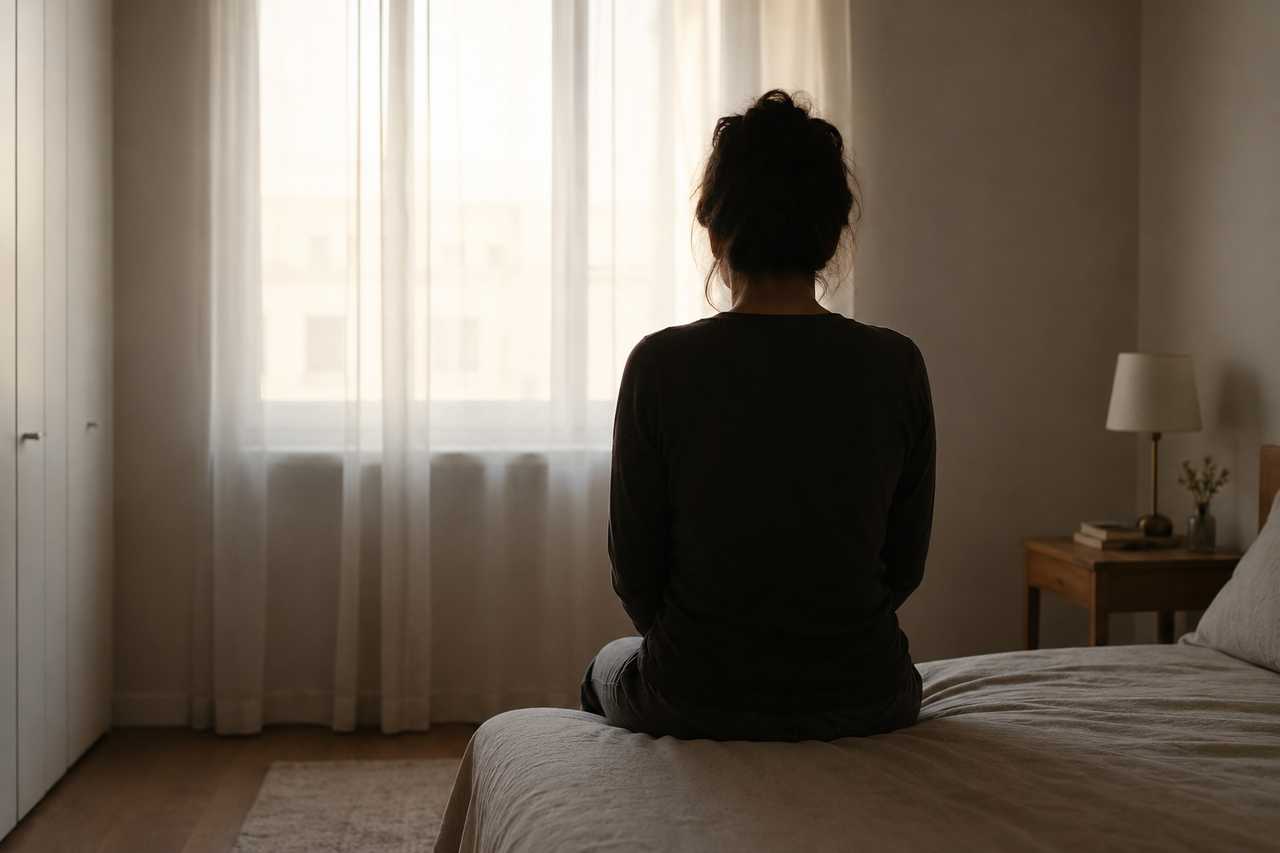
A field report based on four Iranian women’s testimonies reveals how sexual violence within marriage remains hidden behind silence, shame, and patriarchal expectations.
Marital sexual violence is one of the most invisible yet devastating forms of violence against women. Despite its prevalence, it remains largely hidden, silenced, and pushed to the margins. Contrary to the common perception that this form of violence is less serious than other forms of sexual assault, extensive research has shown that sexual violence by an intimate partner can be equally, and in some cases even more, destructive for women, leaving lasting and often irreversible consequences for their physical and psychological health.
This field report is based on interviews with four Iranian women who have experienced sexual violence within marriage. Their testimonies reveal a painful picture of a culture in which women’s bodies are treated as men’s property, women’s sexual needs are ignored, and any form of resistance is met with the taboos of shame and family honour.
Shahla has been married for nearly two decades, but she says she has never had a consensual and fulfilling sexual relationship with her husband. According to her, throughout their marriage, only her husband’s desires and needs have mattered. He has never considered her physical or emotional condition, or whether she was willing or ready to have sex.
She says she has never experienced sexual pleasure even once, and that every time her husband has had sex with her, she has felt as though she was being raped. This experience became even more painful after the death of her father:
“On the exact night my father died, my husband forced himself on me. I could not stop crying the entire time. The grief of losing my father became mixed with the rape my husband committed against me in that moment. I constantly felt nauseous when I remembered that night, and I would throw up. Even now, when I think about it, I still feel sick.”
Shahla says many women around her have gone through similar experiences. When women gather and share their personal stories, they often realise how much pain they have in common. She believes that sexual relationships between couples require education, but her husband and many other men like him have never received such education. Instead, they see women only as a means of satisfying their own desires:
“What a woman needs or wants does not matter to them at all. If one day I do not feel emotionally ready or do not want to have sex, my husband says: ‘You are my wife. It is your duty to satisfy my needs under any circumstances.’”
Shahla says she has repeatedly felt that she was being sexually assaulted. Over time, she developed a deep aversion to sex and no longer wanted her husband to come close to her. In her words, her husband destroyed that part of her because he repeatedly forced himself on her during illness, grief, sadness, and moments when she was emotionally vulnerable.
When Shahla was younger, she once returned to her parents’ home because of this issue and told them she wanted a divorce. Her family repeatedly asked her why she had made such a decision, but she could not explain what had happened. Eventually, she spoke to her mother about it. Her mother’s reaction, however, was not one of support:
“She immediately put her hand over my mouth and said: ‘Don’t say anything. Have some shame. What are you talking about? You will destroy our honour. If your father finds out you came back here because of this, he will kill you. Go back home and thank God that your husband is a proper man. A woman must always serve her husband. Never tell anyone these things. Our honour will be ruined.’”
Shahla says she grew up in an extremely traditional family. At that time, social media did not exist and people did not have access to the awareness and information available today. Her mother, like many housewives of her generation, had learned only to say “yes” and accept that a man’s word was final.
According to Shahla, women suffered greatly under those conditions. Although things have improved somewhat today, she says sexual relationships have still not developed in the way they should. Many of her arguments with her husband continue to revolve around this issue, but because speaking about it remains forbidden and taboo, nothing can truly change.
Shahla says sex has become associated with hatred for her, although she feels she has gradually become accustomed to the situation:
“I am no longer in that state where I felt I was being raped every time. I have reached a state of complete numbness.”
Pornography, Beauty Standards, and the Making of Women into Objects
Solmaz also speaks of an experience that began with her very first sexual encounter with her husband. According to her, her husband treated her in an extremely degrading way from the beginning and had a strong tendency to use humiliating and offensive language during sex. She says she has been forced to endure these words every time they have had intercourse.
Solmaz does not know how widespread this issue is globally, but she believes many of these sexual expectations have been shaped by pornography. She says she feels humiliated during every sexual encounter and derives no pleasure from it because her husband repeatedly makes demands based on things he has seen in the media:
“He pressures me to change my body, to buy certain clothes, to do certain things. And every time I resist, he says it is women’s lack of attention to their husbands that makes men cheat.”
She says her husband constantly compares her with women who have undergone various cosmetic procedures, and sometimes Solmaz feels that she is nothing more than an instrument for fulfilling his desires.
Solmaz emphasises that she deeply loves her husband and her family life, but she believes pornography has had a profoundly negative impact on the way her husband understands sexual satisfaction. She says that when you walk down the street, you see some women who have transformed their bodies into something resembling the images displayed in pornography, and this has also intensified fears of infidelity:
“Every time, his desire is directed towards those appearances that the media has placed in front of him. The media has openly turned women into tools for satisfying men’s needs.”
For Solmaz, this represents a new kind of battle — one in which media and the advertising industry around cosmetic surgery reshape men’s desires while diminishing women’s confidence in their own bodies. Women feel pressured to undergo various procedures in order to satisfy their partners or remain desirable:
“They tell you that a beautiful woman is someone with a fit body, full lips, eyelashes, or even someone who has undergone labiaplasty, cosmetic vaginal procedures, and so on. They distance you from yourself, while at the same time distancing men from who you really are.”
Solmaz says her husband was much better several years ago and that, at the time, she felt more love and affection from him. Today, however, the main feeling she experiences is that she has become an object. Although she herself recognises this problem, she believes this cultural wave affects everyone, and that even women around her encourage each other to undergo cosmetic procedures.
She says their sexual relationship has also changed and is no longer what it used to be, because her husband constantly has new demands and is never satisfied with her.
“Neither My Soul Nor My Body Has Healed”
Fahimeh experienced sexual violence during one of the most painful periods of her life. Her daughter had died in a car accident, and only three days after her death, her husband forced himself on her.
Fahimeh says she could not understand how such a thing could happen; it was as if her husband had forgotten that they had lost their daughter:
“I hated him so much that I could not even bear to look at him for a moment. It felt as if the whole world had turned into hell. That same night, I attempted suicide. They took me to the hospital.”
She says she could not recover from the shock for months and eventually divorced her husband. Even now, she finds it impossible to understand how someone could force himself on the mother of his own child only three days after that child’s death.
Fahimeh says the experience affected both her body and her mind so profoundly that she developed a very rare autoimmune illness and has been receiving treatment for years:
“Neither my soul nor my body has healed from what happened.”
She emphasises that her husband was not an uneducated man. He was a doctor, and they had lived in Europe for years. Yet despite this, she says he had no understanding of what a sexual relationship based on mutuality and consent should be:
“Even animals do not do this to each other. The only thing that mattered to my husband was satisfying his own needs.”
Fahimeh believes the issue of sexuality is much deeper than this. She does not claim that such problems exist only in Iran, because she has lived in other countries for many years. But she argues that because sexuality has always been treated as forbidden in Iran, speaking about it is considered a form of breaking a taboo.
People have grown up in a culture where they have not been able to openly discuss their needs, and, in her view, it is natural that when sexual needs are suppressed and prohibited, many forms of harm and dysfunction emerge.
She says sexual violence exists everywhere in the world, but in Iran it has deeper roots because of the country’s traditional and religious social structures. In her view, marital sexual violence has nothing to do with education, class, or social position. Rather, it is rooted in men’s perceptions of women and the absence of healthy boundaries within intimate relationships.
When a Woman’s “No” Is Not Recognised
Zahra describes a different experience. She says her husband does not have much sexual interest in her and that they may have intercourse only three or four times a year. Yet even these limited encounters are accompanied by severe distress and pain for her:
“Whenever we have sex, I suffer so much during it that I think: I wish we had never even had this.”
According to Zahra, her husband initiates sex without any preparation or attention to her needs, and without even taking basic personal hygiene into consideration. She says the experience is so physically painful and distressing that every time it happens, she is unable to leave the house for several days afterwards.
Despite this situation, her husband expects Zahra to experience sexual pleasure as well, and she is forced to pretend that she has reached orgasm so that he does not feel guilty.
Zahra says sexual issues are not something she can discuss with just anyone. She attended several sessions with a psychologist, and her therapist told her that her husband needed to see a therapist as well. However, he has never accepted that he should seek help because of sexual problems:
“He says the problem is with me and that I am the one who needs treatment. For men, it seems that seeking help for sexual problems is seen as a form of humiliation and an attack on their masculinity.”
Zahra feels that she has only two choices: either accept this situation or separate from her husband. However, after the birth of her child, she completely abandoned the idea of divorce:
“I cannot bear the thought that my child might be harmed. I am willing to endure all the psychological and emotional pressure, as long as my daughter never feels alone or unhappy, even for a moment.”
The testimonies of these women suggest that men who view sexual relationships solely as a way to satisfy their own personal needs often deny women the right to say “no.” This pattern can exist regardless of education, social class, or even place of residence. As Fahimeh emphasises, her husband was a doctor, and they had lived in Europe for years.
The roots of this violence appear to lie in broader cultural perceptions of women and their place within marriage — perceptions that continue to prioritise silence over dialogue in many families and treat men as the ultimate decision-makers when it comes to sexuality.
Changing this situation requires more than simply raising women’s awareness. Men must also be included in conversations and education around sexuality, and the taboo surrounding discussions of sexual problems within families and society must be challenged.
These interviews were conducted only with women who have experienced harm in this area; they do not imply that men cannot experience harm. However, in a society where women face greater structural inequality and are often more vulnerable to violence and exploitation, they are also more frequently forced to hide their experiences and remain silent.