

Elham Houminfar on war’s ecological aftermath, environmental injustice, and how conflict deepens Iran’s pre-existing crises of water, pollution, and climate vulnerability.
When we talk about war, the first issues usually raised are the number of people killed, the destruction of infrastructure, or the military outcome. But you examine war from an environmental and ecological perspective. Why is this perspective important? Why should the environmental consequences of war be taken as seriously as its human and military consequences?
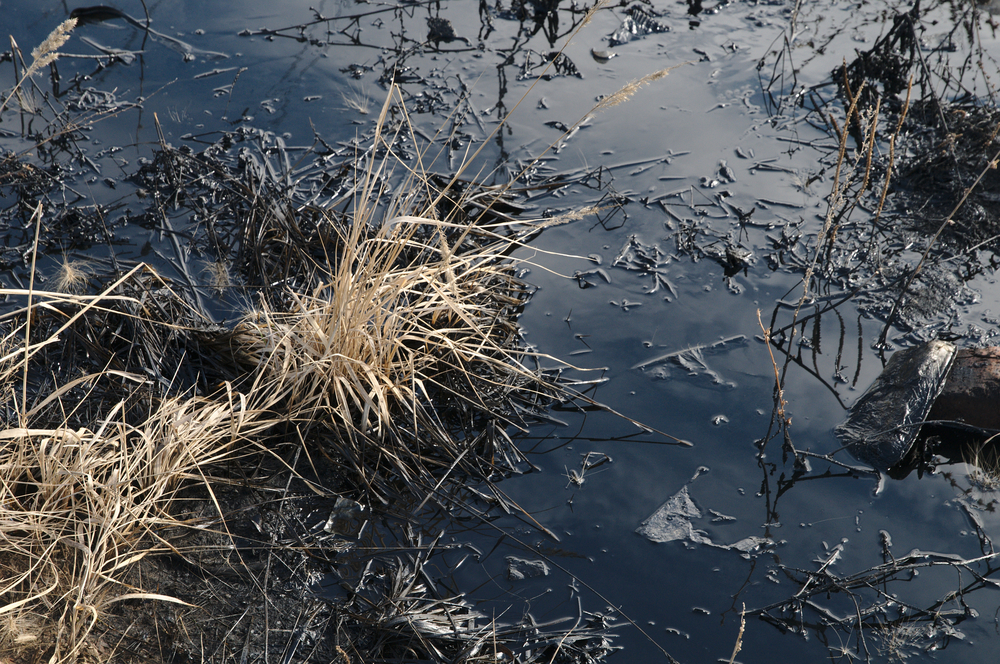
Elham Hoominfar: This perspective matters because the environment is usually the silent casualty of war. Its short- and long-term consequences are largely overlooked. The end of bombing or the announcement of a ceasefire does not necessarily mean the end of the war for water, soil, air, or public health. Oil pollution can remain in the sea for years; toxic substances can enter soil and water sources; and illnesses caused by smoke and chemical pollution may only become apparent years later. Reconstruction itself also requires enormous amounts of energy and leads to further greenhouse-gas emissions.
Let me give a few concrete examples from the war with Iran. On March 7, an apocalyptic scene unfolded in Tehran as Israel targeted major oil depots around the capital. By March 9, around 30 oil depots and facilities were reported to have been attacked. But when we look at the number of people killed in the war, we can say that part of the human toll is simply absent from current casualty figures. Even before these attacks, air pollution in Tehran was already responsible for around 4,000 deaths a year. Attacks on oil depots and facilities, and the pollution produced by the resulting large-scale fires, can increase the risk of respiratory and cardiovascular diseases as well as cancer. The human consequences of such attacks therefore cannot be measured simply by counting those killed directly in the bombing. The pollution caused by these attacks can have direct and long-term effects on public health, mortality, and life expectancy—consequences that will not necessarily appear in current war casualty figures.
Bombing and warfare dramatically increase water and soil pollution and can lead to widespread environmental instability and destruction. During the Vietnam War, for example, around 72 million liters of herbicides, including Agent Orange, were used, causing catastrophic environmental damage, including the destruction of approximately 3.1 million hectares of forest.
Another example is the 1991 Gulf War, during which an estimated 8 to 11 million barrels of oil entered the waters of the Persian Gulf. The Gulf ecosystem is extremely fragile. It is a relatively shallow body of water, with limited and slow circulation and exchange, meaning that cleaning up pollution and restoring its ecosystem can be an extremely difficult and lengthy process.
Such pollution not only destroys ecosystems but also endangers the lives of birds and marine species. More importantly, its effects can remain in the environment for years and enter human life through the food chain. War, in fact, victimizes non-human life and entire ecosystems—from mangrove forests and the habitats of migratory birds to fish, turtles, and other marine species in the Persian Gulf. Environmental damage is therefore not a secondary issue alongside human suffering; it is part of that human suffering, and its continuation across time and into future generations.
Another issue directly connected to our health and survival is the amount of carbon dioxide emitted by war. On a broader scale, the world’s militaries are responsible for approximately 5.5 percent of global greenhouse-gas emissions. If the world’s militaries were treated as a single country or emissions source, they would rank among the four largest carbon emitters in the world. During the Russia-Ukraine war, for example, approximately 230 million tonnes of carbon dioxide were produced in 2023 alone. In the first 24 days of the war with Iran, carbon emissions were estimated at around 7.2 million tonnes. That figure is equivalent to the annual carbon emissions of some European countries.
This issue is particularly significant in the Middle East because the region is one of the areas most vulnerable to climate change. Temperatures in the Middle East are rising at roughly twice the global average. Although around 6 percent of the world’s population lives in the region, it possesses only about 1 percent of the world’s freshwater resources.
Because climate change has a direct impact on water resources, the combination of global warming with war-related pollution and destruction could expose the region to water scarcity, drought, poverty, and environmental insecurity on a scale greater than we currently imagine. Attacks on desalination facilities take the problem into an even more dangerous phase, because under such conditions water itself effectively becomes an instrument of war. What is threatened is not only people’s access to water today, but the long-term water security of the region.
In reality, the human and environmental consequences cannot be separated. When a desalination facility is destroyed, the issue is not simply damage to a building; the daily lives of villages, children’s health, agriculture, and people’s ability to remain where they live are placed at risk. When fuel depots burn, smoke and soot enter directly into the lungs of residents and emergency workers.
Even before this war began, Iran was facing profound environmental crises. In your recent article, you examined these crises in detail, from water scarcity and land subsidence to air pollution and ecosystem destruction. Which of these crises do you find most alarming today, and how might the war intensify them or add new dimensions to them?
Elham Hoominfar: In my view, the water crisis is the most alarming, although it cannot be separated from rising temperatures, drought, soil degradation, and flawed patterns of development. According to the data cited, around 97 percent of Iran’s territory has experienced drought, while the depletion of groundwater has affected approximately 77 percent of the country. Excessive extraction from underground aquifers has also led to soil salinization and widespread land subsidence. In the year before the war, rainfall was reported to be around 45 percent below normal, while the reservoirs supplying Tehran had fallen to critical levels.
The war has landed on top of this already fragile situation. Attacks on desalination facilities in the south disrupted the water supply to dozens of villages and demonstrated how water can become an instrument of war and pressure against civilians. Attacks on fuel depots, industrial centers, or nuclear facilities also increase the risk of contamination of the air, soil, and water sources.
Iran was also already facing deadly air pollution in cities such as Tehran and Ahvaz before the war. Smoke from millions of liters of burning petroleum products is now being added to that existing crisis. War therefore does not replace Iran’s previous environmental crises with a new one; it piles new pressures on top of drought, pollution, land subsidence, and food insecurity, making recovery and restoration increasingly difficult.
In the first month of the war alone, 120 environmental incidents were reported. Taken together, these incidents intensify environmental insecurity. War can be compared to placing a heavy weight on a bridge whose pillars were already cracked and close to collapse. A society that was already struggling with water scarcity, drought, air pollution, and ecological degradation must now withstand the additional pressure of war. We are on the threshold of a climate collapse.
War also changes economic and political priorities. Resources that could have been spent on environmental protection, water management, reducing pollution, and adapting to climate change are redirected toward rebuilding military infrastructure, aircraft, jets, and other destroyed equipment. The reconstruction process itself also consumes more energy and natural resources, producing further pollution and additional greenhouse-gas emissions.
The consequences of war are therefore not limited to the direct destruction of the environment. War also weakens society’s capacity to confront environmental crises. From this perspective, the war has reduced Iranian society’s resilience in the face of ecological emergencies and redirected resources and priorities that could have been used for prevention, adaptation, and environmental protection toward reconstruction and military needs.
In your recent article on “environmental injustice” in Iran, you emphasize that environmental crises do not affect all individuals and social groups equally. Does the same pattern apply to environmental destruction caused by war? How do social class, gender, and ethnicity shape the vulnerability of individuals and communities to the environmental consequences of war?
Elham Hoominfar: Yes. In war, this pattern is reproduced even more intensely. Environmental injustice means that risks, as well as the means available to protect oneself from them, are not distributed equally. A family with sufficient income may be able to temporarily leave a city, buy bottled water, purchase an air purifier, or use private healthcare. But a day laborer, a small farmer, a migrant, or someone living in a deprived area does not have the same options.
Class, gender, and ethnicity do not operate separately from one another. In Sistan and Baluchistan, drought, poverty, and inadequate infrastructure have already accumulated on top of one another, and around 1,700 villages were already dependent on water tankers for drinking water. War, together with disruptions to transportation and public services, makes Baloch communities even more vulnerable. In Khuzestan, too, despite the province’s enormous oil and gas wealth, local communities face poverty, unemployment, and chronic pollution.
Women face additional pressures because of their extensive involvement in traditional agriculture, livestock farming, water collection, and informal and online work. Internet shutdowns can destroy their sources of income, while the collapse of rural economies can increase the risks of girls leaving school, early marriage, and domestic violence. At the same time, these groups should not be seen only as victims. Women, workers, and ethnic minorities have been among the most active forces in Iran’s social and environmental movements. War both exposes them to greater harm and restricts their capacity to organize and defend their rights.
There are other vulnerable groups that also deserve attention, including firefighters, Red Crescent personnel, and workers in other emergency-response services. Because these emergency workers carry out their duties directly in affected areas, they are more heavily exposed than others to widespread pollution caused by fires, explosions, and destruction. Over the long term, this exposure can increase the risk of respiratory illnesses, cardiovascular problems, and certain cancers. Alongside these physical effects, we should not overlook the psychological harm caused by repeated exposure to death, injuries, and scenes of destruction.
More generally, war intensifies environmental injustice because its consequences are not distributed equally among people or regions. Some parts of Iran and some social groups, because of their economic and social circumstances, geographical location, or occupation, face greater direct and indirect risks while at the same time having fewer resources and opportunities to protect themselves, cope with these consequences, and recover after the crisis.
Given the current situation, what should be done?
Elham Hoominfar: The first and most urgent step is to stop the war. At the same time, the “Republic of Executions” must stop killing people and carrying out executions. Alongside the pressures of war, Iranian society is continuously confronted with executions and state killings, a situation that imposes immense psychological and social pressure and pushes society even further toward exhaustion and psychological collapse.
But ending the violence alone is not enough. The Islamic Republic must do what it has refused to do for the past 47 years: make environmental protection a genuine priority and allow people to participate in decisions concerning their own land and natural resources. Protecting the environment and confronting its destruction are impossible without the active participation of local communities and the genuine involvement of people across Iran in environmental policymaking, decision-making, and planning.
Financial, human, and managerial resources should be directed toward protecting and restoring the environment, sustainably managing water resources, and strengthening the resilience of local communities rather than toward further destruction and militarization. At the same time, people and local communities must be moved from the margins of decision-making to its center and given a genuine and decisive role in shaping policies that directly affect their water, soil, air, natural resources, and the future of their lives.