

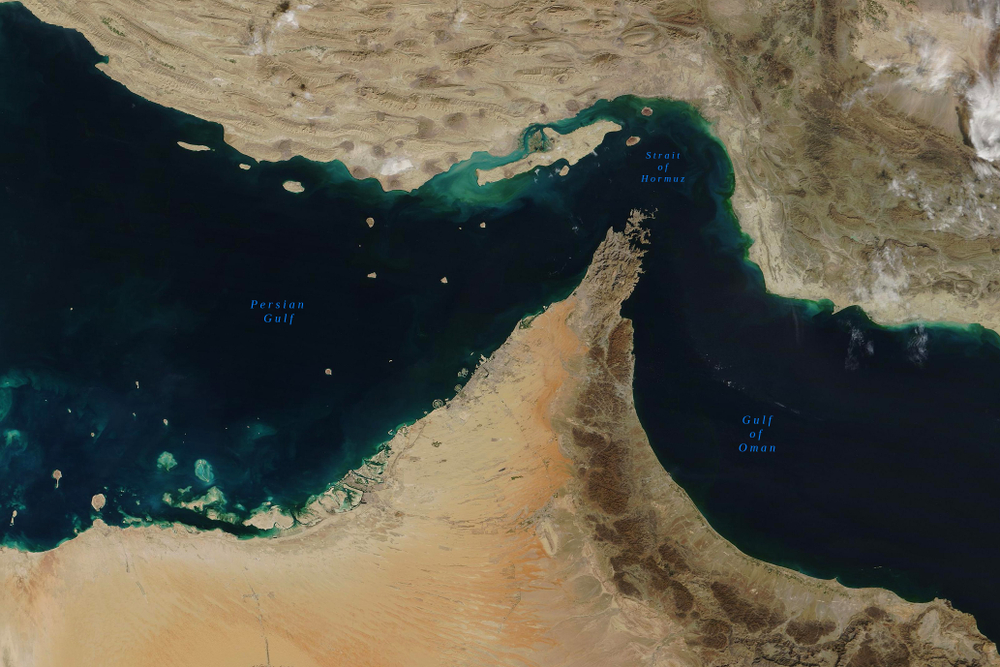
A wider war in the Persian Gulf could unleash an environmental disaster with consequences lasting decades, far beyond the region itself.
The Persian Gulf is one of the world’s most important and, at the same time, most vulnerable marine zones: a region where geopolitical interests, energy economics, and the marine environment are intricately intertwined. At the center of this equation lies the Strait of Hormuz, a narrow passage through which a large share of global oil trade passes. This strait is not only vital to the global economy; in the event of an uncontrolled military confrontation, it could also become the site of one of the gravest environmental disasters of war in recent history.
Rising military tensions in the Persian Gulf have once again raised a critical question: if a large-scale conflict were to erupt around the Strait of Hormuz, what would the consequences be for the environment of the region and the world? Answering this question requires looking both at the historical experience of past wars and at the structural vulnerabilities of this marine zone.
The Legacy of War in the Persian Gulf
The contemporary history of the Persian Gulf shows that war in this region has almost always been accompanied by large-scale oil pollution. During the First Gulf War, one of the largest oil spills in history took place. At that time, millions of barrels of oil were deliberately released into the waters of the Persian Gulf, creating a massive slick that contaminated hundreds of kilometers of coastline.
The consequences of this disaster were not limited to pollution on the water’s surface. Coastal ecosystems, including mangrove forests, seagrass beds, and spawning grounds for marine species, suffered serious damage. Thousands of seabirds were coated in oil, and the populations of some marine species were disrupted for years. Environmental studies have shown that some of the oil residues from that incident could still be identified on parts of the region’s coastline many years later.
Even before that, during the “Tanker War” of the 1980s, attacks on oil tankers became one of the main strategies of naval warfare. Hundreds of commercial vessels were targeted during that period, and some of them suffered oil leaks.
A Vast Concentration of Oil in a Narrow Chokepoint
The importance of the Strait of Hormuz lies in the fact that it is one of the busiest routes for global energy trade. Every day, dozens of giant tankers pass through this strait, carrying enormous volumes of crude oil from Persian Gulf exporting countries to global markets.
Many of these ships are VLCCs, or Very Large Crude Carriers, whose carrying capacity can reach around two million barrels of oil. For that reason, even a limited maritime incident can result in a massive release of oil into the sea.
Under normal conditions, maritime safety systems and international regulations help reduce the risk of such incidents. But in wartime, these mechanisms are quickly weakened, and the risk of disaster rises dramatically.
Likely Scenarios of Oil Pollution in Wartime Conditions
If military tensions around the Strait of Hormuz turn into direct confrontation, several main scenarios could lead to large-scale oil pollution in the Persian Gulf.
The first scenario is the direct targeting of oil tankers. A missile strike, drone attack, or the explosion of a naval mine beneath a tanker’s hull could rupture its cargo tanks and cause a major spill at sea. If a large tanker were to sink, millions of barrels of oil could be released into the marine environment.
The second scenario is the destruction of oil terminals and coastal pipelines. These facilities, located at various points around the Persian Gulf, could, if damaged, become direct sources of oil leakage into coastal waters.
The third scenario is an increase in maritime collisions under wartime conditions. Disruptions in navigation systems, changes in shipping routes, and abnormal congestion in maritime traffic could all increase the likelihood of ship collisions — collisions that, in the case of oil tankers, could have far-reaching environmental consequences.
Why the Persian Gulf Is Vulnerable to Oil Pollution
From a hydrological perspective, the Persian Gulf is a distinctive and relatively enclosed body of water. Its shallow depth, limited exchange with open waters, and high regional temperatures mean that oil pollution can persist in this basin for long periods.
In addition, the coasts of the Persian Gulf are home to sensitive ecosystems that play an important role in the region’s ecological stability. Coral reefs, mangrove forests, and seagrass beds are among the habitats that are especially vulnerable to oil pollution. The destruction of these habitats can disrupt marine food chains and reduce the populations of many marine species.
At the same time, many of the countries along the Persian Gulf coast depend on desalination plants for their drinking water supply. Large-scale oil pollution could disrupt the operation of these facilities and jeopardize water supply for millions of people, especially in the southern part of the Gulf.
The Consequences of an Environmental Disaster
The consequences of such a crisis would extend far beyond the environment. Large-scale oil pollution could paralyze the region’s fisheries for a long time and threaten the livelihoods of thousands of people in fishing communities across coastal countries. Coastal and marine tourism, which has expanded in recent years across many Persian Gulf states, would also be severely damaged. At the same time, global experience shows that the cost of containing and cleaning up such pollution could reach tens of billions of dollars and require years of technical and financial effort.
Yet perhaps the most important consequence of such an event would be the long-term damage to marine biodiversity. Sensitive habitats such as coral reefs, seagrass beds, and fish and marine spawning grounds are highly vulnerable to oil pollution, and their destruction could alter the ecological structure of the region for decades.
The fragile environmental condition of the Persian Gulf clearly shows that the security of this region cannot be defined solely within military or energy equations. Protecting this body of water is, in fact, about protecting one of the world’s most sensitive marine ecosystems — an ecosystem whose health is vital not only for the coastal states, but also for the global economy and the sustainability of the regional environment.