

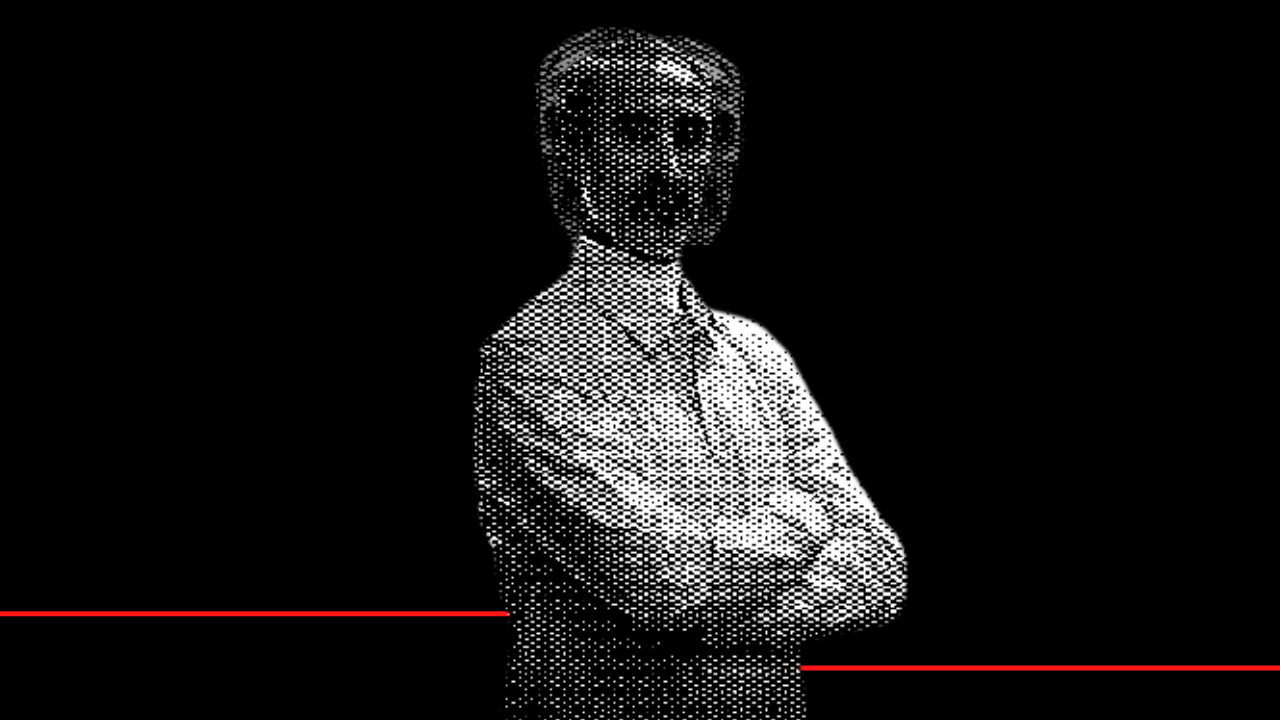
The Stockholm District Court in Sweden has issued the verdict in the trial of a former Iranian Judiciary official, Hamid Nouri, 61, who was involved in the mass execution of political prisoners in Iran in 1988: Nouri is sentenced to life imprisonment.
On Thursday, July 14th, the trial in Stockholm of Hamid Nouri (also spelled Noury), charged with two charges of “war crime – on an international level” and “deliberate murder,” came to an end with a guilty verdict. The Swedish prosecutors had requested the maximum penalty of life imprisonment for Nouri and the court agreed, sentencing him to 25 years in prison. Nouri is eligible for requesting parole after serving two third of this sentence.
It is the first time an Islamic Republic of Iran official involved in the mass killing of more than 5,000 political prisoners in 1988 has been charged with a crime. This is a landmark case for families of the victims who have been seeking justice for years.
Survivors of the mass executions and the families of those killed in Iranian prisons have long awaited justice and an end to the impunity of Iranian officials involved in the mass killing of political prisoners in the late1980s in Iran. One of those officials in Iran’s current president Ebrahim Raisi who was one of the four judges that were a member of what has come to be known as the “Death Commission” that ordered the mass execution of political prisoners in Iran.
Who is Hamid Nouri?
The case in Sweden against Nouri is related to his involvement in the execution of more than 100 political prisoners. According to former political prisoners who were in Gohardasht prison in the late 1980s, Nouri reportedly took part in the mistreatment, lashing, and torture of prisoners as well. The Islamic Republic of Iran has denied the mass killing of political prisoners and Nouri’s involvement in the massacre.
Nouri was a deputy to the assistant prosecutor and involved with the day-to-day dealing with political prisoners in a prison called Gohardasht (currently called Rajai Shahr), in the city of Karaj near Tehran, the capital city. In 1988, when Nouri was a Judiciary and prison official, 5000 political prisoners were sentenced to death in Iranian prisons – many of whom were already serving prison sentences for political activism or for being members of political groups.
The Nine Month Long Trial
The trial of Hamid Nouri, known as “Hamid Abbasi” when working in Iranian prisons, lasted over nine months, with 93 hearing sessions involving 60 witnesses, many of whom were former political prisoners and families of victims. The trial ended on the 4th of May and families who want justice have awaited the verdict since.
This court will be remembered as a significant achievement in the history of the “daadkhahi movement” of Iran – a retributive justice movement that works towards seeking justice for those who were killed by the IRI state including the political prisoners of the 1980s. Nouri is the first person who stood trial for involvement with the mass execution of thousands of political prisoners in Iranian prisons in 1988.
Nouri trial was tied to both killings of leftist political prisoners and also to the killing of prisoners of the People’s Mujahedin Organization (MKO) of Iran who at the end of the Iran-Iraq War conducted a military operation against the Islamic Republic of Iran. As a result of this operation, the killing of MKO prisoners and other prisoners in Iranian prisons in the year 1988 is being tried as a war crime in the Swedish court in Stockholm.
The defense has questioned the jurisdiction of the Stockholm District Court requesting the dismissal of the indictment arguing that the Stockholm court cannot treat the execution of political prisoners in Iran, as a war crime because of the armed conflict between the Islamic Republic and the MKO was not an international conflict.
The Prosecution of Nouri and his Defense
Nouri has been arrested and held in custody in Stockholm since November 2019 and his temporary custody was reputedly renewed throughout the trial. His lawyers, as part of their defense strategy, argued throughout the trial that the court had the wrong guy on the stand – that Nouri was not a prison official at Gohardasht prison but at Evin prison. They also used the testimony of an expert witness to emphasize that Hamid Nouri, in addition to working in Evin prison also worked in Ghezelhesar prison but not Gohardasht, the prison that the Swedish prosecutor had based the case against Nouri on.
Nouri on the stand and in his defense admitted that he had visited Gohardasht several times, although he also emphasized that he did not work at Gohardasht.
Aginst Nouri, along with the testimonies of 12 experts, were the testimonies of many families of victims and former prisoners who testified and identified him as Hamid Nouri (Abbasi) of Gohardasht prison. There is also digital forensic evidence retrieved by the Swedish police from Nouri’s mobile phone.
The police in Sweden managed to recover deleted messages and phone numbers from Hamid Nouri’s mobile phone confiscated upon his arrest. The data was deleted a day before Hamid Noori traveled to Stockholm. Of the seven thousand and 291 numbers stored on his cell phone, Nouri had deleted 252 numbers one night before traveling to Stockholm International Airport in November 2019.
According to the documents presented at the court he had searched and deleted certain names such as “Mogheiseh”, “Nayeri,” “Haji” and “Zindan”. The deleted numbers are of known Judiciary officials involved with the killing of political prisoners in Iran, including judge Muhammad Mogheiseh and Hossein Ali Nayeri, a member of the “Death Commission” during the executions of 1988, which ordered the death sentences of the prisoners.
Hamid Nouri confirmed in the court that the number associated with “Nayeri” that he had deleted was the phone number of Hossein Ali Nayeri.
Tensions between Iran and Sweden
The trial of Hamid Nouri increased diplomatic tensions between Iran and Sweden. The Iranian Foreign Ministry summoned the Swedish ambassador to Iran in protest of the trial. On May 1, the Iranian Foreign Ministry called in Mattias Lentz, the Swedish ambassador to Iran, to convey the Islamic Republic’s strongest protest over “the baseless and fabricated” charges against Nouri.
The Swedish Ministry of Foreign Affairs issued an advisory warning against non-essential travel to Iran. The statement said, “Foreign travelers can be arbitrarily detained and prosecuted without clear reasons.”
One of those who are arbitrarily detained in Iran is the Swedish-Iranian national Ahmad Reza Jalali who received a death sentence in May after the Nouri trial ended on charges of espionage.
Ahmad Reza Jalali, a university professor, was arrested in 2016 on an academic visit to Iran. Six years later, his death sentence is set to be carried out and many experts believe that his case is now tied to that of Nouri in Sweden.
More about this story: