

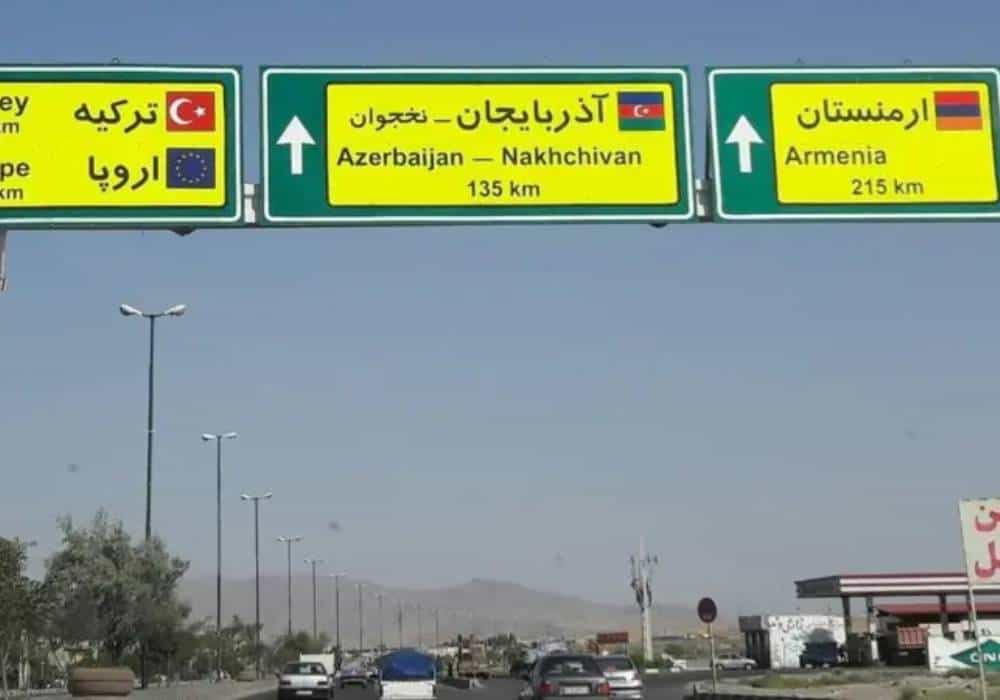
The Armenian parliament’s approval of the agreement concerning the so-called Trump Route and Ali Akbar Velayati’s threatening response have reignited debate over Iran’s position in the South Caucasus. In an interview with Radio Zamaneh, energy expert Masoud Delbari argues that Tehran’s principal concern goes beyond the US presence and the strengthening of Turkey and Azerbaijan: it is the erosion of Iran’s influence over regional decision-making. He interprets Velayati’s reference to the Treaty of Turkmenchay as reflecting a historical conception of the Caucasus as an Iranian sphere of influence. Despite Tehran’s limited practical leverage, Delbari believes it can still influence how the agreement is implemented through diplomacy.
Recent remarks by Ali Akbar Velayati, the Islamic Republic’s Supreme Leader’s adviser on international affairs, concerning Armenia and the Zangezur Corridor have raised questions about Iran’s role in the security arrangements of the South Caucasus. Following the Armenian parliament’s ratification of the framework agreement for the so-called Trump Route for International Peace and Prosperity (TRIPP) on 28 October 2026, Velayati sharply criticised Armenian Prime Minister Nikol Pashinyan, declaring in threatening terms that Iran would defend the security of the Caucasus “with or without Russia.” His statement comes as the United States seeks to expand its economic and strategic role in the region, while Azerbaijan and Turkey support a transport route connecting Azerbaijan to Nakhchivan. Is Tehran merely concerned about foreign powers operating near its borders, or is it seeking to retain a decisive role in shaping the emerging regional order?
Velayati’s reference to the 1828 Treaty of Turkmenchay, and his insistence that the Caucasus, extending as far as Derbent in Dagestan, has served as Iran’s security buffer since antiquity, adds a historical dimension to his position. The treaty, concluded after Qajar Iran’s defeat by Russia, resulted in the cession of territories in the Caucasus and symbolised the loss of much of Iran’s historical influence in the region. Velayati’s remarks can therefore be interpreted as invoking a pre-Turkmenchay conception of Iran’s geopolitical position, in which Tehran regards itself not merely as a neighbour but as a power entitled to a say in determining the region’s security arrangements. This does not necessarily imply a territorial claim, but raises questions about the authority Tehran believes it should exercise beyond its borders.
Yet the geopolitical landscape of the South Caucasus has changed profoundly over the past two centuries. Armenia and Azerbaijan are independent states, Russia’s influence faces new challenges, and the United States and Turkey are expanding their presence. Against this background, the Islamic Republic’s position reveals a contradiction: while Tehran insists on respecting Armenia’s sovereignty and territorial integrity, it also seeks a role in determining security and transport arrangements within Armenian territory. Does Iran possess the diplomatic, economic and security instruments needed to influence these developments, or does its reliance on historical arguments and threatening rhetoric reveal anxiety over declining regional influence? We discussed these questions with Masoud Delbari, an energy expert.
The Main Change in the Caucasus Is America’s Entry into Regional Arrangements
Delbari believes that understanding the significance of the TRIPP agreement requires starting with the realities on the ground, which are sometimes obscured by political rhetoric.
He explains that the Trump Route for International Peace and Prosperity emerged from the agreement reached at the Washington summit between Armenian Prime Minister Nikol Pashinyan and Azerbaijani President Ilham Aliyev. The project aims to establish a transport connection through Syunik province in southern Armenia, linking Azerbaijan to its exclave of Nakhchivan.
According to Delbari, the Armenian parliament’s ratification has brought the project closer to becoming a binding legal commitment rather than merely a diplomatic proposal. The Armenian government maintains that the infrastructure will remain under its sovereignty, jurisdiction and security oversight, without transferring territorial control or severing its border with Iran. The project also has substantial economic implications: the planned TRIPP Development Company will be 74% US-owned and 26% Armenian-owned for an initial 49-year term, with the possibility of a further 50-year extension under a revised ownership arrangement. These provisions help explain Tehran’s concerns, although Delbari argues that the most consequential change lies in regional power relations rather than the route itself:
“In my view, the main change is not in the route itself, but in the logic governing regional relations.”
He explains that before the recent developments in Nagorno-Karabakh, the South Caucasus was largely structured around three actors: Russia as the security guarantor, Iran as a southern neighbour and balancing power, and Turkey alongside Azerbaijan. The wars over Nagorno-Karabakh altered this configuration. Russia’s involvement in Ukraine, combined with Yerevan’s declining confidence in the security guarantees of the Collective Security Treaty Organization, gradually pushed Armenia towards the West. The process has since moved beyond diplomacy: on 7 November 2026, Armenia, Azerbaijan and the United States launched joint technical planning groups on transportation and electricity transmission to advance TRIPP’s implementation. Delbari emphasises:
“Today, something new has entered the equation: Washington and the United States. They are moving from being a distant, peripheral player to becoming a formal partner in regional infrastructure. For Tehran, this is a qualitative change, not merely a quantitative one.”
Security Concerns, Transit Competition and Iran’s Declining Regional Standing
Delbari identifies three dimensions to the Islamic Republic’s concerns about the new route.
The first is geopolitical and security-related. Referring to the proximity of the Iran-Armenia border to Syunik province, he explains that Tehran fears the US presence could acquire intelligence and security dimensions through commercial companies, contracts, private security personnel and surveillance technologies, even without the establishment of a military base.
He sees this concern reflected in Velayati’s references to Trump and his allies operating along Iran’s northern borders.
The second concern relates to the strengthening of Turkey’s and Azerbaijan’s regional positions. Delbari argues that the Nakhchivan route is not merely a road for Baku and Ankara but could create an uninterrupted transport connection stretching from Turkey through Azerbaijan to Central Asia.
A route developed without Iranian participation could weaken Iran’s position in north-south and east-west transit networks, which Tehran has long regarded as a geopolitical advantage.
Delbari, however, considers the third concern more important: the decline of Iran’s regional influence and standing. He explains:
“Here, we are talking less about the road itself and more about the message conveyed by this road and this agreement. When Armenia, which Tehran considered a reliable partner, approves such an agreement without securing Iran’s consent, it means Iran’s instruments of influence are more limited than Tehran itself had assumed.”
This concern, he argues, underlies the other two: the question is who gets to shape the region’s future. Delbari also describes Moscow as a relative loser in the recent developments, despite having voiced little opposition to its diminished role. Russia previously supported reopening regional transport routes, but it no longer acts as the principal arbiter. Washington is increasingly assuming that role, leaving Tehran without the security partnership it once expected from Moscow:
“Even in a scenario involving Russia, Russia is no longer the reliable security partner it used to be. And this is precisely what is reflected in Mr Velayati’s phrase ‘with or without Russia.’”
Delbari thus distinguishes between Iran’s enduring geographical importance, its limited diplomatic and economic leverage over a US-backed project, and its attempts to compensate through rhetorical deterrence. Excluding Iran from regional arrangements would carry costs, but threatening its neighbours may prove counterproductive, particularly if it drives Armenia further towards Western partnerships.
The Reference to Turkmenchay Reflects a Historical Logic of Spheres of Influence
One of the most striking aspects of Velayati’s remarks is his reference to the Treaty of Turkmenchay and Iran’s historical presence in the Caucasus. By describing the region as Iran’s security buffer since the time of Cyrus the Great, he invokes a past in which Iran was one of its dominant powers.
The Treaty of Turkmenchay, signed in 1828 after Qajar Iran’s defeat in its second war with Russia, resulted in the cession of territories including Yerevan and Nakhchivan. The earlier Treaty of Gulistan in 1813 had already removed other parts of the Caucasus from Iranian sovereignty. In Iranian historical memory, these treaties symbolise the decline of Iran’s power as well as the redrawing of its borders. For Delbari, the significance of Velayati’s remarks lies in the political assumptions behind them:
“In my view, the answer is partly yes, but not entirely. When Mr Velayati speaks of a security buffer dating back to Cyrus the Great, he is using the language of an empire or a historical power, not that of a modern nation-state. In this view, the Caucasus is Iran’s natural security sphere, rather than a collection of independent countries. This is the same logic of spheres of influence that prevailed in the nineteenth century.”
Nevertheless, Delbari cautions against interpreting these remarks as an attempt to restore Iran’s pre-Turkmenchay borders. Velayati himself emphasised that Iran had never infringed upon Armenia’s independence since the treaty. Moreover, the Islamic Republic does not formally claim sovereignty over Caucasian territories. Its objective is to retain influence over the region’s security arrangements:
“I think it would be more accurate to say that these remarks do not amount to a claim to restore domination, but rather express a perceived entitlement as a neighbour. The underlying idea is that decisions about what happens on my border should not be made without consulting me.”
For Delbari, distinguishing territorial claims from demands for a role in regional security arrangements is essential. Yet even the latter can conflict with the sovereignty of independent states.
Legitimate Security Concerns Are Not the Same as Claiming Authority Over Neighbours
Examining Velayati’s historical perspective in relation to international law, Delbari explains that national sovereignty gives every independent state the right to determine its foreign policy, security partnerships and infrastructure arrangements. Armenia is a UN member state whose elected parliament approved the TRIPP agreement by a majority vote. A neighbouring country’s claim to responsibility for an entire region’s security, particularly when accompanied by threats, can therefore conflict with the principle of sovereign equality. Delbari nevertheless notes that Iran is not unique in invoking spheres of influence. Russia has long treated its so-called “near abroad” as an area of special interest; the United States has the Monroe Doctrine in its foreign-policy history; and Turkey invokes “one nation, two states” in its relations with Azerbaijan. As Delbari puts it:
“The logic of spheres of influence is widespread in our region, and Iran is no exception in this regard. But the fact that something is widespread does not make it legitimate.”
He therefore distinguishes between legitimate security concerns and claims of authority over neighbouring countries.
Iran, he argues, is entitled to seek transparency about infrastructure projects near its borders and assurances that they will not become security threats.
Such demands are part of ordinary diplomacy. Armenian officials, moreover, have expressed a willingness to listen to Tehran’s concerns.
The problem arises when a state moves from seeking security guarantees to claiming responsibility for the entire region or threatening the use of force. Delbari explains:
“Iran has the right to be concerned about its border security. It has the right to demand transparency about infrastructure being built a few dozen kilometres from its borders. It has the right to seek guarantees that this route will not become a threat to Iran. These are normal diplomatic demands. But when we start talking about being responsible for the security of the entire South Caucasus, or making threats of physical force, we move from expressing concern to claiming a right of oversight.”
He believes that smaller states, including Armenia, Georgia and Azerbaijan, are wary of such claims because their historical experiences show how becoming a major power’s security buffer can restrict their independence. Armenia, in particular, may strengthen its Western partnerships if Tehran adopts an increasingly confrontational approach. Delbari warns:
“The very process Tehran fears is strengthened by its threatening tone. In other words, a security buffer only works when your neighbour wants to stand alongside you, not when it is forced to do so.”
Delbari identifies two distinct elements in Velayati’s position: a genuine security concern that can be addressed diplomatically, and a historical conception of the Caucasus as Iran’s security sphere that sits uneasily with the independence of its states. He argues that Tehran should replace claims of regional oversight with a more cooperative approach:
“The sustainable solution is for Iran to move from claiming a right of oversight to seeking a right of partnership. In other words, Iran should not see itself as responsible for the security of the Caucasus, but as one of its stakeholders. This will become possible when Iran can offer its neighbours something that makes excluding it a less attractive option.”
Iran’s Military Capacity to Change the Caucasus Equation Is Limited
Turning to the Islamic Republic’s practical options, Delbari distinguishes between possessing instruments of power and being able to use them effectively. He identifies five: military and security capabilities, diplomacy, economic and geographical leverage, influence over Armenia’s domestic politics, and cooperation with foreign powers.
Military power is the first, and the instrument Velayati most clearly invokes. Delbari points to the severe economic and military pressures facing Iran following its confrontations with the United States. Referring to what he describes as a 33-day war followed by approximately 40 days of confrontation with Washington, he cites a maritime blockade, sharply reduced oil exports and restrictions on airspace. Although the precise chronology of these phases requires clarification, his argument concerns Iran’s limited capacity to sustain another conflict:
“A country whose resources are devoted to economic survival and deterrence on its southern front will not have the capacity to open a second front in the north.”
Delbari also considers the political costs of military action against Armenia to be high. Attacking a country whose elected parliament has approved the agreement could transform Iran’s image in regional public opinion from that of a concerned neighbour into that of a threatening power.
Such an outcome, he believes, would benefit the United States and Azerbaijan.
Delbari also cites analysts who question whether Tehran has made a credible military threat against the project. He refers to reports of a drone incident in Nakhchivan in March 2026 that Azerbaijan attributed to Iran, while noting that Tehran denied responsibility and that the available evidence requires caution.
Diplomacy and Negotiated Conditions Are Tehran’s Most Realistic Instruments
Delbari regards diplomacy and the negotiation of conditions as Tehran’s most promising option. He points to statements by Khalil Shirgholami, Iran’s ambassador to Yerevan, whose position contrasts with Velayati’s rhetoric. The ambassador has emphasised Armenia’s sovereignty while identifying the potential deployment of foreign military forces near the Iranian border as Tehran’s principal concern.
This approach distinguishes between the Zangezur Corridor, understood as a route outside Armenia’s sovereign control, and the TRIPP framework, which formally preserves that control. Delbari sees room for agreement if Iran’s security and economic interests are addressed. The contrast between confrontation and diplomacy has become more apparent in recent statements: on 10 November 2026, Iranian Vice President Seyed Hamid Pourmohammadi described Armenia and Prime Minister Pashinyan as trustworthy partners, emphasising that Iran’s official foreign-policy positions are communicated through the Foreign Ministry. Delbari describes Tehran’s emerging diplomatic approach as follows:
“In practice, Iran is retreating from trying to prevent the project towards trying to shape it: securing binding guarantees, an economic role for Iran along the route, and the right to respond if it becomes militarised. This is an intelligent approach, but it is incompatible with the rhetoric of breaking people’s legs.”
Rather than seeking to block TRIPP, Tehran could therefore negotiate specific security guarantees, opportunities for economic participation and restrictions on foreign military deployments near its border.
For Delbari, the contrast between the ambassador’s position and Velayati’s statements reflects two competing approaches: negotiation over practical arrangements and the declaration of confrontational red lines.
Iran’s Economic and Geographical Leverage Cuts Both Ways
The Islamic Republic’s third instrument is its economic and geographical position:
“Iran has an advantage that cannot be ignored. Its border with Armenia provides Armenia’s only land connection to the south, and Armenia depends on Iran for energy, trade and transit. But this leverage cuts both ways. Iran also relies on this border for access to the Caucasus and to Armenian and Georgian markets.”
Restricting cross-border trade or applying economic pressure could therefore damage Iran’s own interests. Sanctions further limit Tehran’s room for manoeuvre.
The fourth instrument is influence over Armenia’s domestic politics. Delbari points to groups in Syunik and elsewhere that oppose TRIPP and favour closer relations with Iran and Russia, although he considers this an unreliable source of leverage.
Pashinyan retains parliamentary support for the agreement, leaving its opponents in a minority. Delbari warns that overt Iranian reliance on opposition groups could be perceived in Armenia as interference in domestic affairs.
The fifth instrument is cooperation with Russia and other foreign powers. Delbari reads Velayati’s phrase “with or without Russia” as an acknowledgement that Moscow is no longer the security guarantor it once was. Russia’s preoccupation with Ukraine makes it reluctant to incur additional costs for Iran in the Caucasus, while China has yet to play a significant role in these arrangements. Tehran’s options for external support are consequently narrow.
Tehran Can Influence How the Project Is Implemented, but Not Necessarily Whether It Proceeds
Asked whether the Islamic Republic can alter the course of developments in the Caucasus, Delbari distinguishes between stopping TRIPP and negotiating its implementation.
He considers cancellation unlikely given Armenia’s approval, US backing and the direct interests of Azerbaijan and Turkey. However, he argues that security arrangements and economic participation remain areas in which Tehran may retain influence:
“If you mean stopping the road itself, the chances are low. Armenia has made its position clear, the United States is behind it, and Baku and Ankara both have a stake in it. But if you mean influencing the details of implementation, such as who provides security along the route, whether foreign military forces can be stationed there and whether Iran can have a share in the project, then Iran still has leverage.”
Armenia’s repeated assurances that TRIPP will not threaten the Iranian border suggest, in Delbari’s view, that Yerevan wants to address Tehran’s concerns rather than ignore them.
He interprets the Islamic Republic’s threatening rhetoric as a combination of genuine insecurity and diminished practical leverage:
“In my view, they are both a sign of weakness and a sign of genuine concern, and the two are not contradictory. When a country has fewer practical instruments at its disposal, it sometimes sharpens its rhetoric to create verbal deterrence. But the danger is that if a red line lacks the means to enforce it, the credibility of that deterrence is weakened. In other words, if a threat is not carried out, it will not be taken seriously the next time.”
Delbari concludes that Iran’s influence in the Caucasus has historically rested on three advantages: its geographical position, close relations with Armenia and ability to balance Turkish influence. Threatening its neighbours risks weakening all three. He therefore sees the diplomatic approach expressed by Iran’s ambassador in Yerevan as a more promising way forward, although it remains uncertain which position will prevail in Tehran. He ends with a question:
“If threats give way to partnership and negotiation, that will benefit Iran. I think Iran’s ambassador in Yerevan has been expressing precisely this position. The main question is whether his voice will be heard, or whether it will be the voice of more confrontational statements like those made by Mr Velayati?”