

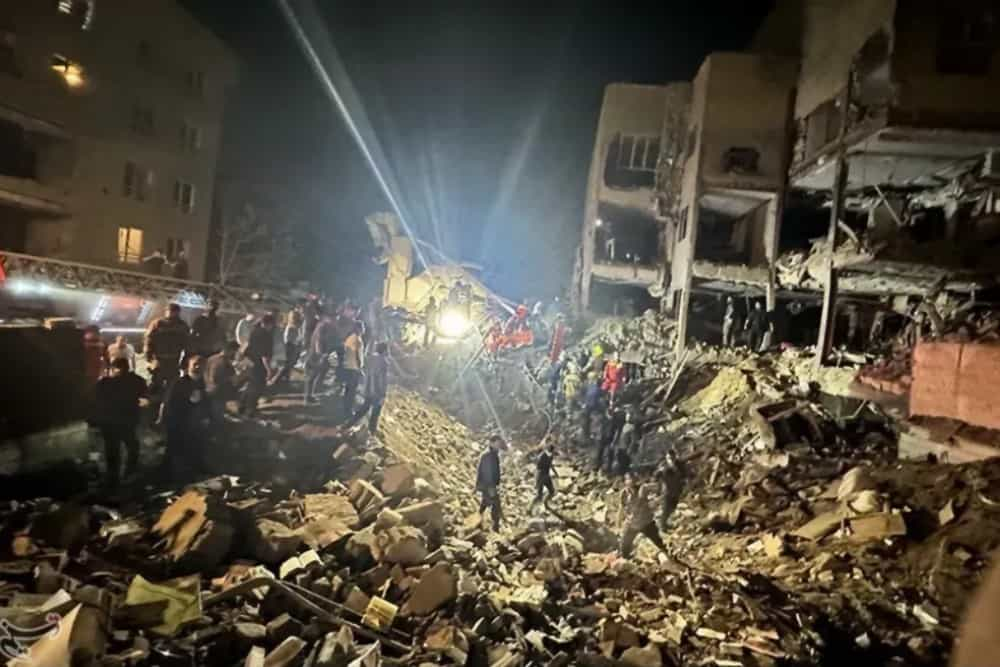
The Balochistan Human Rights Documentation Network says that US and Israeli air and drone strikes in Sistan and Baluchestan and Baluch-populated areas of Hormozgan and Kerman killed at least 192 civilians between the outbreak of the war on 28 February 2026 and 22 September. The deadliest incident documented in the report was the attack on the Shajareh Tayyebeh school in Minab, which killed 168 people. The final death toll from several other attacks remains unknown.
In a report published on Thursday, 22 October, based on field investigations and documented cases, the Balochistan Human Rights Documentation Network detailed civilian deaths and injuries resulting from a series of US and Israeli air and drone strikes between the outbreak of the war on 28 February and the end of September 2026. According to the organisation, the strikes affected not only military facilities but also residential neighbourhoods, a primary school, a wedding celebration, fishing boats, workplaces and routes used by civilians going about their daily lives.
According to the report’s statistical findings, at least 192 civilians were killed in the documented incidents. Of these, 168 died in the attack on the Shajareh Tayyebeh school in Minab, while at least 24 others were killed in incidents for which specific casualty figures are available. These figures represent the minimum documented death toll and should not be treated as a definitive total, as the number of victims in several incidents remains uncertain.
Minab School: More Than 100 Children Among the Victims
The deadliest incident documented in the report was the attack on the Shajareh Tayyebeh primary school in Minab, Hormozgan province, on the morning of Saturday, 28 February 2026. According to the Documentation Network, the school was struck during a US and Israeli air attack on nearby military facilities, with at least three missiles hitting its grounds and buildings.
Local authorities reported that 168 people were killed in the attack. Amnesty International, drawing on satellite imagery, videos and interviews with independent sources, also concluded that the school building had been directly struck and that more than 100 children were among those killed.
The Documentation Network says that it initially verified the identities of 57 students and teachers and published photographs and identifying details of 19 of them. In addition, DNA testing established that 62 recovered body fragments belonged to 32 students.
The organisation had previously reported, citing a relative of one of the victims, that the actual death toll might be higher. Amnesty International has called for an independent, impartial and transparent investigation into the attack and for those responsible to be held accountable.
On Tuesday, US Secretary of War (Defense) Pete Hegseth said that the investigation into the Minab school attack was still ongoing.
Bloomberg had previously reported, citing sources, that US military officials were considering postponing the publication of the investigation’s findings until after the congressional elections or delaying their release to an even later date.
Strike on a Wedding Celebration: Five Killed and More Than 60 Injured
Another major incident documented in the report was an attack on the evening of Tuesday, 1 September 2026, targeting the vicinity of a telecommunications tower and a residential house in Bandar Kuhestak, Sirik County, where a wedding celebration was taking place.
Initial reports indicated two deaths and more than 50 injuries. As investigations continued, however, the death toll rose to five, with more than 60 people injured. According to the Documentation Network, women and children were among both the dead and the injured.
Those killed included Zarkhatoun Taheri, 50; Kolsoom Mallahi-Nejandnia, 43, a member of the Gahardu village council; and Amirali Karimi, a four-year-old child from Bandar Kuhestak. Mohammad Mallahi, 16, was also killed when shrapnel struck his head as he rode a motorcycle near the site of the attack.
Asiyeh Molaeinejad, 22, who had been attending the wedding, died in a hospital in Bandar Abbas two days after being injured. Another victim, seven-year-old Sepehr Mallahi, suffered a shrapnel injury to the head and underwent surgery.
Fishers and Sailors: Casualties in Coastal Waters
Attacks on fishing vessels and coastal areas are another major focus of the report. Beyond the loss of life, these strikes have also disrupted the livelihoods of coastal communities.
In an attack on the waters off Minab and Sirik on the evening of 7 May 2026, at least eight fishers and sailors were killed, while another 19 people were reported injured or missing. Three of those killed were identified as Aref Mallahi and Hamed Mallahi, both from Bandar Kalahi, and Fereydoun Mallahi from Bandar Kuhestak. Reports also indicated that four fishers were missing following the incident.
On 8 July, an attack on the Bandar Kuhestak pier killed at least two Baluch fishers: Omid Arabi, approximately 26 years old, and Morteza Hormozi, approximately 25. The final number of people injured in this incident remains unknown.
In another incident, two fishing boats were targeted by a drone in the waters off Kargan, Minab, on 14 September. According to initial reports, at least three people were killed and two injured, while several others on board were reported missing.
Workers and Residents of Neighbourhoods Also Among the Victims
In an attack on the Chabahar Free Zone industrial estate on 30 March 2026, Erfan Jamaat Baluch, a worker and security guard at a rice-packaging company, was killed, and at least 11 other workers were injured. According to the Documentation Network’s sources, shrapnel struck cargo trucks and workers, setting vehicles on fire.
More than ten Baluch civilians were injured in an attack on the old customs area of Konarak on 6 March 2026. One of the identified victims was Hanif Sayadi, approximately 25 years old, from Konarak.
In the Janglook neighbourhood of Chabahar, an attack on nearby military facilities sent munitions into residential homes, killing Parvin Sepahi. Two members of her family, including her pregnant daughter, were also injured.
On 9 July, Hamid Darzadeh, a father of four from Qasr-e Qand, and Edris, from Iranshahr, were killed in an attack near the Pasabandar radar station. According to published information, both men were on their way to work at the Beris pier when the attack occurred.
In another incident, Tayyeb Baluch, from the village of Genz in the Jiwani area of eastern Baluchestan, was killed on 7 March 2026 when a drone crashed onto his boat in the Kalani River in Dashtiari. Khaled Ghaderi, approximately 29 years old, who was working on duty at the meteorological building of Iranshahr Airport, was also killed by shrapnel during an attack on 9 July.
Attacks on Military Facilities and Discrepancies in Casualty Figures
According to the Documentation Network, military facilities in Konarak, Chabahar, Zahedan, Saravan, Dashtiari, Lashar, Mehrestan, Fanouj, Sirik, Minab, Jask, Bampur and Rask were also targeted during the war.
In the 15 July attack on the Iranian Army’s 388th Mechanised Infantry Brigade in Bampur, the army reported seven deaths. However, published accounts differed over the number of people injured. The local newspaper Asr-e Hamoun, citing the army’s ground forces, reported 13 injuries, while the Iranian Labour News Agency (ILNA) put the figure at 45. Some local sources suggested higher numbers, but the Documentation Network was unable to verify these figures independently.
These casualties were not included in the report’s civilian death toll. Soldiers and other military personnel, including Saeed Chameli, who was killed in an attack on military headquarters in Bampur on 16 March, were excluded from the count of civilian casualties.
Difficulties in Identifying Victims and the Need for Independent Investigations
The Balochistan Human Rights Documentation Network emphasises that its casualty figures are based on field information, published reports and documented case files. Where initial figures were subsequently revised, the organisation used the most recent available data.
Nevertheless, internet restrictions, difficulties accessing targeted areas, the condition of victims’ remains, incomplete official information and discrepancies between published casualty figures have complicated efforts to identify victims and independently verify the death toll. The final numbers of those killed, injured or missing in several attacks on fishing boats and coastal communities remain unknown.
The Documentation Network has called for independent, effective and transparent investigations into attacks that have killed or injured civilians. It has also demanded the publication of accurate casualty figures, the identification of missing persons and accountability for those responsible for attacks that may have violated international humanitarian law.