

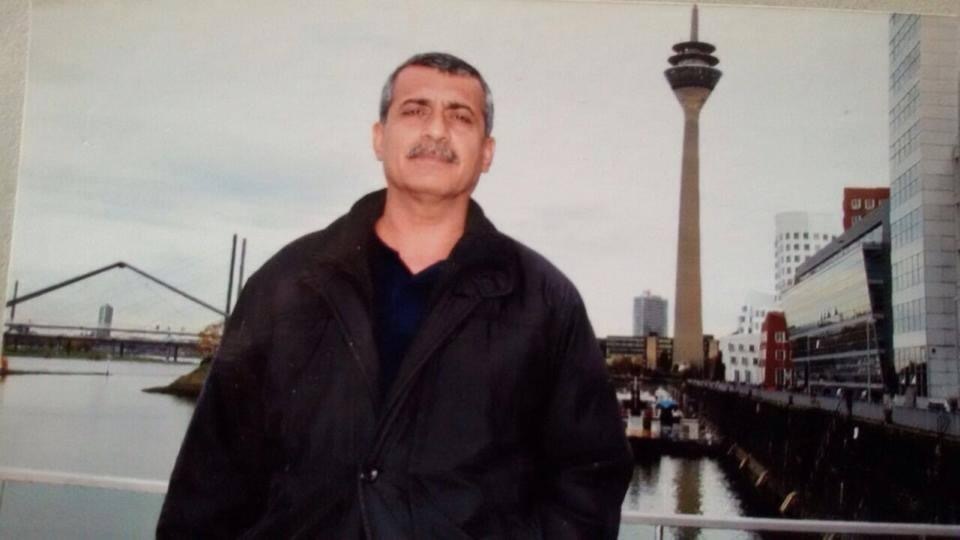
For years, I did not know that what had happened to my father had a name under international law. I did not know that enforced disappearance is recognized as one of the gravest human rights violations and that, when committed as part of a widespread or systematic attack directed against a civilian population, it may constitute a crime against humanity.
In Iran, we simply said that someone had become sar be nist (سر به نیست) — literally, “gone without a trace” or “disappeared.” It was a familiar expression, but never a legal one. Only years later did I learn that what happened to my father, Yousef Silavi, was not merely an isolated family tragedy, but part of a well-defined pattern of abuse recognized by the international community. Dr Ahmed Shaheed, then the UN Special Rapporteur on the situation of human rights in Iran, was the person who first gave a legal name to what had happened after listening to my account when I met him in 2015.
Enforced disappearance is not simply a person going missing. It is a violation designed to remove a person from the protection of the law and leave a family trapped between hope and grief.
What is enforced disappearance?
Article 2 of the International Convention for the Protection of All Persons from Enforced Disappearance defines enforced disappearance as an arrest, detention, abduction, or any other deprivation of liberty by State agents — or by persons or groups acting with the State’s authorization, support, or acquiescence — followed by a refusal to acknowledge the deprivation of liberty or the concealment of the person’s fate or whereabouts, placing that person outside the protection of the law.
The Rome Statute of the International Criminal Court contains a related definition. Under Article 7, enforced disappearance may constitute a crime against humanity when it is committed as part of a widespread or systematic attack directed against a civilian population, with knowledge of that attack.
The violation does not end at the moment of disappearance. It continues as long as the person’s fate and whereabouts remain concealed and unclarified. Families are forced to live with uncertainty, unable fully to mourn and unable to move forward.
The UN Working Group on Enforced or Involuntary Disappearances (WGEID) was established in 1980. Its 2025 annual report records 62,904 cases transmitted to 115 States since its creation, of which 49,664 cases involving 100 States remained outstanding as of 2 May 2025.
The scale of disappearances in Iran
According to the WGEID’s 2025 annual report, 612 cases had been transmitted to the Government of the Islamic Republic of Iran between 1980 and 2 May 2025. Of these, 580 remained outstanding, while 32 had been clarified — 22 through information provided by the Iranian government and 10 through information from other sources. Of the 612 transmitted cases, 111 involved women, and 110 of those cases remained outstanding.
These figures should be understood as a documented minimum, not the total number of enforced disappearances in Iran. They do not fully capture historical cases, including disappearances connected to the 1988 prison massacres, earlier waves of political repression, or cases that families were unable or unwilling to report because of fear, pressure, or the risk of retaliation.
Many historical disappearances remain absent from international databases because they were never submitted. This includes cases linked to political repression, secret executions, and mass killings. In Iran, UN experts and human rights organizations have repeatedly raised concern about the continued concealment of the fate and burial places of those forcibly disappeared and extrajudicially executed during the 1988 prison massacres.
The cases of Saeed Zeinali and Yousef Silavi
Saeed Zeinali, a 22-year-old computer science student at the University of Tehran, was arrested at his family home in Tehran on 14 July 1999, in the aftermath of the violent crackdown on student protests. According to his mother, Akram Neghabi, armed agents took him away in front of his family members.
Three months later, he made a brief telephone call to his family. His mother has said that he indicated he was being held in Evin Prison. After that call, all communication stopped.
For twenty-seven years, Iranian authorities have failed to provide a clear account of his fate or whereabouts. Officials have denied that there is evidence of his arrest, while his family has repeatedly sought answers from the judiciary, security bodies, prison officials, and the Office of the Supreme Leader.
Akram Neghabi has become one of Iran’s most recognized voices among families of the disappeared, continuing to demand the truth about what happened to her son. Because the authorities have not disclosed his fate or whereabouts, his case continues to be described as an enforced disappearance.
My father, Yousef Silavi
My father, Yousef Silavi, is a retired turbine technician who worked at Ramin Power Plant and is a member of the Ahwazi Arab minority in southwestern Iran. He went missing from our home in Ahvaz around 6 November 2009, shortly after returning from a visit to my sister and me in Damascus, Syria, where we were pursuing our higher education.
My mother, who had been staying with us, flew directly back to Ahvaz with a suitcase full of black mourning clothes, preparing for the worst. Yet she could find no trace of him. She reported him missing and searched alone through hospitals, morgues, police stations, and missing-person records. She pursued every possible avenue, contacting the police, the judiciary, intelligence agencies, and other authorities.
She even sent a handwritten letter to the Office of the Supreme Leader, Ali Khamenei, but received no response.
By 2012, my sister and I had fled to Belgium to escape the war in Syria, after enduring threats and harassment from the Iranian Embassy in Damascus. We submitted our father’s case to the UN Working Group on Enforced or Involuntary Disappearances and contacted Amnesty International sections in the United Kingdom and Belgium. Amnesty International issued an Urgent Action in April 2016 calling on the Iranian authorities to establish his fate and whereabouts.
Our search continues. Nearly seventeen years after his disappearance, the Iranian authorities have still not established his fate or whereabouts and continue to deny that they officially arrested him. Amnesty International has said that he may have been subjected to enforced disappearance.
I believe my father’s disappearance was an act of reprisal against my family because of its long-standing opposition to the Iranian regime and the continuing advocacy of family members for the rights of ethnic minorities, especially Ahwazi Arabs. My father himself was not politically active and had no political affiliation.
Because of her efforts to find him, my mother says that she has faced severe restrictions on her ability to travel since 2015, and that repeated applications for travel documents have been rejected. She has also been insulted and mistreated by officials. At times, they have suggested that she should no longer consider herself a married woman; at others, they have accused her of being responsible for his disappearance.
I once heard Syrian journalist Wafa Mustafa — whose father, Ali Mustafa, was forcibly disappeared by Syrian government forces in 2013 — compare the loss to waking up one day and discovering that part of your body is missing.
As Yousef Silavi’s daughter, I cannot think of a more accurate description of how I have felt for nearly seventeen years.
An enforced disappearance leaves an absence that never heals: a constant, invisible wound. I continue to live, but part of me is permanently missing. Our family remains suspended between hope and grief, never knowing whether to mourn or to wait.
A message to families of the disappeared
On 30 August, the International Day of the Victims of Enforced Disappearances, I wish Wafa Mustafa and her family, the family of Saeed Zeinali, my own family, and all victims, survivors, and families affected by enforced disappearance peace of mind and the strength to endure.
This is an experience I would not wish on my worst enemy — not even on the children of those who committed this violation against my father and our family.
If your loved one has been forcibly disappeared
Put safety first. Assess the risk of retaliation before reporting publicly or approaching authorities. If possible, consult a trusted lawyer or human rights organization and use secure methods of communication.
Act promptly when it is safe to do so. Early reporting can help preserve evidence and may allow a recent case to be considered under the WGEID’s urgent procedure.
Document everything. Keep a secure record of the circumstances of the disappearance, including dates, locations, witness accounts, identifying information, and every communication with the authorities.
Seek trusted help. Contact qualified lawyers and reputable human rights organizations. Where appropriate, a relative or an organization acting with the family’s consent may submit the case to the WGEID.
Do not face this experience alone. When safe, connect with trusted relatives, survivor networks, or psychosocial support. No family should be pressured into public advocacy or silence; the decision must reflect its own security and circumstances.
Remember that time matters, but delay does not erase the case. Delay can make it harder to identify witnesses, preserve evidence, determine the person’s fate, and secure accountability. Yet many families understandably postpone reporting because they fear reprisals, and older cases may still be submitted.